















1. Where is Lung Po Flag Tower? Address, geographical location, and coordinates
Located at the northernmost point of the Fatherland, Lung Po Flag Tower is not only a tourist attraction but also carries sacred meaning about sovereignty, history, and the cultural flow of the Vietnamese nation. For many tourists, the question Where is Lung Po Flag Tower is always associated with the image of the Red River beginning its journey into Vietnam, marking a special "border tri-point" in the Northwest region.
1.1. Geographical location and coordinates of Lung Po Flag Tower
Lung Po Flag Tower is located in A Mu Sung commune, Bat Xat district, Lao Cai province, a border commune adjacent to the Vietnam – China border. The structure was built near Lung Po Border Guard Station, where border guards protect the national sovereignty day and night.
This location is not only convenient for border protection but also serves as a point for traditional education, attracting a large number of tourists, students, and pilgrimage groups. Amidst the majestic mountains and forests, the red flag with a yellow star flying high on the flagpole creates a solemn and moving image at the northernmost point of the Fatherland.
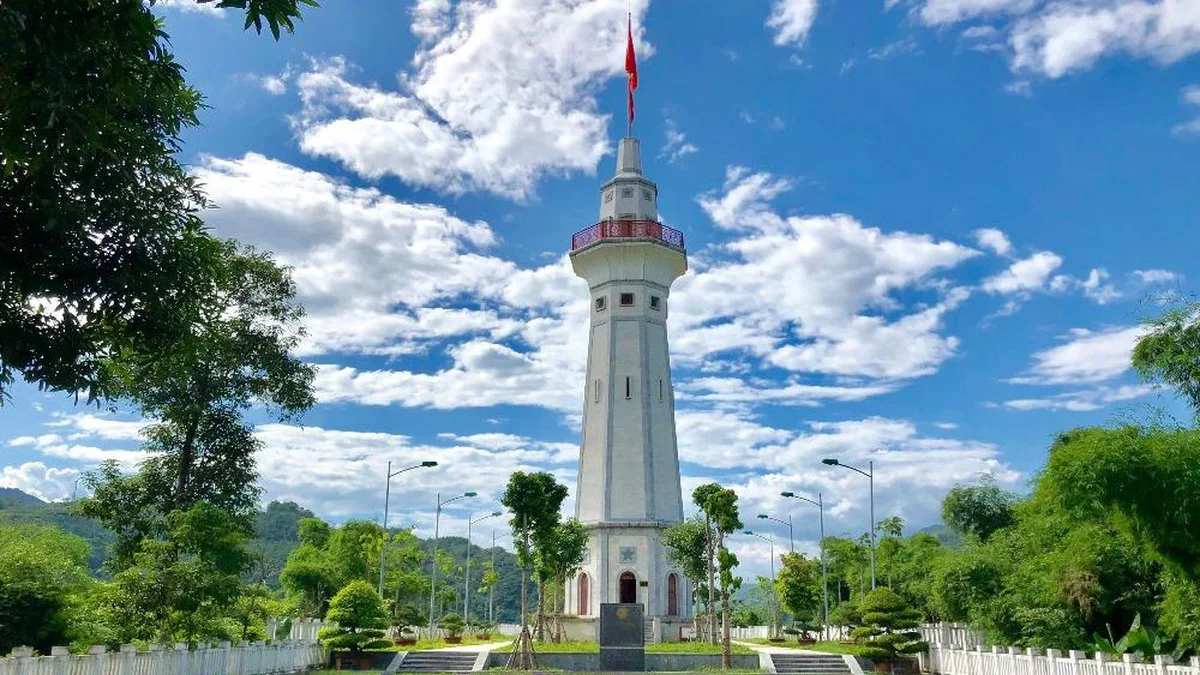
The Lung Po Flagpole is located close to the Vietnam - China border (Source: Collected)
On the map, the Lung Po Flagpole is situated in the northwesternmost area of Lao Cai province, about 70–80 km from the center of Lao Cai city. Visitors can travel along the route Lao Cai – Bat Xat – A Mu Sung to reach the flagpole area.
The special feature of this location is that it lies right at the confluence of the Lung Po stream and the Red River – the moment the Red River officially flows into Vietnamese territory. This unique geographical factor has made the Lung Po Flagpole one of the most iconic border symbols of the North.
1.2. The starting point of the Red River flowing into Vietnam
Lung Po is considered a land of special historical and geographical significance, marking national sovereignty through both space and natural flow. From here, the Red River begins its journey, depositing silt, nurturing the Northern Delta, and is closely linked to the formation and development of Vietnam's wet-rice civilization.
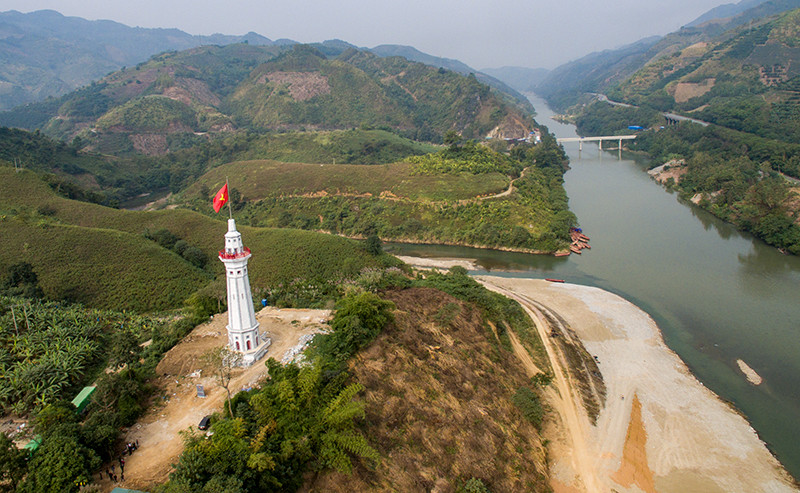
Lung Po Flag Tower is the point marking the Red River flowing into Vietnamese territory (Source: Collected)
The erection of the Lung Po Flag Tower at the "border tri-point" not only signifies the assertion of territory but also serves as a symbol of the continuation of culture, history, and national spirit. Standing here, visitors can not only admire the majestic border scenery but also feel the sacred pride when setting foot on the place where the Red River flows into Vietnam.
2. How to get to Lung Po Flag Tower
As it is located in a border area far from the center, the journey to Lung Po Flag Tower is full of the spirit of exploring the mountains and forests of the Northwest. Although not too difficult, visitors need to know the route, suitable means of transport, and specific notes for border areas to ensure a safe, smooth, and complete travel experience.
2.1. How to travel from Hanoi to Lung Po Flag Tower
From Hanoi, visitors travel along the route Hanoi – Lao Cai City – Bat Xat District – A Mu Sung Commune to reach Lung Po Flag Tower, with a total distance of about 350–370 km. The average travel time is 8–10 hours, depending on the means of transport and traffic conditions. The most common way is to take a sleeper bus or train from Hanoi to Lao Cai (about 6–7 hours), then continue to rent a motorbike or car to go to Bat Xat – Lung Po.
For travelers who love adventure, a personal car or motorbike trip through the Northwest is also a worthwhile option to have a flexible itinerary and stop to admire the scenery along the way. The most ideal time to visit is the dry season, from about September to April of the following year, when the weather is dry, the mountain roads are easy to travel, and the border scenery is clearly visible.
2.2. How to travel from Lao Cai, Sa Pa to Lung Po?
Starting from Lao Cai City, the journey to Lung Po is about 70–80 km, passing through communes of Bat Xat District like Trinh Tuong before reaching A Mu Sung. The travel time is 2.5–3.5 hours, suitable for a day trip. Motorbikes are the preferred mode of transport for many tourists due to their flexibility, ease of stopping for photos, and ability to fully experience the border mountain atmosphere, while cars or local taxis are suitable for larger groups or families.
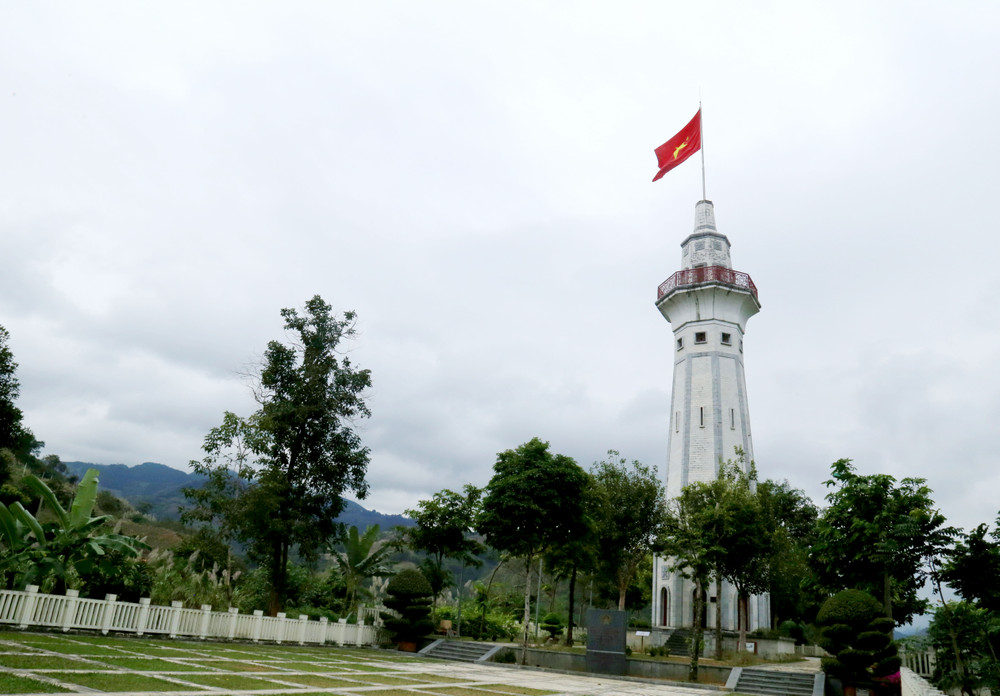
Visitors traveling from Lao Cao need about 3 hours to reach Lung Po Flag Tower (Source: Collected)
If traveling from Sa Pa, the journey will be longer, about 120–140 km, with many winding mountain passes and roads, requiring a steady hand and an early start. Some tourists who love exploration also combine short treks through roadside villages, but careful preparation is needed, and it is best to go with locals.
2.3. Experience traveling to Lung Po independently, safely, and economically
When traveling to Lung Po independently, visitors should prioritize departing early in the morning to avoid thick fog and ensure a return before dark. Due to the long mountain journey with few roadside stalls, preparing sufficient drinking water, snacks, a jacket, personal medication, and essential items is very important, especially when traveling by motorbike.
As this area is near the border, visitors must carry identification, comply with border guard instructions, and not enter restricted areas without permission. To save costs, it is advisable to travel in small groups to share vehicle rental costs and combine visits to other tourist attractions in Bat Xat during the same trip, optimizing the itinerary and making the exploration of the country's northernmost point more complete.
3. Discover the architecture, dimensions, and symbolism of the Lung Po Flag Tower
3.1. Overall architecture of the structure in the border region
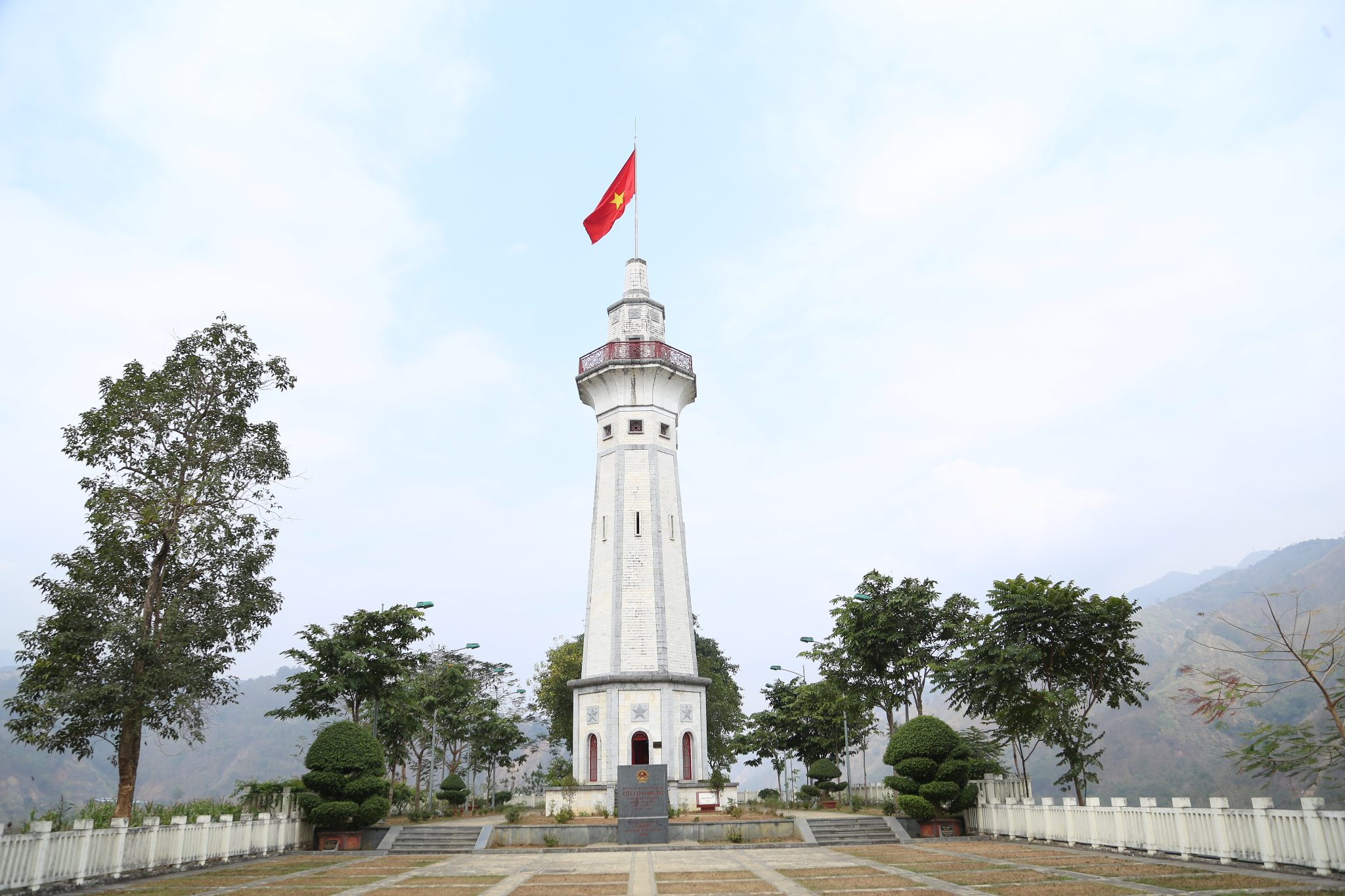
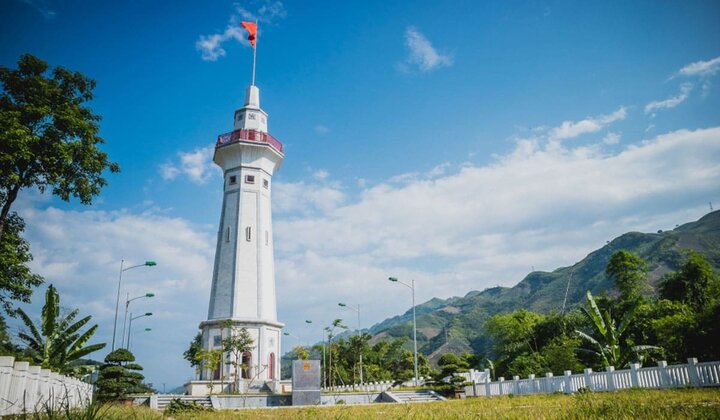
The Lung Po Flag Tower is a sacred structure of national sovereignty (Source: Collected)
The Lung Po Flag Tower is built as a symbolic structure with sacred meaning of national sovereignty, located in the border area of A Mu Sung commune, Bat Xat district. The entire structure is within a campus of over 2,000 m², including the main flag tower, the ceremonial ground, pathways, and auxiliary items, creating a solemn space that is harmonious with the Northwest mountain and forest landscape. The architecture of the flag tower is solid and robust, reflecting the resilient spirit of the border region at the country's gateway, while still maintaining simplicity and closeness, in line with the spirit of a national symbolic structure rather than ostentatious display.
3.2. Dimensions, structure, and symbolic numbers
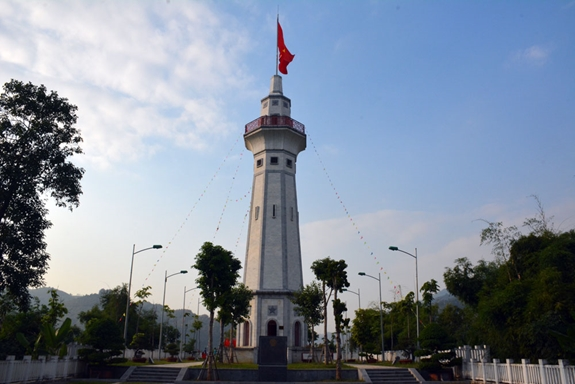
The structure is built on an area of 2100 m2, with a height of 31.43 m symbolizing the peak of Fansipan (Source: Collected)
The Lung Po flagpole has a total height of about 41 meters, standing out amidst the majestic mountainous landscape at the Vietnam – China border. Of this, the pole body is 31.43 meters high, a number symbolizing the 3,143-meter altitude of Fansipan peak – the “roof of Indochina”, representing the soaring spirit, perseverance, and resilient will of the Vietnamese nation. The flag-hoisting part above is nearly 10 meters high, allowing the national flag to always fly prominently in the border sky. Notably, the red flag with a yellow star has an area of about 25 m², symbolizing the 25 ethnic groups living together in Lao Cai province, demonstrating the spirit of unity and solidarity within the cultural diversity of the border region.
3.3. Symbol of Sovereignty and Historical – Cultural Values of Lung Po Flagpole
More than just an architectural work, the Lung Po flagpole carries profound symbolic values of history, culture, and national sovereignty. Erecting the flagpole at the confluence of the Lung Po stream and the Red River – the point marking the Red River's official entry into Vietnamese territory – signifies the affirmation of the nation's sacred boundary through both geographical space and natural flow.
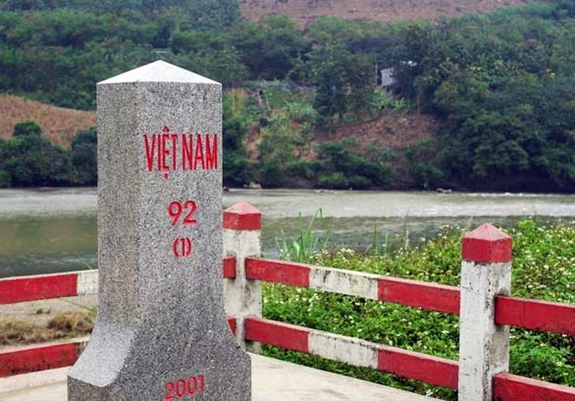
Landmark 92 marks the point where the Red River begins to flow into Vietnamese territory (Source: Collection)
The image of the national flag flying at the northernmost point reminds us of the merits of the generations of ancestors who protected the border, and at the same time becomes a spiritual anchor, a place to educate the patriotic tradition for the young generation. For many tourists, standing before the Lung Po Flag Tower is not just a tourist experience but also a moment to pause and feel more deeply the national pride and the sacredness of the word "Homeland".
4. Places to visit and dine combined with Lung Po Flag Tower
After visiting Lung Po Flag Tower, tourists can combine exploring many other destinations and experiencing the characteristic cuisine of the Bat Xat – A Mu Sung border region. The journey does not stop at a symbolic structure, but also opens up a cultural space, life, and cuisine with a strong Northwestern flavor.
4.1. Notable check-in spots near Lung Po Flag Tower
Right near the flag tower area, tourists can visit landmark 92, one of the important border markers on the Vietnam – China border, which clearly marks national sovereignty. The space around the border marker has a wild, peaceful beauty, very suitable for taking souvenir photos and feeling the solemn atmosphere of the country's northernmost region.
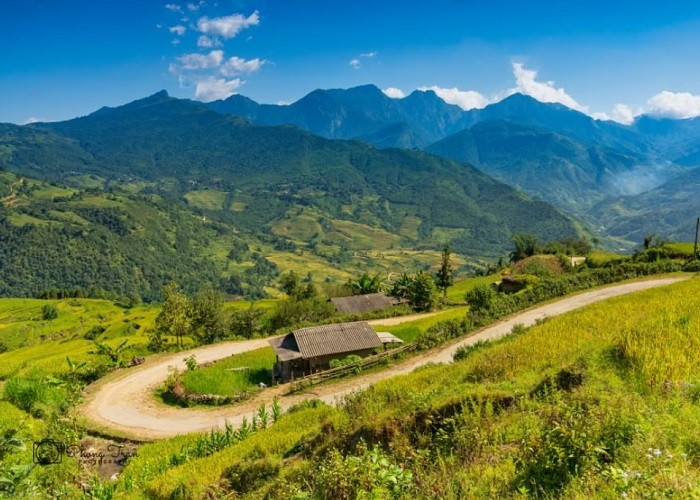
Peaceful scenery in A Mu Sung commune, Lao Cai (Source: Collected)
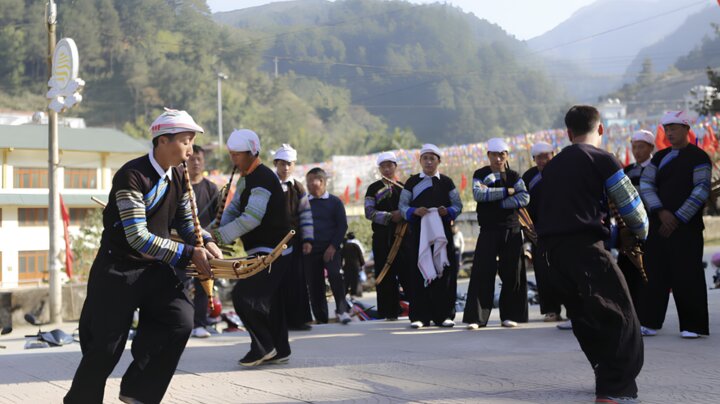
From Lung Po Flag Tower, visitors can easily combine visits to the villages of ethnic minorities living in A Mu Sung commune and neighboring communes of Bat Xat district. The highland villages with traditional houses, terraced fields, and a slow pace of life offer an intimate and authentic experience of life on the border. A little further, the center of Bat Xat district is a suitable stopover to rest, learn about local culture, and continue the journey to explore the majestic mountain routes of Lao Cai.
4.2. What to eat in A Mu Sung, Bat Xat? Specialties of Lao Cai border region
The cuisine of A Mu Sung – Bat Xat is rich with the flavors of the mountains, rustic yet full of character, perfect for enjoying after visiting the flag tower. Visitors can find familiar highland dishes such as mountain pork, free-range chicken, and stream fish, simply prepared to retain their natural sweetness. Besides, forest bamboo shoots, seasonal wild vegetables, and five-colored sticky rice are also popular choices for many visitors when visiting the border region of Lao Cai.
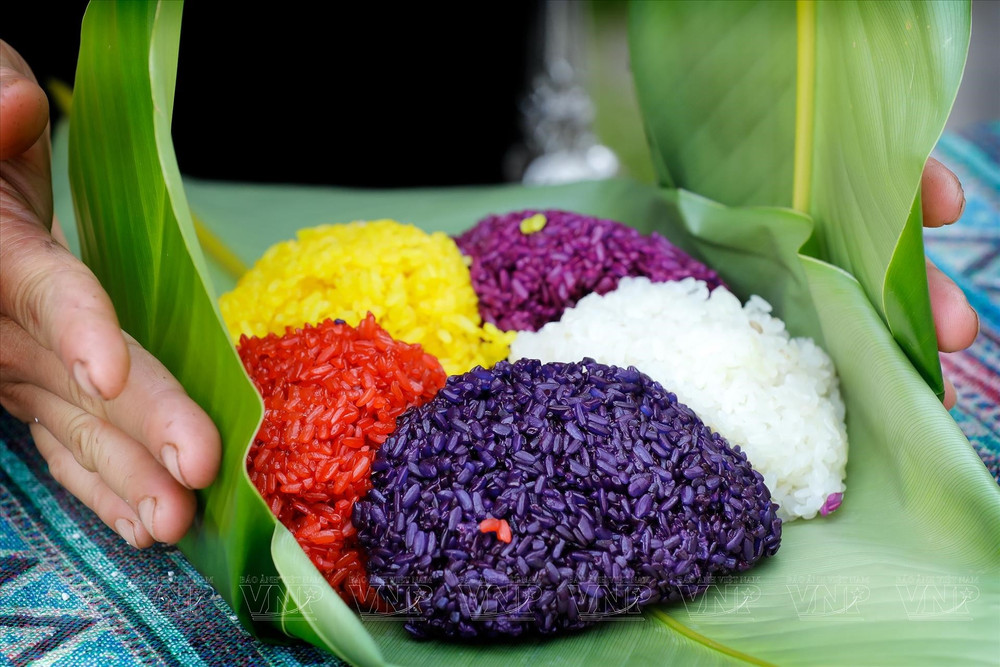
Five-color sticky rice is a famous dish of the Tay Bac ethnic groups (Source: Collected)
In the central area of Bat Xat district or family eateries in A Mu Sung, visitors can also enjoy traditional corn wine and rice wine of the ethnic people, which are both warming and rich in highland flavor. Although there are not many large restaurants, the simplicity and authenticity in the cooking and hospitality of the local people create a memorable culinary experience, contributing to a more complete and emotional journey to Lung Po Flagpole.
5. Useful Experience & Notes When Visiting Lung Po Flagpole
As a destination located in a border area far from the center, thorough preparation before visiting Lung Po Flagpole will help ensure a safer trip, while also providing a complete experience in terms of scenery, emotions, and historical value.
5.1. Suitable Time to Visit Lung Po Flagpole
The most ideal time to visit Lung Po Flagpole is the dry season, from around September to April of the following year. During this period, the weather in the Northwest mountains is relatively stable, with little rain, dry roads, and clear visibility, which is very convenient for travel and photography. From September to November, the mountain scenery is lush green, and the air is fresh; although winter is cold, it offers a serene and emotional border landscape.
The rainy season (around June-August) brings lush greenery to the mountains but also poses risks of slippery roads, landslides, and thick fog, especially when traveling by motorbike. For beautiful photos, visitors should come in the morning or late afternoon, choose neat, brightly colored but polite attire, and wear a light jacket to adapt to the rapid temperature changes of the high mountain region.
5.2. Security, Documents, and Border Culture Notes
As Lung Po Flagpole is located near the border area, visitors must carry valid personal identification documents such as a Citizen Identity Card (CCCD) or passport to present when required. During the visit, comply with the regulations of the border guards, do not enter restricted areas without permission, and do not take photos of sensitive locations related to border security.
In addition, visitors should maintain a polite attitude, respect the customs and traditions of the local ethnic communities, especially when visiting highland villages. Maintaining cleanliness, not littering, minimizing noise, and protecting the natural landscape are also ways to show responsibility towards the border environment and the local community.
5.3. Necessary Equipment & Safe Travel Tips
The journey to Lung Po is often long and passes through many mountain roads, so visitors should prepare adequate personal belongings, drinking water, snacks, a jacket, and sports or trekking shoes with anti-slip soles. If traveling by motorbike, check the vehicle carefully, carry basic repair tools, and fill up the fuel tank before entering deserted sections of the road.
Additionally, it is advisable to prepare personal medications, basic first-aid supplies, and save the phone numbers of the border guard station or local authorities in case of need for assistance. Traveling in small groups, informing acquaintances of your itinerary, and avoiding travel after dark or in bad weather will make your trip to Lung Po Flagpole safer, more proactive, and more meaningful.
Besides the journey to explore Lung Po Flagpole and the Bat Xat border area, a trip to Lao Cai will be even more complete by combining it with a visit to Sa Pa – a famous destination in the Northwest. Here, visitors have the opportunity to conquer Fansipan, the “Roof of Indochina,” experience the modern cable car, hunt for clouds at an altitude of over 3,100 meters, and visit the spiritual complex amidst the majestic Hoang Lien mountains. The combination of Lung Po – Bat Xat and Sa Pa not only offers a journey to explore diverse nature but also allows visitors to fully appreciate the geographical, cultural, and spiritual beauty of the Lao Cai region.
Through this exploration, the question of where Lung Po Flagpole is located is not only answered with a specific address on the map but also opens up a panoramic view of the sacred borderland where the Red River flows into Vietnam. Combining a visit to Lung Po – Bat Xat with Sa Pa and Fansipan peak will provide visitors with a complete trip, allowing them to admire the majestic nature while deeply feeling the historical, cultural values, and national pride of the Lao Cai region at the country's northernmost point.