















1. A brief overview of Sapa's winter weather
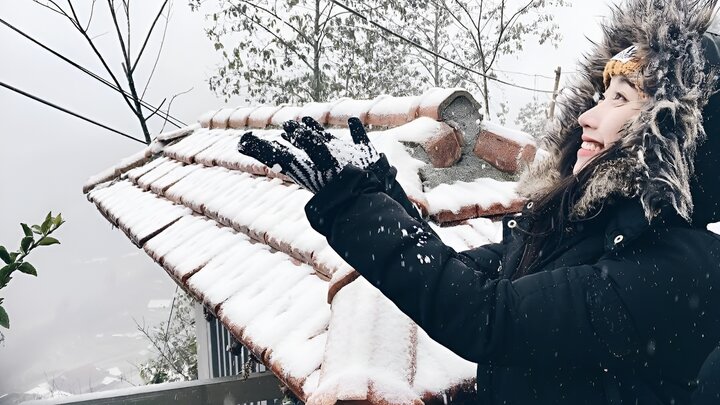
Sapa in the final months of the year offers visitors an experience of a "true winter". From December to February, daytime temperatures hover around 10°C, while nighttime temperatures sometimes drop below 0°C. In recent years, frost and snowfall have appeared more frequently, covering the mountain town in a pristine white layer – as beautiful as a painting, and making people shiver in their thickest coats.
Sapa's weather this season changes quite erratically, with the difference between day and night potentially reaching 15–20°C. Therefore, if you are not accustomed to the mountain cold, you can easily experience "temperature shock" or catch a cold if you don't prepare carefully. A thermal puffer jacket, gloves, a woolen hat, and non-slip shoes are an indispensable "armor" for you to explore comfortably.
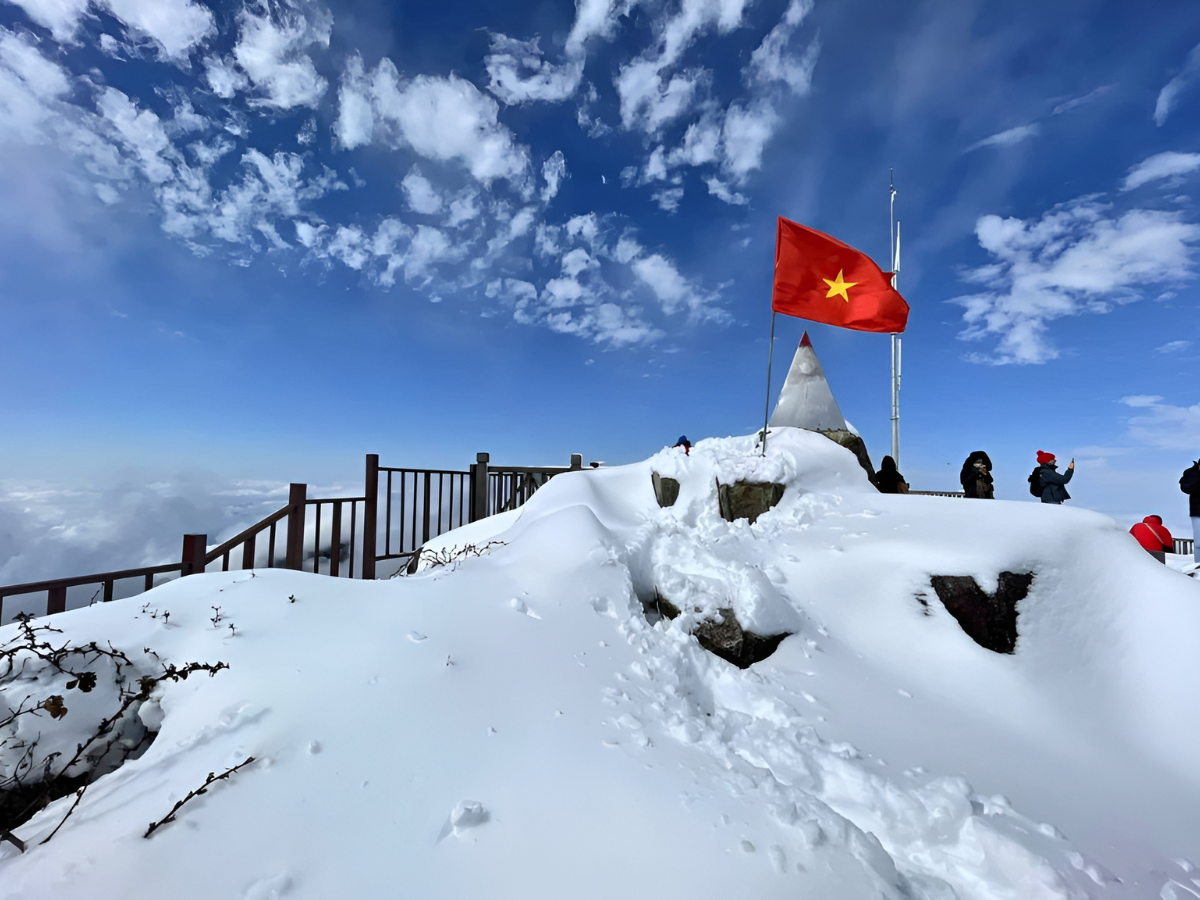
Sapa in winter is covered in white mist. (Source: Collection)
Although cold, Sapa in winter still captivates tourists from near and far with unforgettable experiences: cloud hunting on mountain peaks, trekking through misty paths, or conquering Fansipan peak at Sun World Fansipan Legend – where winter is as beautiful as a scene from Northern Europe. Although a bit harsh, that climate is precisely what makes Sapa's unique charm.
And if you are someone who loves "virtual living" (taking photos), this is definitely the most ideal season. In the white snow, just a beige coat or a bright red woolen scarf is enough to get you a photo frame like a Korean movie.
2. List of clothing to bring when going to Sapa in winter
2.1. Warm jackets, puffer jackets
A thick jacket is an indispensable companion to help you overcome the winter cold in Sapa without worrying about temperature shock. When the temperature drops, a quality down or feather-filled puffer jacket will make your trip more complete. It is advisable to prioritize waterproof jackets as Sapa often experiences fog and drizzle.
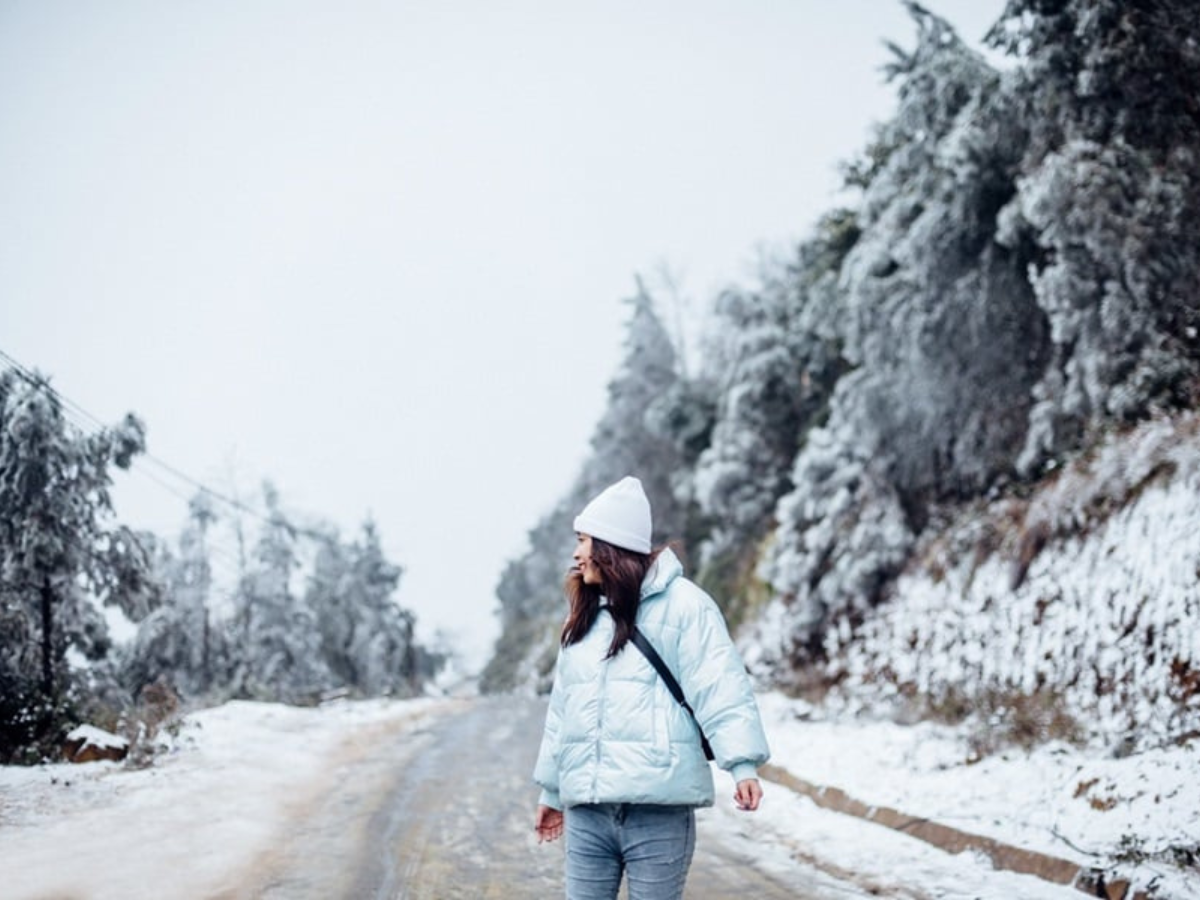
A thick jacket – your companion to help you overcome the cold Sa Pa winter. (Source: Collected)
Men can consider neutral-colored puffer jackets like black, gray, navy blue, or loose-fitting leather jackets allowing for easy movement. 3-layer windbreakers or khaki wool coats are also suitable choices, both keeping warm and providing a sophisticated look. For women, long puffer jackets flatter the figure, elegant wool coats, or fashionable leather jackets in various striking colors are worth considering.
When choosing what to wear when going to Sa Pa in winter for children, material is important. Choose lightweight, soft jackets with hoods and good water resistance. Avoid overly thick jackets that restrict movement or stiff materials that may irritate a child's sensitive skin.
The secret to styling jackets beautifully is choosing a well-fitting silhouette, paired with matching scarves or woolen hats. Layering outfits with harmonious colors not only keeps you warm but also creates interesting accents, making the outfit more photogenic.
2.2. Basic Sweaters, Fleece, Thermal Shirts
The innermost layer plays a significant role in keeping the body warm. Turtleneck sweaters, thick fleece sweatshirts, or stretchy thermal shirts fit snugly against the body, creating an effective insulating layer while ensuring comfort. Materials like cotton blends with wool or polyester are highly absorbent, keeping the body dry.
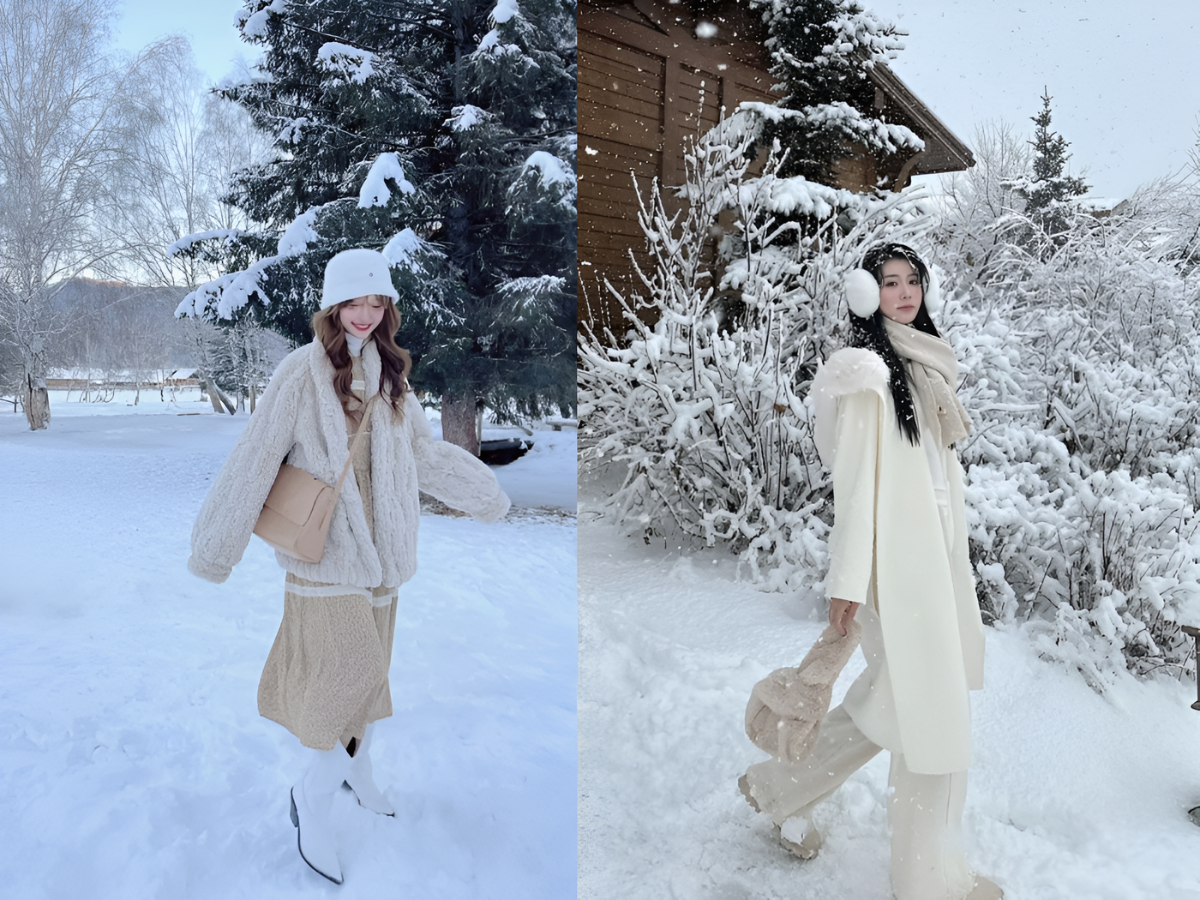
Sweaters and fleece jackets keep you warm effectively, helping your body stay comfortable in the cold Sa Pa weather. (Source: Collected)
The principle of layering is the key to adapting to the erratic temperature changes in Sa Pa. During the day, with light sunshine, you only need to remove the outer jacket and still be warm enough thanks to the inner sweater. In the evening, when it gets cold, just put on an outer layer to retain heat effectively.
A smart way to combine them is to choose a neutral-colored thermal shirt as the base layer, a patterned or brightly colored sweater in the middle, and a solid-colored jacket on the outside. A scarf in the same color as the sweater will bring harmony and a highlight to the overall outfit. It's advisable to choose a moderately thick sweater to avoid making the outfit bulky when wearing an additional outer jacket.
2.3. Thick jeans, warm leggings
The lower body also needs attention when visiting Sa Pa in winter. Thick jeans are a popular choice, providing warmth and easy outfit coordination. Additionally, fleece pants, multi-layered joggers, or specialized trekking pants are also very suitable for mountain climbing activities or strolling around the villages.
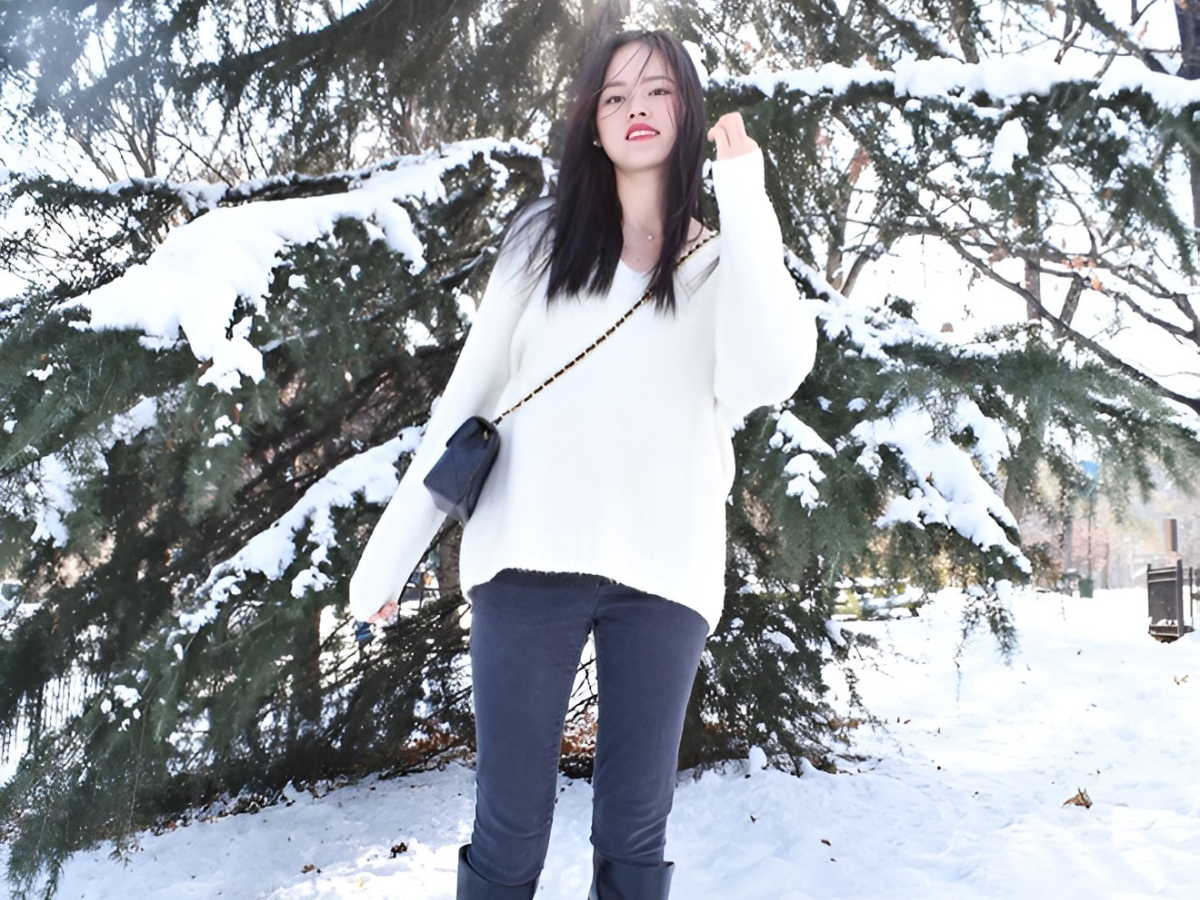
Thick jeans keep you warm and are easy to pair with many different outfits. (Source: Collection)
Women can try pairing thermal leggings with thick woolen dresses or high-waisted skirts. The secret is to wear thick tights inside the leggings, which both increases warmth and creates a feminine style amidst the mountainous scenery.
Experience choosing pants for Sa Pa in winter is to prioritize materials with good elasticity, a snug hem or one that can be extended to limit the cold wind from blowing in. Avoid choosing pants that are too wide or made of thin material as they will not be warm enough, especially when participating in outdoor activities like trekking to the summit of Fansipan. Pants with zippered pockets are also very convenient for storing phones and wallets in cold, damp weather.
2.4. Warm accessories: woolen hat, scarf, gloves, thick socks
Accessories are the perfect accent, helping winter outfits in Sa Pa stand out and stay warm. A woolen hat protects the head and ears from the cold wind, while a scarf limits heat loss through the neck, the area where the body loses heat most easily. Gloves keep hands warm, making it easy for you to use your phone or take photos in the cold.
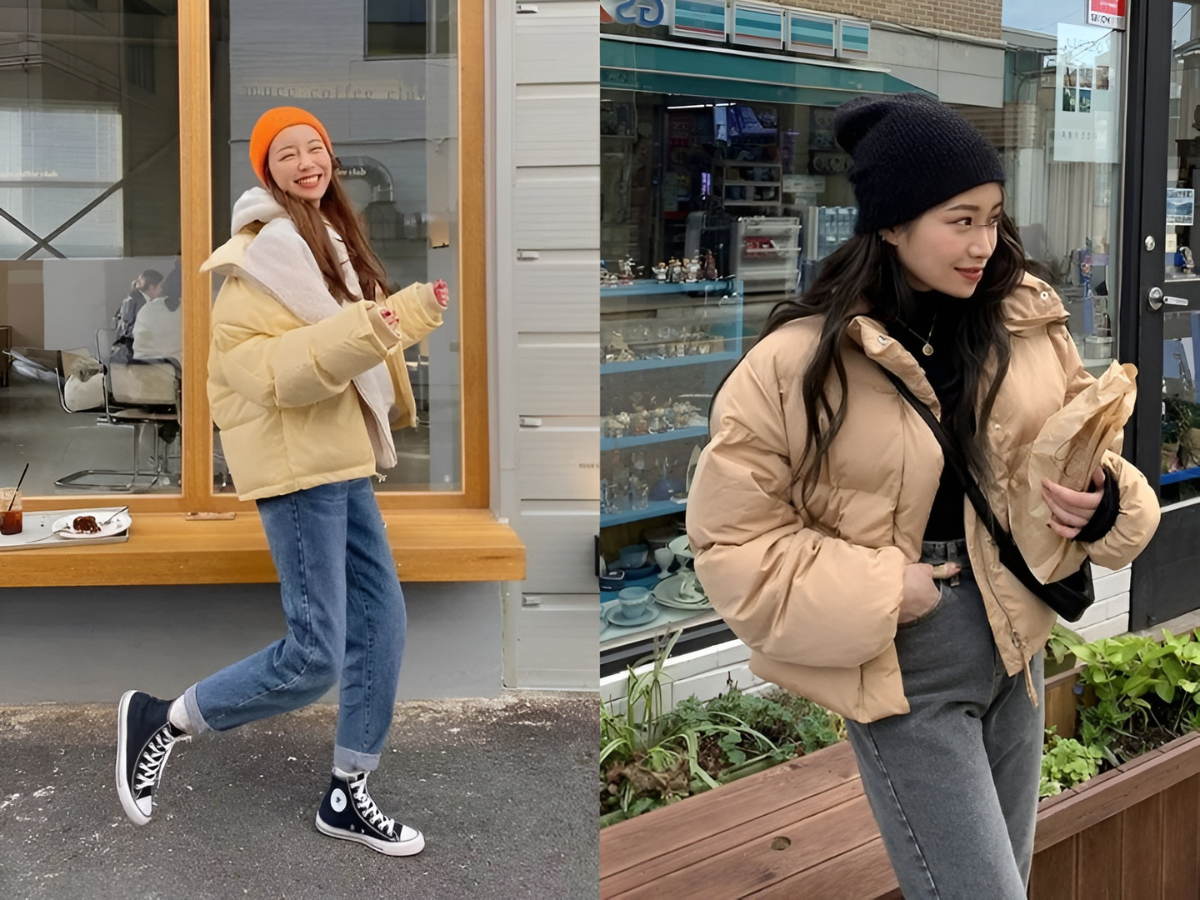
Accessories such as woolen hats, scarves, gloves, and thick socks are essential items in Sa Pa. (Source: Collected)
Thick socks play a role in protecting your feet, especially when walking a lot on cold rocky paths in Sa Pa. It is advisable to choose woolen socks or thick sports socks with good sweat absorption to keep your feet dry and warm at all times.
To make accessories both practical and fashionable, you can choose items with matching colors or ethnic patterns characteristic of the highlands. Ethnic woolen hats, fleece scarves, or woolen gloves decorated with local patterns not only help keep you warm but also showcase the cultural beauty of Sa Pa.
The secret to coordinating accessories is to choose one item as a prominent color accent, like a red scarf, while other accessories should maintain neutral tones so that the overall outfit is harmonious and stands out when "checking in" amidst a space filled with white clouds.
2.5. Footwear: Prioritize sports shoes, low-heeled non-slip boots
Choosing suitable shoes is an important factor affecting safety and comfort when exploring Sa Pa in winter. High heels or sandals should be avoided due to the terrain being steep and rocky, slippery, especially when ice and snow appear. A slip can interrupt your experience.
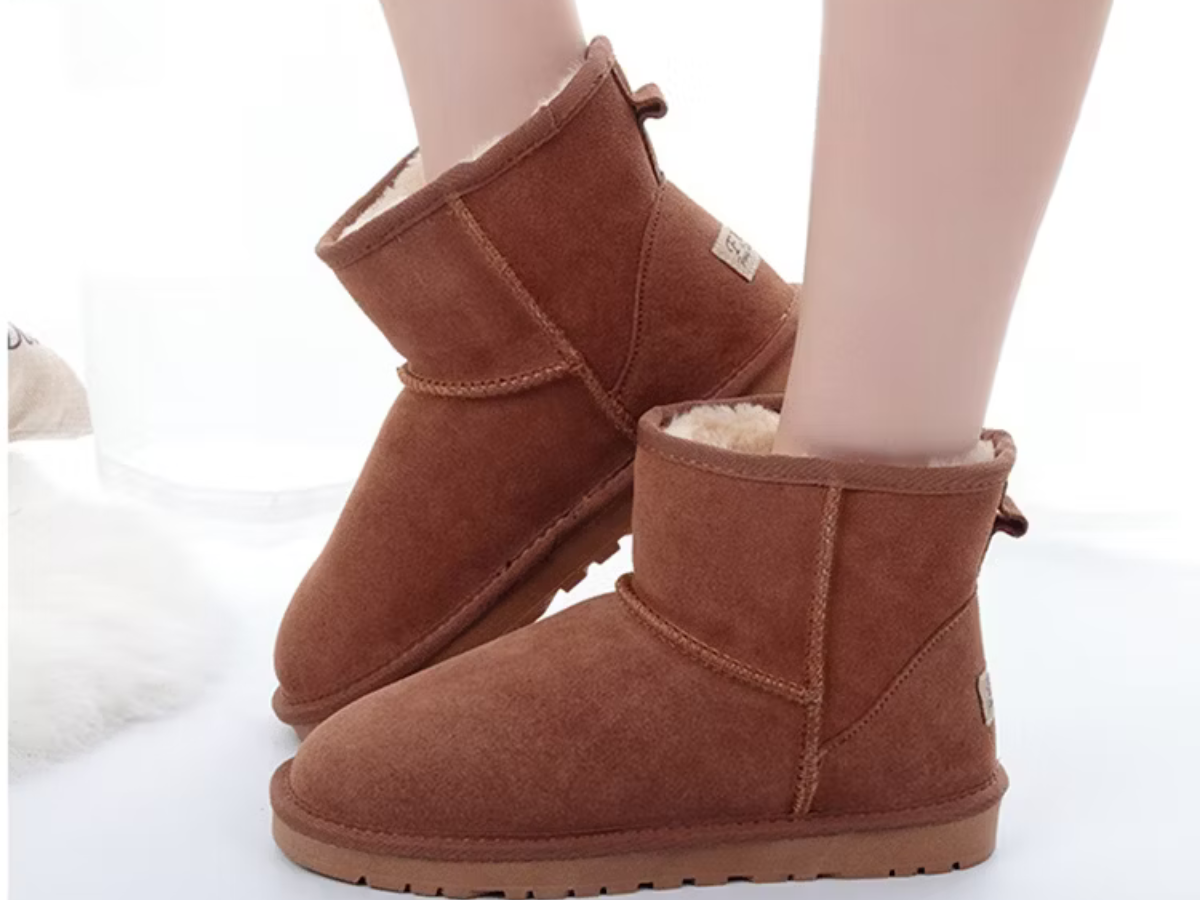
A pair of warm, non-slip shoes will help you move safely when exploring Sapa. (Source: Collection)
Low-cut fur-lined leather boots are an ideal choice, keeping you warm and protecting your ankles when moving on rough terrain. Thick-soled sports shoes or waterproof sneakers are suitable for a youthful, dynamic style. For those who love trekking, specialized non-slip shoes are indispensable.
Note that choosing shoes for winter Sapa trips prioritizes water resistance and heat retention. You should bring shoe warmers and wear thick socks to keep your feet warm.
If you encounter snow or ice, wipe and dry your shoes immediately after returning to your accommodation. Do not wear damp shoes the next day, as they will not only be cold but also easily affect your health. Bringing a pair of lightweight spare shoes also helps you be flexible when you need to change your footwear.
3. Outfit suggestions for "photogenic" looks in Sapa during winter
3.1. Styling with minimalist, pastel, and neutral colors
Colors are the element that creates highlights for photos amidst the winter scenery of Sapa. Neutral colors such as beige, cream, light gray, or soft pastels help the wearer stand out subtly against the backdrop of clouds and mountains. These tones also bring a sense of elegance and youthfulness, very suitable for the romantic atmosphere of the highlands.
 }
lp>
}
lp>
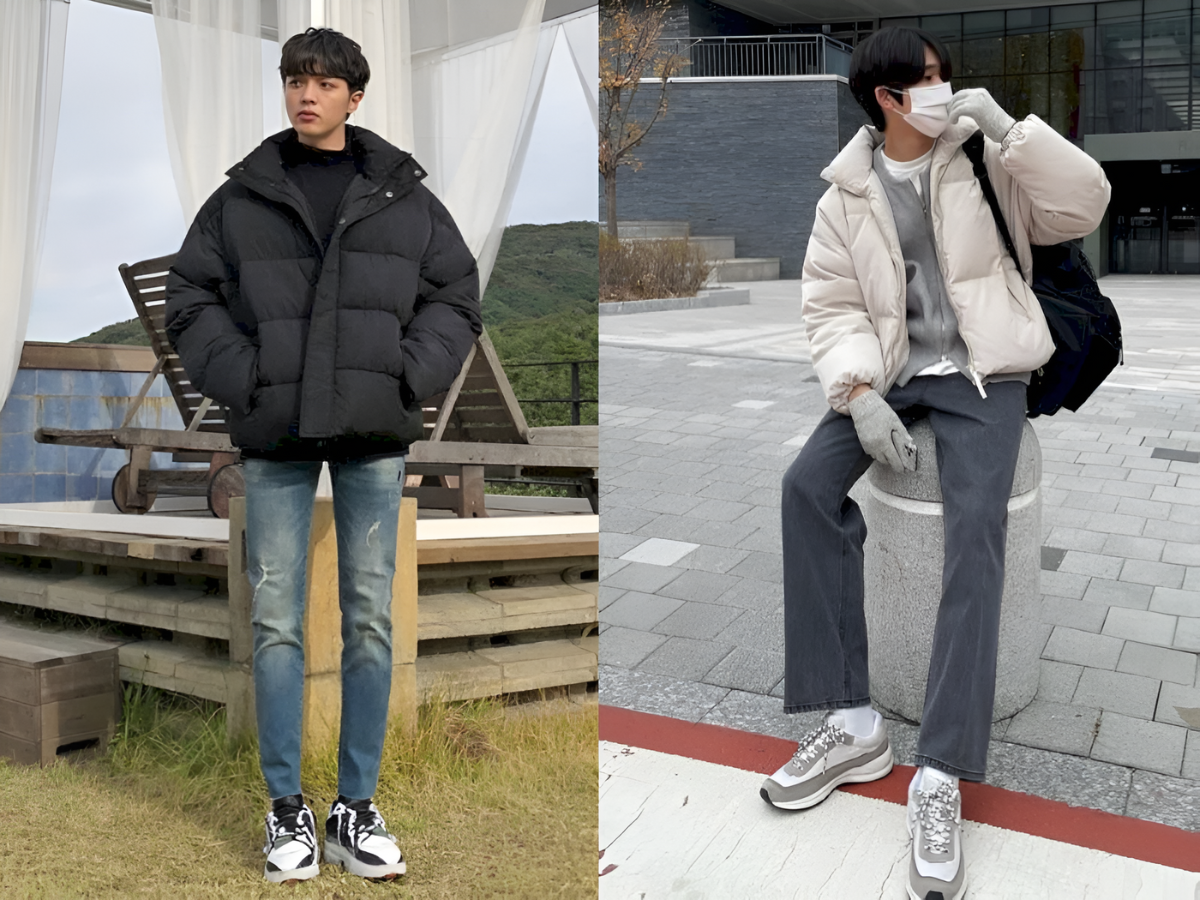
Warm clothing for men traveling to Sa Pa. (Source: Collected) } lp>
}
lp>
Men can choose dark blue jeans, a grey turtleneck sweater, an earth-brown parka, and a classic plaid scarf, which are both stylish and convenient for outdoor activities.} lp>
}
lp>

Warm clothing for women traveling to Sapa (Source: Collected)
Women can wear pastel-colored woolen skirts, cream-colored woolen coats, ethnic patterned woolen hats, and suede boots - a perfect combination to create 'virtual life' photos in true Korean style.
If traveling with friends or family, coordinating outfits for Sapa in winter should have a consistent main color tone. For example, choose brown-beige or navy blue-gray tones for the whole group, and each member can make small variations to create harmony when taking group photos, helping the picture achieve a high aesthetic effect.
Minimalist style does not mean monotony. Highlight your outfit with an accessory like an ethnic patterned scarf, a brightly colored woolen hat, or a vintage handbag. The balance between simplicity and sophistication will help you leave your mark amidst the mountainous nature.
3.2. What to wear when traveling to Sapa in winter for easy movement and mobility
Visiting Sapa requires flexible movement, from taking the Fansipan cable car to walking to explore villages. Appropriate winter attire for Sapa involves layering with well-fitting clothes, avoiding overly tight or loose items.
Ideal attire includes a snug thermal base layer, a fitted sweater or fleece, and an outer jacket that's easy to remove. When entering restaurants, cafes, or taking the cable car, you can remove your jacket and stay warm thanks to the inner layers. Stretchy jeans and trekking pants are suitable choices for getting around.
You should also bring heat patches for your back and soles of your feet to help when the temperature drops sharply. A thin, easily foldable raincoat is also useful for heavy fog or drizzle characteristic of Sapa.
Choose shoes with good grip, and avoid carrying too many cumbersome accessories. A crossbody bag or a small backpack will be more convenient than a handbag when you need to move around a lot. Leave a small space in your bag to store your jacket when not wearing it.
4. Notes and tips for staying warm when dressing for Sapa in winter
4.1. The principle of layering
The layering principle is an important secret to help you adapt to Sapa's constantly changing climate. Temperatures can vary greatly between indoors and outdoors, between morning and evening, and even when moving between different areas on the same day.
The first layer is a snug thermal shirt or cotton t-shirt, creating insulation and wicking away sweat. The next layer is a sweater, fleece, or cardigan, serving as the main insulation. The outermost layer is a windproof, waterproof jacket to protect against the elements.
The advantage of layering is not just staying warm but also providing flexibility. When entering a cafe or resting at a homestay, you can remove outer layers without getting cold. When going outdoors or to higher altitudes, adding a jacket is also very convenient.
The secret to dressing warmly for Sapa is to choose layers with gradually increasing thickness from inside out, coordinating colors appropriately. Avoid wearing too many thick layers at once to prevent feeling heavy and restricted in movement.
4.2. Notes on choosing outfits for special groups (children, the elderly)
For children and the elderly, preparing winter clothing for Sapa requires more attention because their thermoregulation abilities are not yet fully developed or have gradually decreased with age, making them susceptible to the cold.
For young children, prioritize materials like cotton blends, natural wool, or soft, hypoallergenic synthetic fur lining. Jackets should have hoods and sturdy zippers. Avoid choosing clothes with small, detachable parts that could be dangerous. Bright colors will help identify children in a crowd and create eye-catching photos.
The elderly should wear lightweight clothing that still provides warmth, avoiding heavy outfits that cause fatigue. Footwear needs good anti-slip soles and a snug fit for increased safety when moving. It's advisable to bring scarves and woolen hats to keep the head and neck warm.
Sapa in winter is like a beautiful painting, and you will experience it more fully when you have prepared appropriate attire. From thermal jackets to fashion accessories, each item contributes to a safe and memorable trip. Apply the above tips to enjoy your exciting journey in the land of clouds and mountains!