















1. What to prepare for a more complete and economical trip to Sapa
1.1. Sapa's weather changes rapidly depending on the time of day
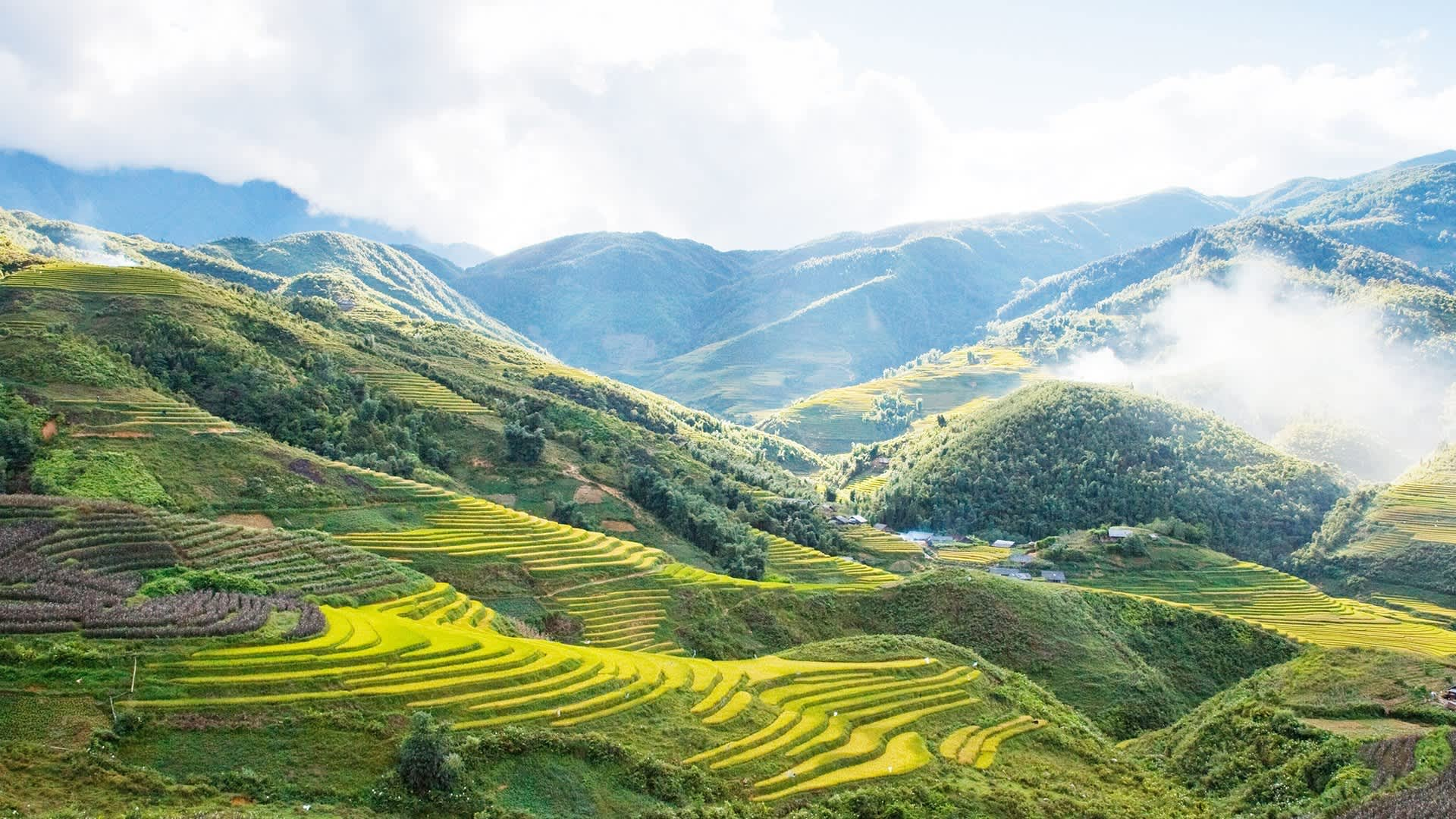
Sapa has high mountainous terrain, so the weather changes rapidly during the day. (Source: Collected)
One of the most important things when learning about what to prepare for a Sapa trip is to understand the weather characteristics of the Northwest high mountain region. Sapa is located at an altitude of about 1,500 m above sea level, so the temperature is always lower than many other areas in the North. Even in summer, daytime temperatures usually range from 18 to 25 degrees Celsius, while early mornings and late evenings can drop significantly lower.
What's special about Sapa is that the weather can change in just a few hours. The morning is clear and sunny, but by noon, there may be fog or light rain. In the late afternoon, it quickly turns into the characteristic chilly air of the high mountains. Therefore, many first-time visitors to Sapa are often surprised when they wear quite comfortable clothing during the day but need a thicker jacket in the evening.
1.2. Many attractions are located in high mountainous areas and require a lot of movement
Unlike resort destinations concentrated around the central area, famous places in Sapa are often scattered among mountains and require a lot of travel. From the town center to Cat Cat village, Muong Hoa valley, or O Quy Ho pass, you have to go through steep mountain passes characteristic of the Northwest highlands.
Especially, the journey to explore Fansipan often lasts almost the entire day with many continuous travel stages from the Muong Hoa mountain climbing train, cable car, to the stairs leading to the summit. Therefore, preparing good physical fitness and suitable footwear is very important.
2. What to prepare for Sapa regarding prominent attractions
2.1. Fansipan Peak
The majestic Fansipan mountain peak is an unmissable destination when visiting Sapa. The exploration journey begins with a trip on the Muong Hoa mountain climbing train, taking you through lush green valleys and winding terraced fields, opening up a majestic yet poetic landscape of the Northwest mountains.
Next, the modern 3-wire Fansipan cable car, 6,292.5 m long, will take you to conquer the roof of Indochina, 3,143 meters high. As the cabin slowly leaves the station, the scenery of the valley, terraced fields, and villages below comes into view, with white clouds drifting by, creating a feeling of floating in the sky.
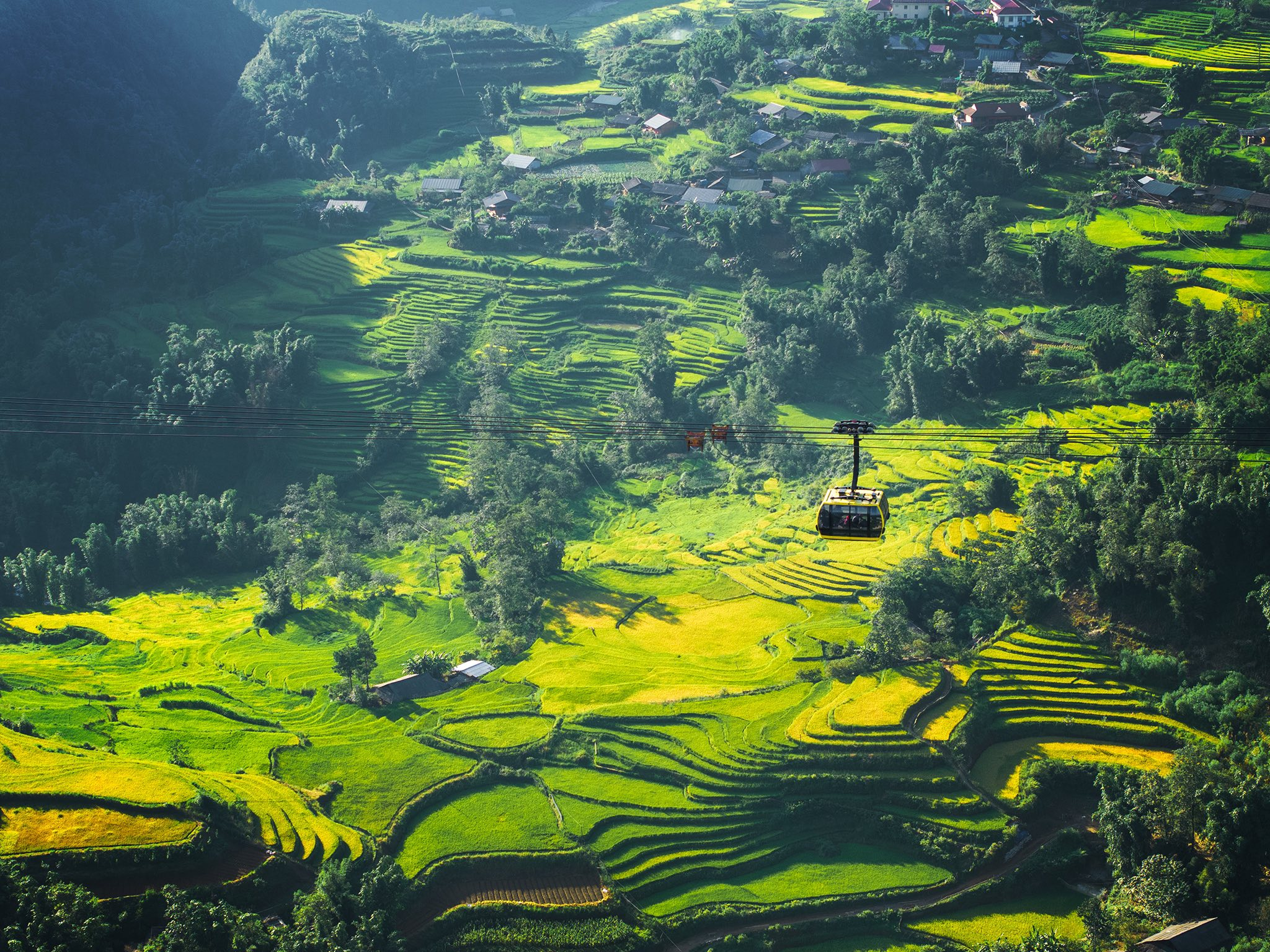
Panorama of the Hoang Lien Son mountain range seen from the Fansipan cable car cabin. (Source: Collected)
Besides the journey to conquer the summit, the resort also boasts many outstanding attractions spread across the Hoang Lien Son mountain range. The large bronze Great Buddha statue of Amitabha stands out against the blue sky, bringing a sense of great serenity. Bich Van Zen Monastery with its ancient architecture nestled amidst the clouds is a place chosen by many tourists to stop, admire the scenery, and enjoy the peaceful atmosphere characteristic of the high mountain region.
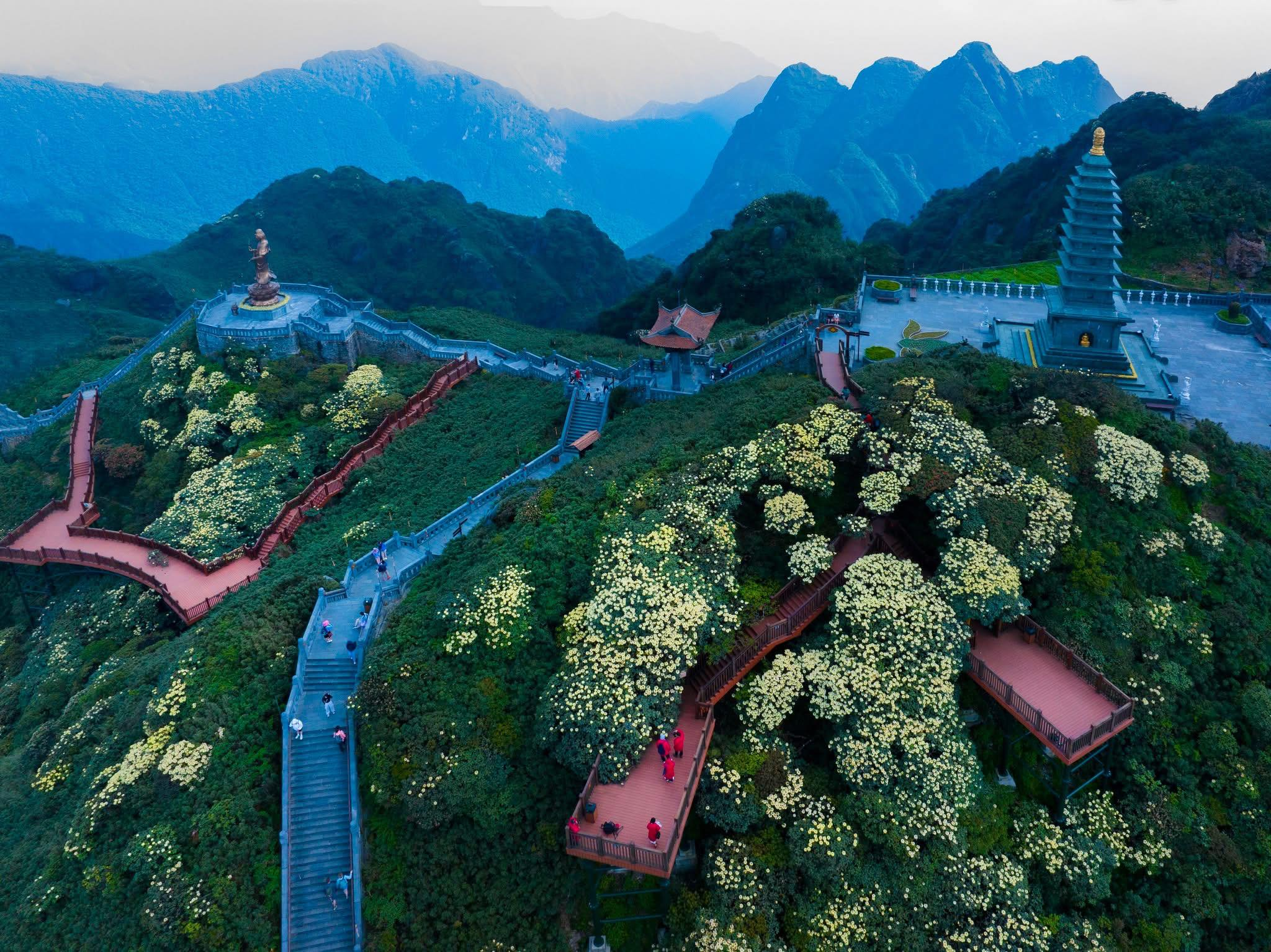
Majestic spiritual structures at Sun World Fansipan Legend. (Source: Collected)
Tourists who love highland cultural experiences can visit Ban May, located near the rose valley. Ban May was built to recreate the life of the people of the Northwest highlands. The space here features traditional wooden houses, hearths, brocade weaving craft, and many cultural activities characteristic of ethnic groups in the mountains such as: Hmong, Tay, Giay, Xa Pho, and Red Dao.
2.2. Ban Cat Cat
Ban Cat Cat is located about 2 km from the center of Sa Pa and is one of the most famous villages in the Northwest region. The place impresses with its peaceful scenery with traditional wooden houses nestled on the mountainside, winding stone-paved paths, and the sound of streams murmuring in the valley.
The space in Cat Cat bears the strong cultural imprint of the Hmong people, with many traditional activities still preserved to this day. Tourists can see people weaving brocade, crafting silver by hand, or performing traditional musical instruments within the village grounds.
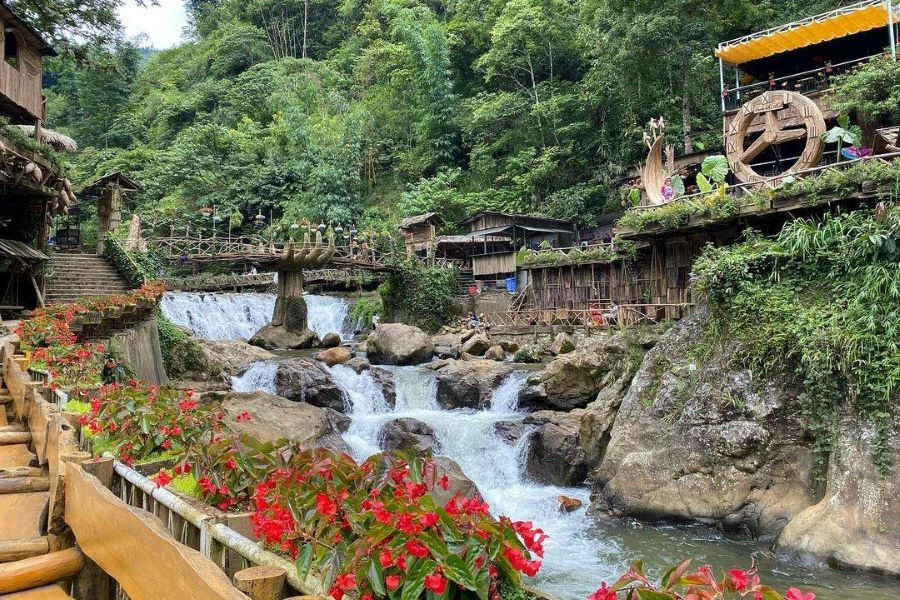
Cat Cat Village is one of the most famous tourist villages in Sapa. (Source: Collected)
2.3. Ta Van Village
Ta Van is a destination loved by many tourists for its peaceful beauty located in the middle of Muong Hoa valley. Unlike the bustling atmosphere in the central Sapa area, this place has a slow pace of life with terraced fields stretching to the foot of the mountains.
The road leading into the village winds around lush green hills, passing small suspension bridges and streams flowing through the valley. Along the way are simple wooden houses of the Red Dao, Giay, and H'mong people, hidden among the mountains and forests, creating a very characteristic landscape of the Northwest highlands.
2.4. Muong Hoa Valley
Muong Hoa is considered one of the most beautiful valleys in Sapa with its famous system of terraced fields stretching along the mountainsides. The scenery here changes distinctly with each season of the year and always possesses the unique beauty of the Northwest mountains.
In the green rice season, the entire valley is covered in an emerald green color stretching from the foot of the mountains to the distant hills on the horizon. When it transitions to the ripe rice season, Muong Hoa valley turns into a brilliant golden color, creating one of Sapa's most famous landscapes.
Besides the terraced fields, this area is also famous for the Muong Hoa stream flowing through the villages and ancient stone fields scattered amidst the fields. The stones with many mysterious characters and patterns that have existed for hundreds of years make this place a destination that possesses both natural beauty and many special cultural values.
2.5. O Quy Ho Pass
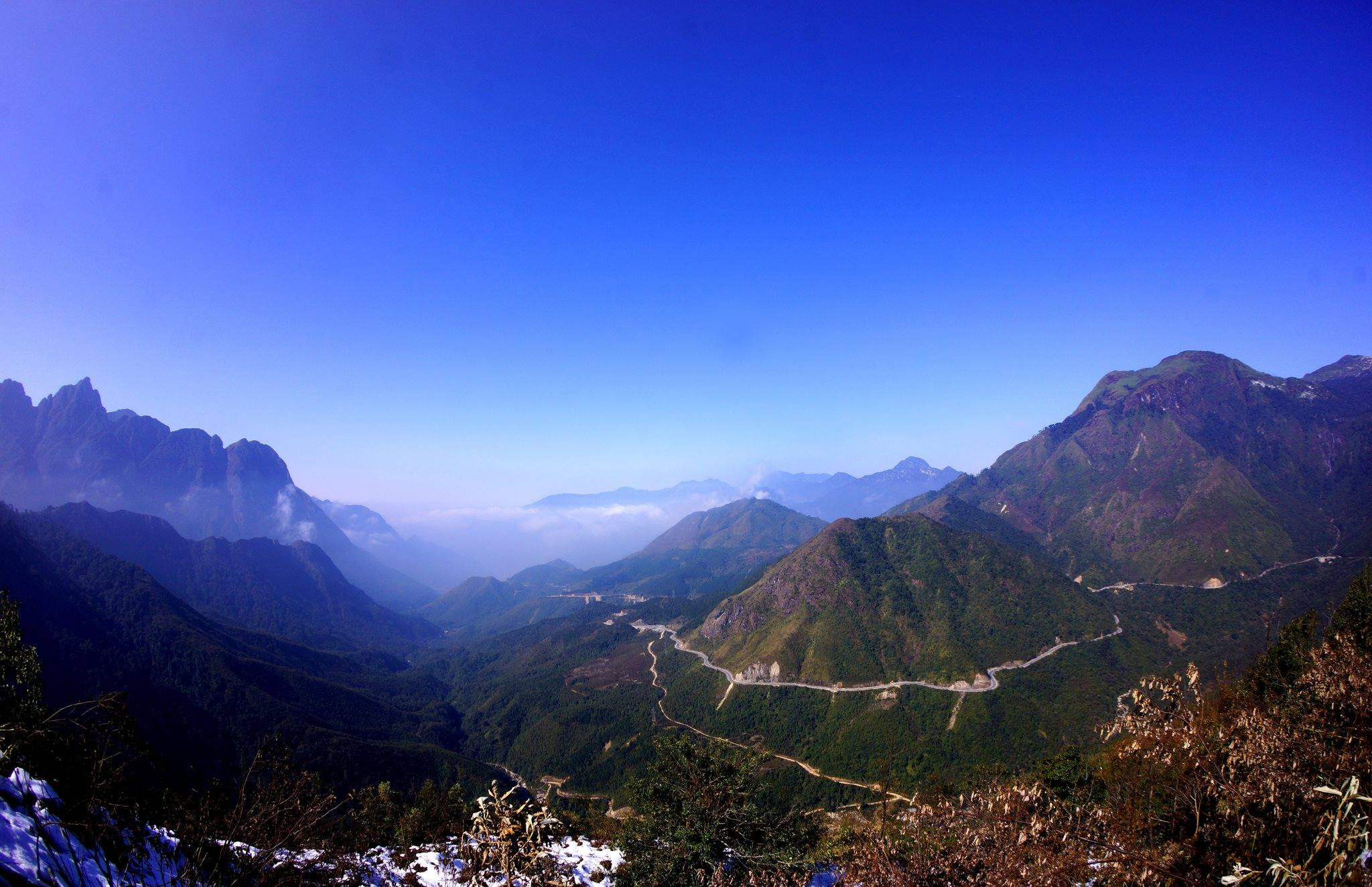
Majestic scenery of O Quy Ho Pass. (Source: Collected)
O Quy Ho Pass is one of the four most famous mountain passes in the northern mountains and also a route with the most majestic beauty in Sapa. The pass is located at a high altitude with many winding turns hugging the slopes of the Hoang Lien Son mountain range, opening up a vast view towards successive mountain ranges stretching to the horizon.
The scenery at O Quy Ho changes continuously with the weather and time of day. Sometimes the entire pass is submerged in a white sea of clouds, and sometimes it appears clearly under the golden sunlight covering the mountain slopes. This is also a destination chosen by many tourists for cloud hunting and sunset viewing.
2.6. Sapa Stone Church
Located right in the center of Sapa town, Sapa Stone Church is an architectural work bearing the strong imprint of French colonial style, built from the early 20th century. With its prominent location in the central square, it has long become a familiar symbol of Sapa.
The structure is built mainly of stone in a classic Gothic style, nổi bật bởi tháp chuông cao và những ô cửa kính mang vẻ đẹp rất đặc trưng của kiến trúc châu Âu xưa. Trải qua nhiều năm, nhà thờ đá vẫn giữ được nét cổ kính giữa không gian núi rừng Tây Bắc.
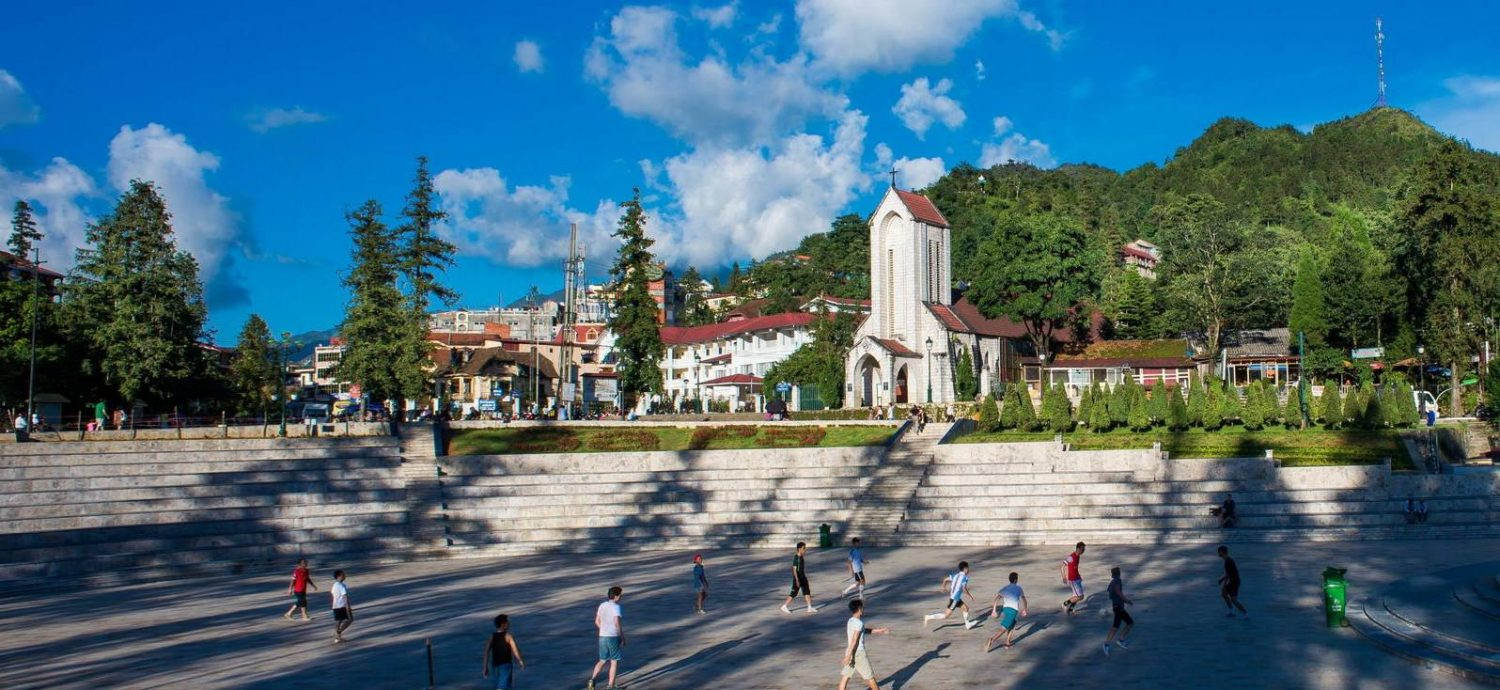
Prominent Gothic architecture of the stone church in Sa Pa. (Source: Collected)
3. What to prepare for clothing and personal items when going to Sa Pa
Light jackets and warm clothing are always the top priority items when visiting Sa Pa. Even when traveling in the summer, the temperature in the evening and early morning is still quite cold, so bringing a jacket will help the body adapt better to the high mountain weather.
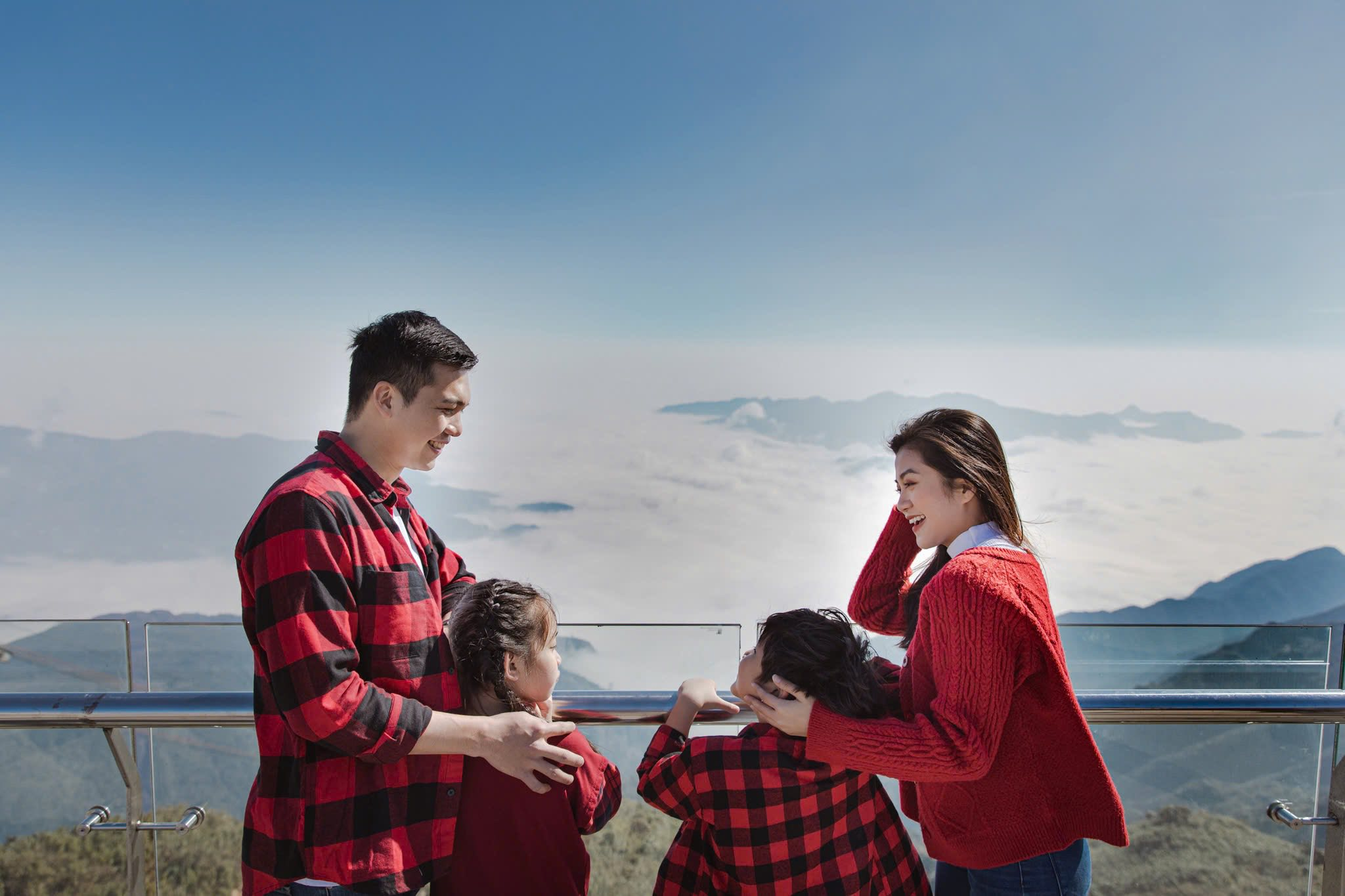
Tourists should bring a jacket when exploring Sa Pa in the chilly weather. (Source: Collected)
Sneakers or non-slip shoes are also very important because most attractions in Sa Pa require a lot of walking. Shoes with good grip will help movement on rocky paths or mountainous slopes safer.
If you love taking photos, tourists should also prepare a power bank and storage devices because the scenery in Sa Pa changes constantly throughout the day. From the sea of clouds on Fansipan to the terraced fields in Muong Hoa, almost every corner here can easily create impressive photos.
3. Tips for a more convenient Sa Pa exploration
3.1. Check the weather before departure
One of the most important tips when researching what to prepare for Sa Pa is to check the weather forecast before the trip. This helps tourists choose the right time to hunt for clouds, admire terraced fields, or experience Fansipan more conveniently.
Clear days often offer beautiful views from the cable car cabin and the Fansipan peak area. Meanwhile, if there is heavy rain or thick fog, travel and sightseeing may be significantly affected.
3.2. Prioritize booking Fansipan cable car tickets early
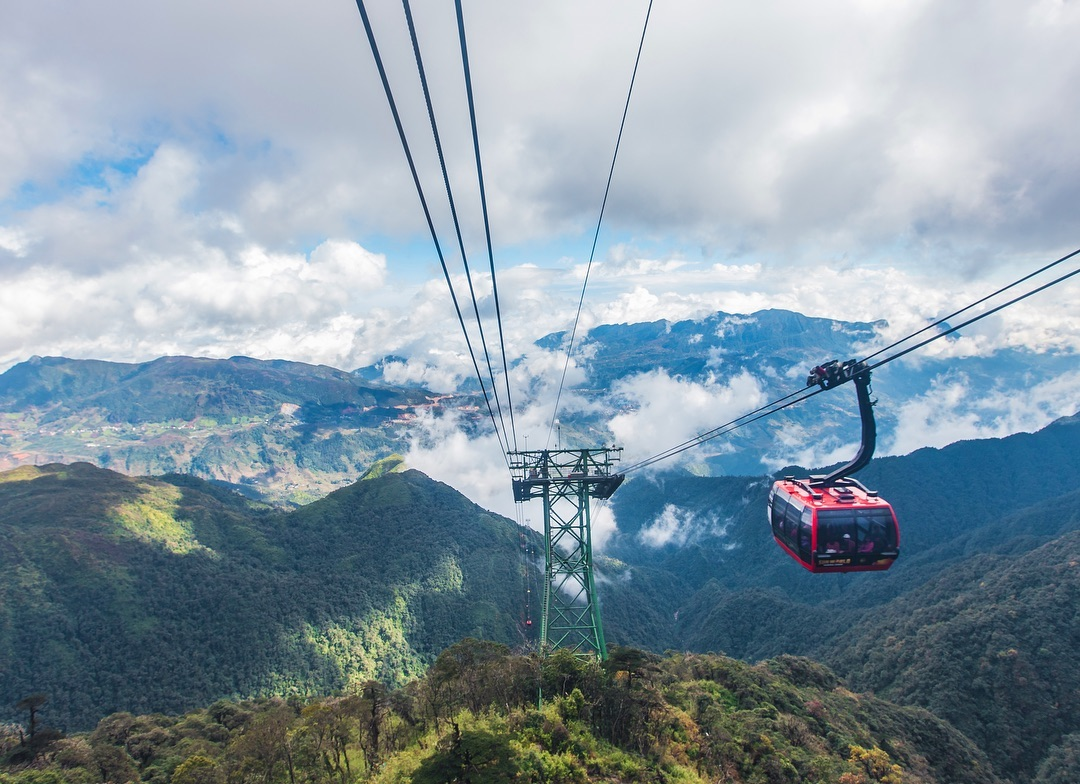
Tourists should book Fansipan cable car tickets early for the most complete experience. (Source: Collected)
Fansipan is always one of the most attractive destinations in Sa Pa, so the number of tourists often increases on weekends and during the summer tourist season. Booking tickets early will help save queuing time and make your itinerary more proactive. Morning is the most beautiful time to experience the cable car because the sea of clouds often appears more clearly. As the cabin gradually passes through the cloud layers and reveals the majestic scenery of the Hoang Lien Son mountains, many tourists can hardly take their eyes off the view below.
3.3. Arrange a reasonable itinerary between sightseeing and relaxation
Sa Pa has quite a few attractions spread out, so constant movement can easily make you tired if the itinerary is too packed. Therefore, instead of trying to visit many places in a short time, tourists should combine exploration and relaxation to fully enjoy the beauty of the Tay Bac mountainous region.
Mornings are suitable for cloud hunting and outdoor sightseeing. Afternoons can be spent enjoying coffee while admiring the valley or strolling around the town center. Evenings are the ideal time to enjoy highland specialties amidst the characteristic cool air of Sa Pa.
Not only does Sa Pa boast a cool climate and impressive mountain scenery, but it also offers many memorable experiences, from cloud hunting, exploring villages, to conquering Fansipan amidst a dreamy sea of clouds. However, for a smooth trip and to fully enjoy the beauty of the Northwest highlands, careful preparation of luggage, clothing, and itinerary is very important. If you are wondering what to prepare for a trip to Sa Pa, save the checklist above to make your Sa Pa exploration journey easier, more comfortable, and filled with memorable experiences.