















1. Overview of Sapa's Flood Season
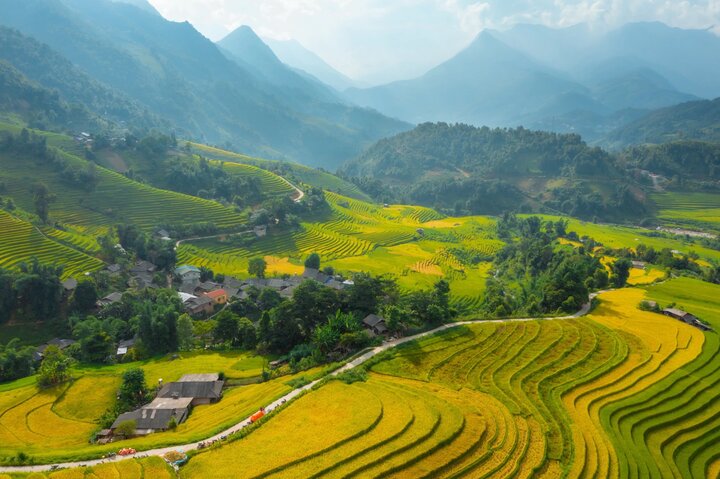
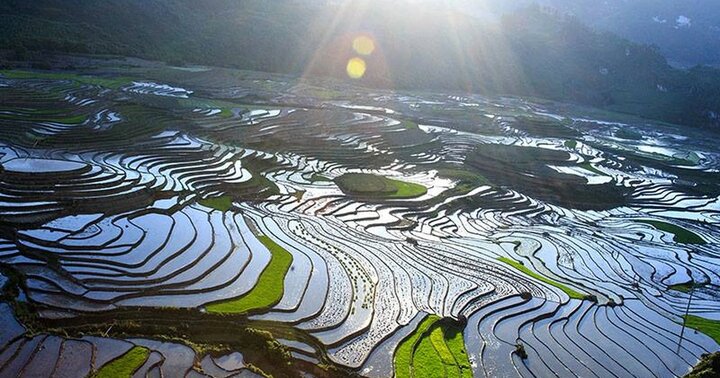
The flood season is one of the most beautiful and distinctive seasons of the year in Sapa, attracting a large number of tourists, photographers, and nature lovers to explore. This is the time when the people of the highlands begin to channel water from streams, dams, and mountain slopes down to the terraced fields to prepare for the new rice crop. Viewed from above, thousands of terraced fields layered and winding along the mountainside are filled with water, creating a scene that is both majestic and poetic, becoming a unique characteristic of Sapa tourism every early summer.
Typically, the flood season in Sapa takes place from late April to the end of June annually, with May considered the best time to admire this scenery. When the first rains of the season appear, water from the Hoang Lien Son mountain range begins to flow into the fields, transforming the terraced fields into "giant mirrors" reflecting the sky, white clouds, and the mountains of the Northwest. Under the sunlight, the shimmering water surface creates constantly changing colors throughout the day, offering a beauty that no other season of the year can match.
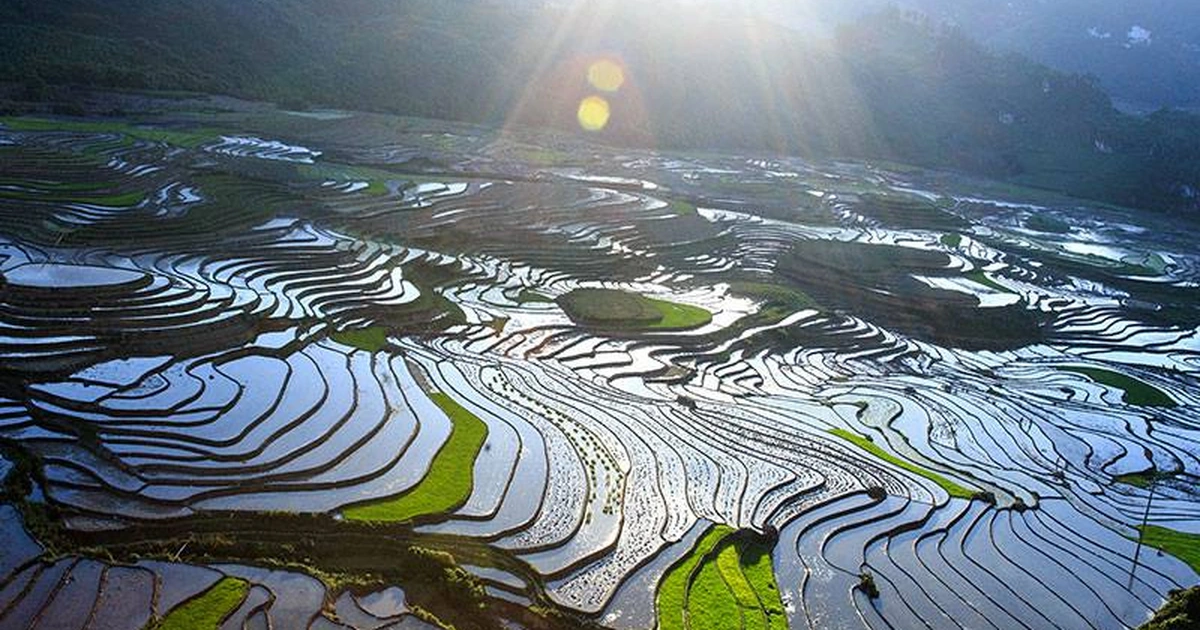
Picturesque Sapa scenery during the water pouring season
Unlike the vibrant golden ripe rice season in autumn, the water pouring season offers a more pristine and peaceful beauty. This is the time when tourists can witness local people busy plowing, channeling water, and planting the first rice crops on the terraced fields. These traditional production activities combined with the majestic natural scenery create a vivid picture of highland life, helping tourists better understand the long-standing farming culture of the ethnic communities in Sapa.
Not only attractive for its scenery, the water pouring season is also a time when Sapa's weather is relatively pleasant. The temperature usually ranges from about 15–25°C, not too cold like winter and not too hot like many lowland areas. The fresh air, the thin mist in the early morning, and the green of the Hoang Lien Son mountains make the journey to explore Sapa more relaxing and memorable.
Today, the water pouring season has become one of Sapa's famous tourist "specialties" alongside cloud hunting season, flower season, or ripe rice season. This is not only an ideal time for sightseeing and photography but also an opportunity for tourists to experience the original beauty of the Northwest mountains and understand the working rhythm of the local people. Therefore, whenever asked about what month is Sapa's water pouring season, many people wish to visit at the right time to witness firsthand one of the most impressive scenes of Vietnam's terraced fields.
2. What month is the best for Sapa's water pouring season?
Although the water pouring season in Sapa usually lasts from late April to the end of June, each phase has its own beauty. Depending on the weather each year and the local people's farming progress, the scenery of the terraced fields will change significantly. Therefore, if you are researching what month is the best for Sapa's water pouring season, tourists should choose a time that suits their desired experience and scenery.
2.1. Late April – Early May: The first streams of water cover the terraced fields
This is when the water pouring season just begins. After the early summer rains, people in the highland villages channel water from streams and mountainsides down to the fields to prepare for the new planting season. The terraced fields, which were dry after the previous harvest, are gradually filled with water, creating a very characteristic scene of the Northwest mountains.
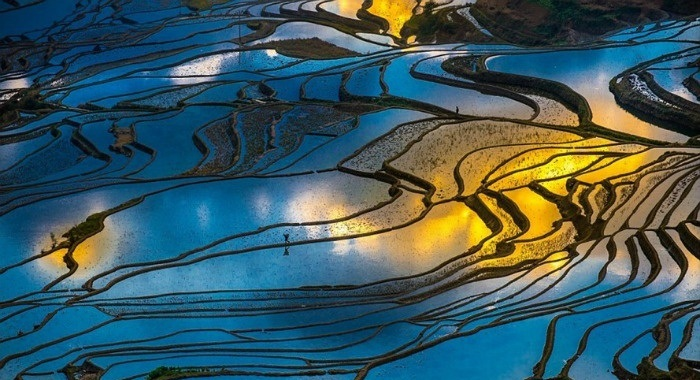
Scenery of the water pouring season in Sa Pa during April
During this period, the landscape possesses pristine and peaceful beauty. Patches of water interspersed with the brown soil of newly plowed terraced fields create unique undulating lines on the mountainside. This is also a suitable time for photography enthusiasts as they can capture the authentic labor of local people in the new harvest season.
Furthermore, the number of tourists is usually not too crowded, so visitors can comfortably visit and explore famous terraced field viewpoints without having to jostle like during other peak seasons of the year.
2.2. Mid-May – Early June: The most beautiful time of the water pouring season
This is considered the most ideal period to admire the water pouring season in Sa Pa. At this time, most of the terraced fields are filled with water, creating giant "natural mirrors" that reflect the sky, white clouds, and the majestic Hoang Lien Son mountains.
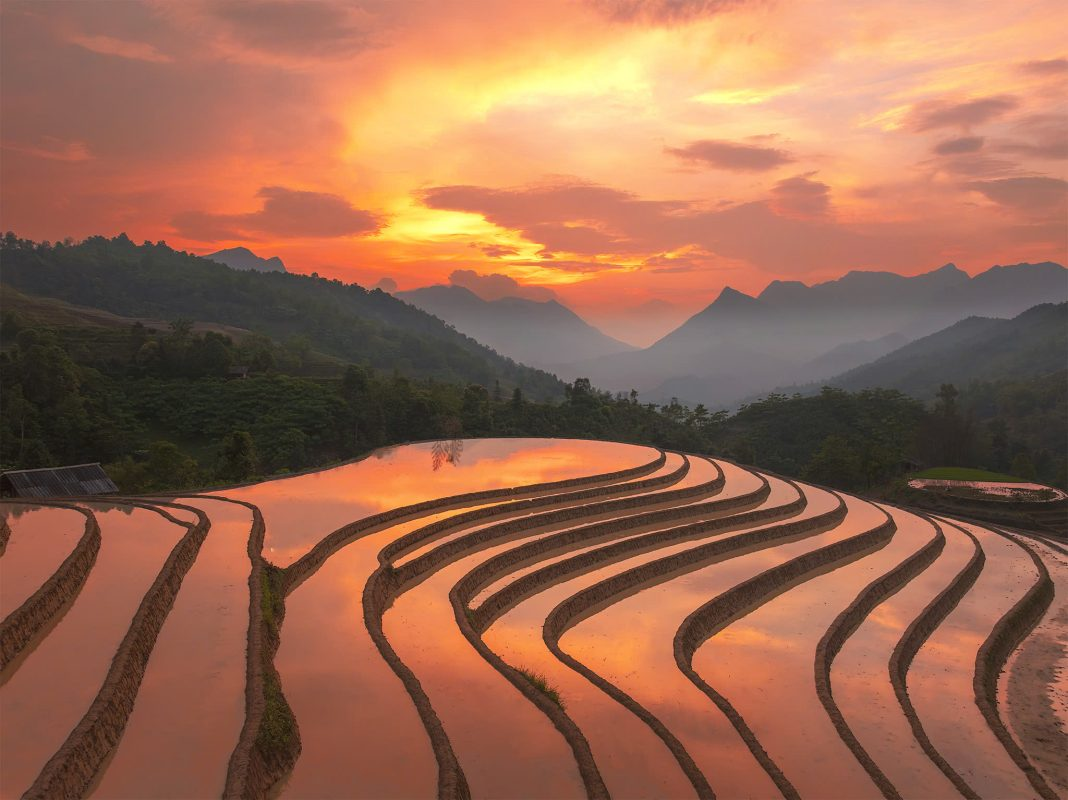
Scenery of terraced fields under a beautiful sunset
Under the summer sun, the sparkling water creates beautiful light effects. In the early morning, mist lightly covers the valleys, making the scenery mystical. As the sun rises higher, the fields reflect the green of the sky and mountains, creating a spectacular scene sought after by many photographers. In the late afternoon, the last golden sunlight of the day bathes the entire valley, bringing special moments rarely seen at other times of the year.
This is also the time when people begin to transplant rice in many terraced field areas. The image of diligent farmers amidst flooded fields creates vivid touches for the highland natural landscape.
2.3. Late June: Terraced fields gradually turn green
After completing rice transplanting, many terraced field areas in Sa Pa begin to show the first patches of young green. Although the water-flooding season has not completely ended, the landscape at this time has transformed from light-reflecting fields to the fresh green color of new rice.
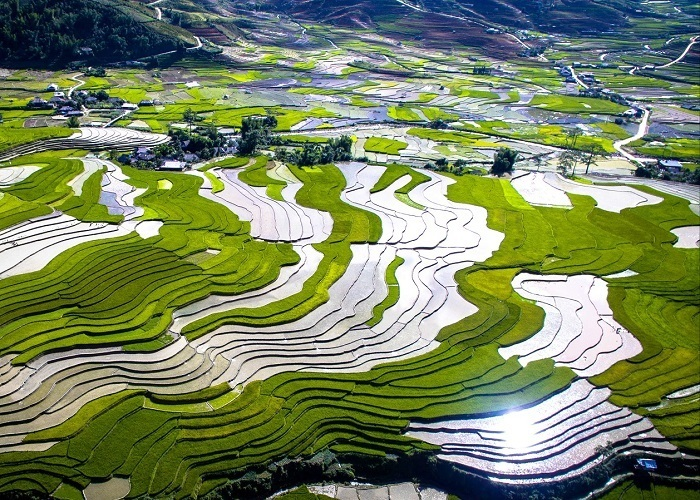
Sa Pa in the late water-pouring season turns green
This is the right time for tourists who want to admire the intersection of two seasons – the water-pouring season and the rice-growing season. The fields, having both water and young rice rows stretching out, create a soft and vibrant beauty. The entire Muong Hoa valley along with highland villages like Lao Chai, Ta Van, or Hau Thao are covered in a refreshing green, bringing a sense of relaxation and comfort.
Although there are no longer vast water mirrors like in mid-May, late June is still a beautiful time to explore Sa Pa, especially for tourists who love lush green nature and want to feel the working rhythm of the highland people during the new rice season.
3. The most beautiful spots to admire the water-pouring season in Sa Pa
To fully appreciate the beauty of the water-pouring season, choosing the right scenic spots is very important. Around May to early June, many valleys and villages in Sa Pa take on a completely different appearance as the terraced fields are filled with water, reflecting the sky and the Northwest mountains. If you are researching when is Sa Pa's water-pouring season and want to capture the best shots, here are the must-visit destinations.
3.1. Muong Hoa Valley
When talking about Sa Pa's terraced fields, Muong Hoa valley is always the first name mentioned. This is the area with the largest and most famous terraced fields in the Northwest region, stretching across many communes and villages at the foot of the Hoang Lien Son mountain range.
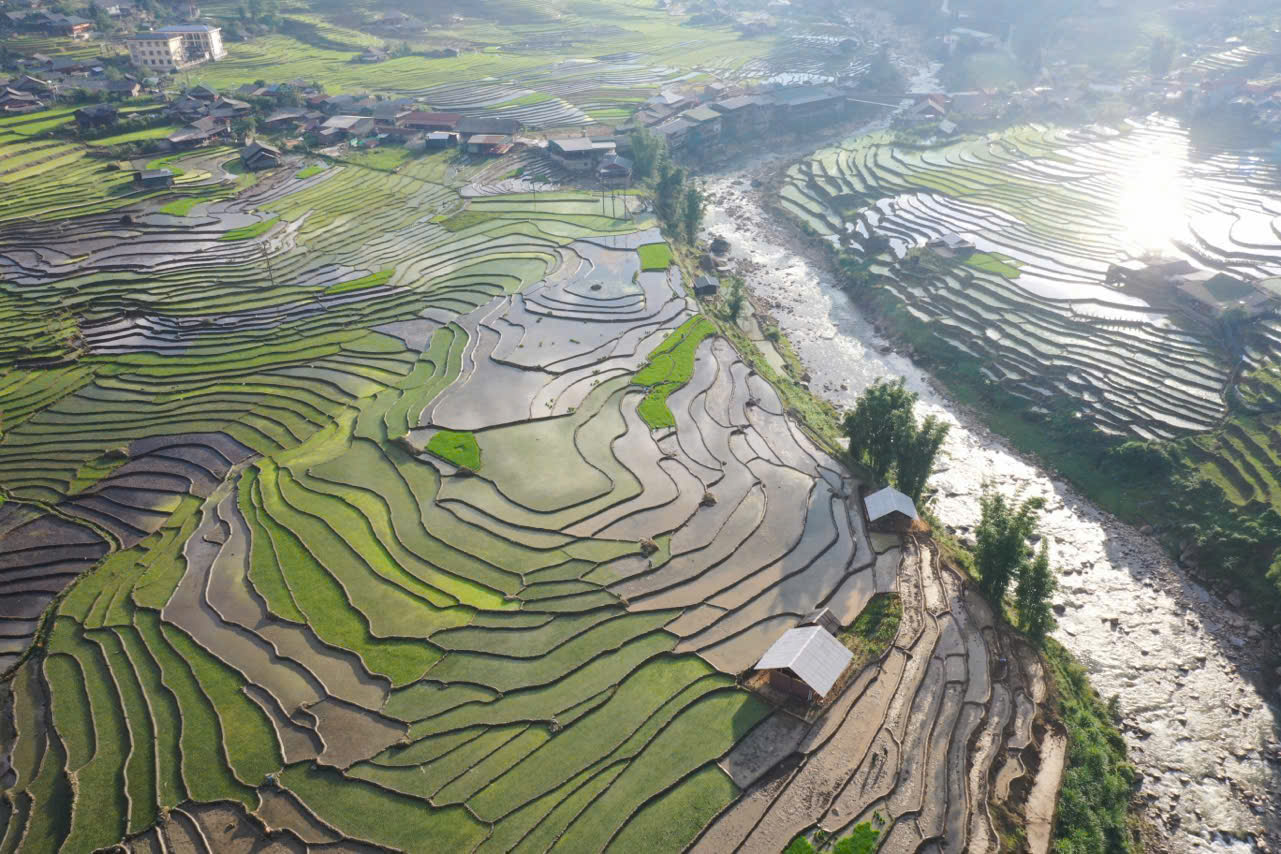
Terraced rice fields in Muong Hoa Valley during the water pouring season
During the water pouring season, the entire valley seems to be adorned with a new coat. Thousands of terraced fields, one after another along the mountainside, are filled with water, creating soft curves and beautiful light reflections. Seen from above, the scenery appears like a giant painting created by the hands of human labor and nature.
This is also an ideal place for tourists to admire the sunrise or sunset. When the sunlight shines down on the fields, the entire valley sparkles like giant mirrors amidst the mountains and forests. This beauty has helped Muong Hoa become the most famous spot for capturing photos of the water pouring season in Sa Pa.
3.2. Lao Chai Village
Located about 7 km from Sa Pa town center, Lao Chai is one of the water pouring season viewing spots loved by many tourists. This H'Mong village is situated in the Muong Hoa Valley, boasting terraced rice fields stretching across gentle mountain slopes.
During the water pouring season, the scenery in Lao Chai becomes particularly captivating with fields reflecting the blue sky and leisurely drifting white clouds above. Interspersed among the fields are the traditional houses of the ethnic people, creating a highland picture that is both peaceful and rich in cultural identity.
Besides sightseeing, visitors to Lao Chai also have the opportunity to observe the daily lives of the local people during the new crop season. The image of farmers plowing fields, channeling water, and transplanting rice amidst the terraced fields offers an authentic experience of life in the Northwest highlands.
3.3. Ta Van Village
Ta Van is a famous destination for tourists who love trekking, exploring local culture, and photographing nature. Located deep within the Muong Hoa Valley, this village boasts vast terraced rice fields along with a peaceful natural landscape, separate from the hustle and bustle of the town center.
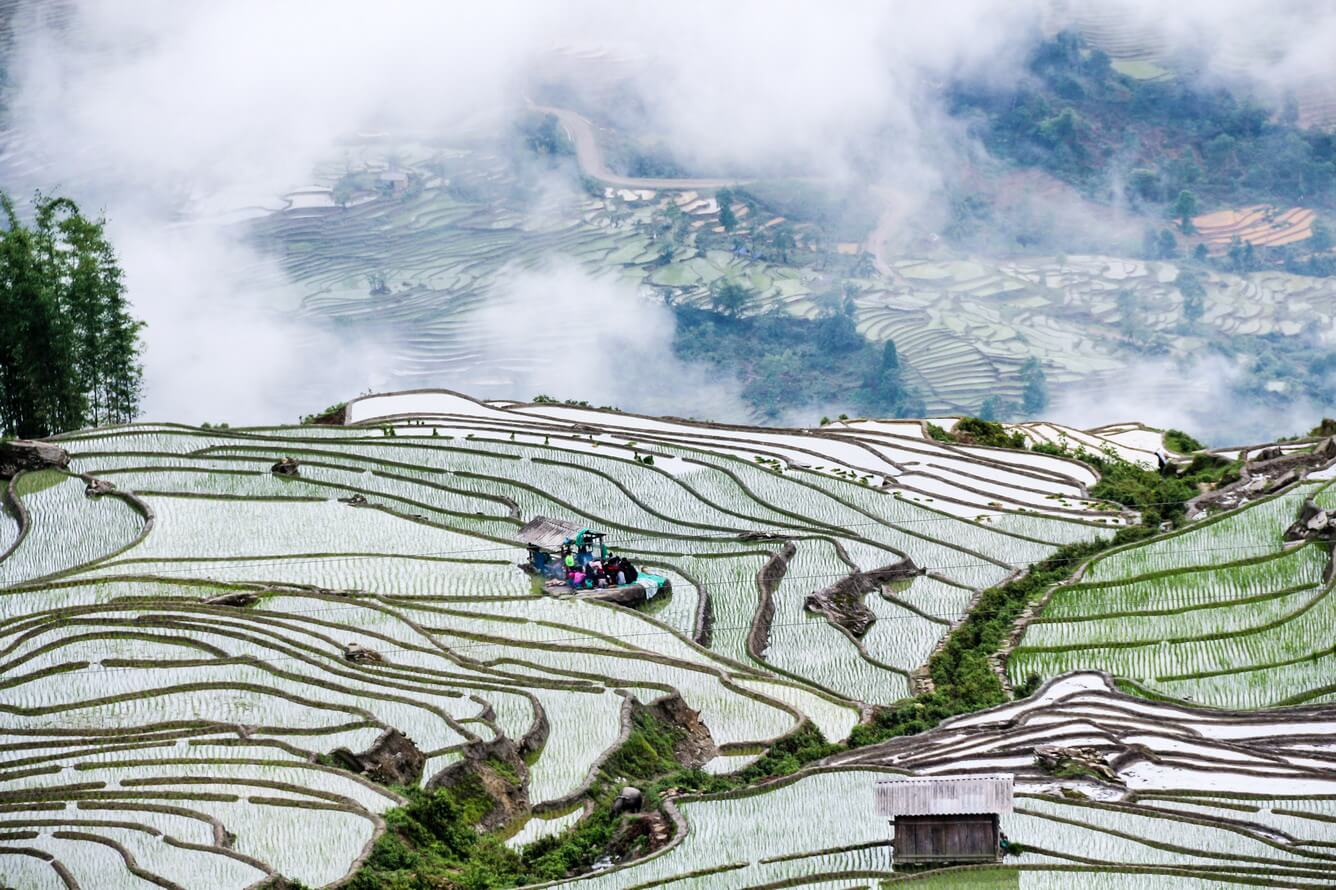
Ta Van in the season of flooded rice terraces is picturesque
During the season of flooded rice terraces, the paddies in Ta Van reflect the sky and mountains, creating colors that change continuously with the light of the day. In the early morning, a thin mist covers the valley, creating a mystical scene. By noon and afternoon, sunlight shines on the water surface, making the entire area vibrant and full of life.
Ta Van is especially suitable for tourists who want to combine sightseeing, trekking to explore villages, and experiencing the culture of the Giay and Red Dao ethnic groups. It is also one of the locations chosen by many photographers to capture the characteristic beauty of the Sa Pa flooded rice terrace season.
3.4. Hau Thao Village
Compared to Lao Chai or Ta Van, Hau Thao still retains a more pristine and tranquil character. The village is located at a high position, offering a wide panoramic view of the entire Muong Hoa valley and the rolling mountains in the distance.
From Hau Thao, tourists can easily observe the endless layers of terraced fields. During the season of flooded rice terraces, the water surfaces sparkle under the sun, creating an incredibly impressive visual effect. This is one of the ideal viewpoints for those who want to admire the full panorama of the flooded rice terrace season rather than just observing it up close.
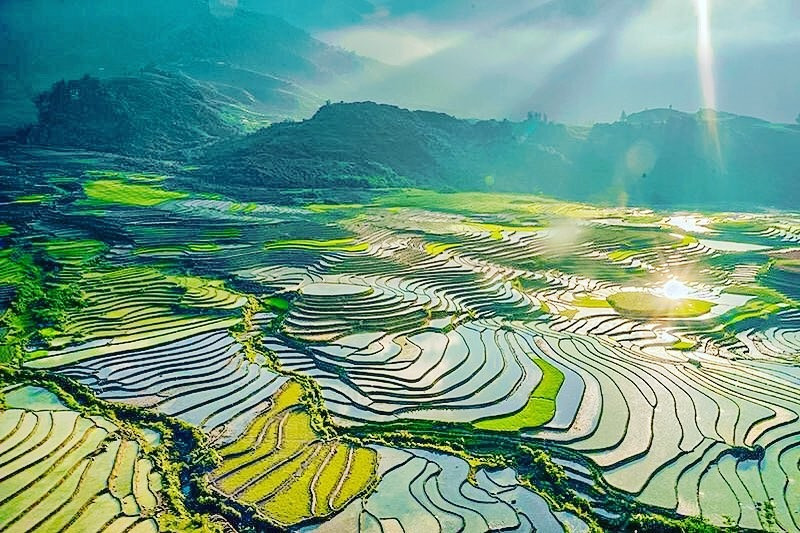
Hau Thao village during the water pouring season
Additionally, Hau Thao is also a great place for cloud hunting in the early morning. The combination of sea of clouds, flooded terraced fields, and highland houses creates a landscape with a strong Northwestern character that few places can match.
3.5. O Quy Ho Pass
For travelers who want to admire the beauty of Sa Pa from a broader perspective, O Quy Ho Pass is a must-visit destination. As one of the "four great mountain passes" of Vietnam, O Quy Ho offers panoramic views of the Hoang Lien Son mountain range and many terraced field areas below.
On clear days, from the stops along the pass, visitors can gaze at the terraced fields stretching between the majestic mountains. The water pouring season makes the scenery stand out more as the fields reflect the light, creating sparkling bands of color amidst the green of the mountains and forests.
This is also an ideal location to combine sightseeing, cloud hunting, and admiring the majestic natural beauty of Sa Pa in the summer. For photography enthusiasts, O Quy Ho Pass offers many impressive angles to capture the beauty of the water pouring season from above.
If spring brings vibrant flowers and autumn is famous for its golden ripe rice fields, then the water pouring season is when Sa Pa possesses a unique beauty unlike any other time of the year. The sparkling terraced fields under the sunlight, the water streams winding along the mountainside, and the working rhythm of the highland people create a natural picture that is both majestic and poetic.
Regarding the question when is the water pouring season in Sa Pa, the period from May to June is considered the most ideal for exploration and photography. This is when the terraced fields reach their most impressive beauty, attracting a large number of tourists to famous spots like Muong Hoa valley, Lao Chai, Ta Van, or Hau Thao.
If you are planning a trip to Sa Pa in the summer, don't miss the opportunity to witness the water pouring season – one of the unique natural "specialties" of the Northwestern mountains. This will surely be a memorable experience for those who love terraced landscapes and want to explore the pristine beauty of Sa Pa during the early days of the new crop season.