















1. Overview of Can Cau Market
1.1. Geographical location and cultural significance
Located in Can Cau, Si Ma Cai, Lao Cai, Can Cau Market is situated right on Highway 153 - the only crucial transportation route connecting Bac Ha town with the Si Ma Cai border. The market is about 20 km from Bac Ha town towards the Vietnamese and Chinese border, only convening on Saturday mornings, usually starting early and lasting until past noon, and also opening on holidays and Tet occasions throughout the year.
This place is considered one of the largest buffalo markets in the Northwest, serving as a venue for diverse trading activities among the H'Mong Hoa, Dao, and Giay ethnic communities. Beyond its role as a trading hub, Can Cau Market also serves as a space that marks distinctive cultural living aspects, fostering community bonds and preserving the traditional values of the highlands through many periods.
1.2. Why Can Cau Market is loved by tourists
Unlike many familiar markets, Can Cau Market impresses tourists with the vibrant colors of the traditional costumes of the H'Mong, Dao, and Giay people. On Saturday mornings, the cheerful chatter blends with the sounds of buying and selling, creating a uniquely lively atmosphere.
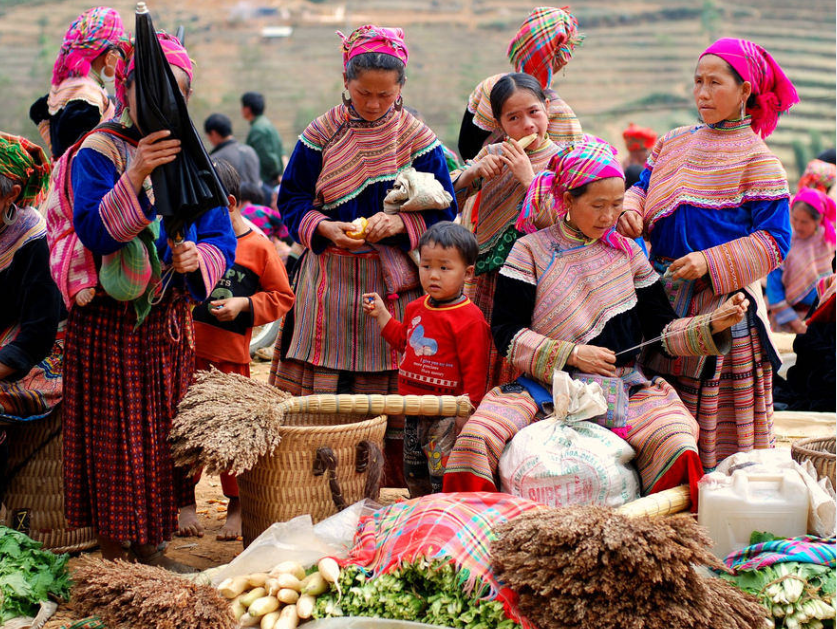
Can Cau Market impresses visitors with the vibrant colors of traditional costumes. (Source: Collected)
Visitors not only enjoy and choose to buy many specialties of the mountainous region such as fresh agricultural products, forest medicinal herbs, local food, brocade items, or meticulously crafted handicrafts but also have the opportunity to observe and feel the simple, rustic pace of life of the local people. Can Cau Market is a vibrant cultural space, where every conversation and interaction clearly reflects the local culture and customs.
2. How to get to Can Cau Market
2.1. Starting from Hanoi
The most convenient way to get to Can Cau Market when starting from Hanoi is to go to Bac Ha town by car, bus, or personal vehicle. The distance connecting Hanoi and Bac Ha is about 350 km, with an average travel time ranging from 6 to 7 hours.
From Bac Ha, visitors continue driving along Route 153 for about 20 km to reach the destination. This route winds through mountains and forests, with scenery of terraced fields and ethnic villages on both sides, creating an impressive and memorable journey.
2.2. Starting from Lao Cai
If starting from Lao Cai city, visitors follow National Highway 4D through Bao Thang district, then turn onto Road 153 towards Bac Ha, and continue straight towards Si Ma Cai. Can Cau Market is located right on the main road, making it very convenient for travel.
The total distance from Lao Cai to Can Cau is about 100 km, with an average travel time of 2.5 to 3 hours depending on road and weather conditions.
2.3. Starting from other provinces/cities
For visitors from distant provinces/cities, they can choose to travel by plane or bus to Hanoi, or wait for flights to Lao Cai airport when available. Then, continue the journey by public transport or rent a private car to Bac Ha, and then proceed to Can Cau Market following the suggested routes.
Many tourists often arrange itineraries combining visits to Sapa and Can Cau Market in the same trip to save time and travel costs.
3. What does Can Cau Market sell?
3.1. The large buffalo market in the Northwest - the "brand" of Can Cau Market
When mentioning what Can Cau Market sells, one cannot miss the large-scale buffalo market, a distinctive feature that makes the market famous throughout the Northwest. Each market session, hundreds of buffaloes and cows from highland districts such as Bac Ha, Si Ma Cai, Muong Khuong, or provinces like Ha Giang, Yen Bai are brought here for trading.
Here, traders and farmers come to buy and sell quality plowing buffaloes and meat buffaloes. Some sessions also feature interesting buffalo competitions, creating a traditional cultural feature that attracts many participants and visitors. The buffalo and cattle trading area at Can Cau Market is known as the "largest buffalo trading floor in the Northwest" due to its scale and professional organization.
3.2. Fresh agricultural products and local specialties
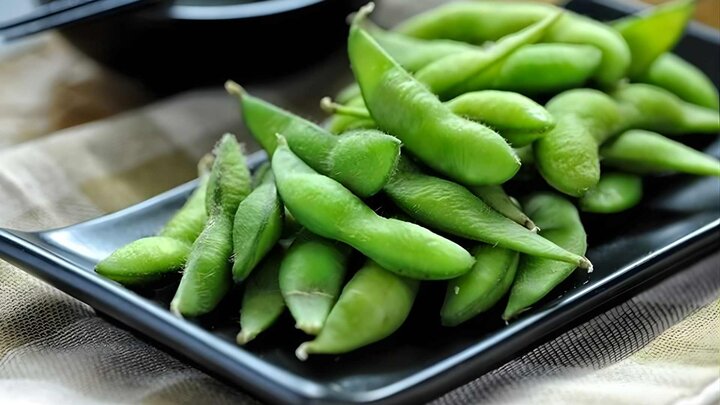
Besides being famous for its buffalo market, Can Cau Market sells many characteristic products of the Northwest mountains. The areas selling wild vegetables, tubers, and fruits such as bamboo shoots, shiitake mushrooms, wood ear mushrooms, corn, soybeans, and mountain rice display fresh products with the distinct flavor of the mountains. Visitors can also easily find special spices such as mac khen fruit, doi seeds, cardamom, wild honey, or ground cherries.
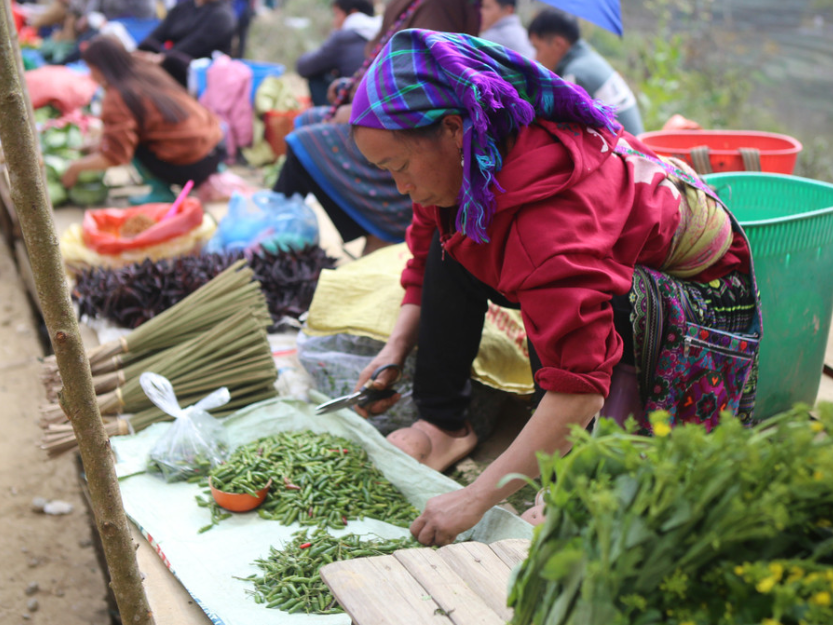
Can Cau Market sells many types of characteristic products from the Northwest mountains. (Source: Collected)
Besides, foods such as piglet carried on the shoulder, black chicken, and bầu duck, raised using traditional methods in the high mountains, are also very popular. These types of meat are usually firm, rich in flavor, and are essential ingredients for local specialty dishes that you can only buy at markets like Can Cau.
3.3. Brocade and traditional handicrafts
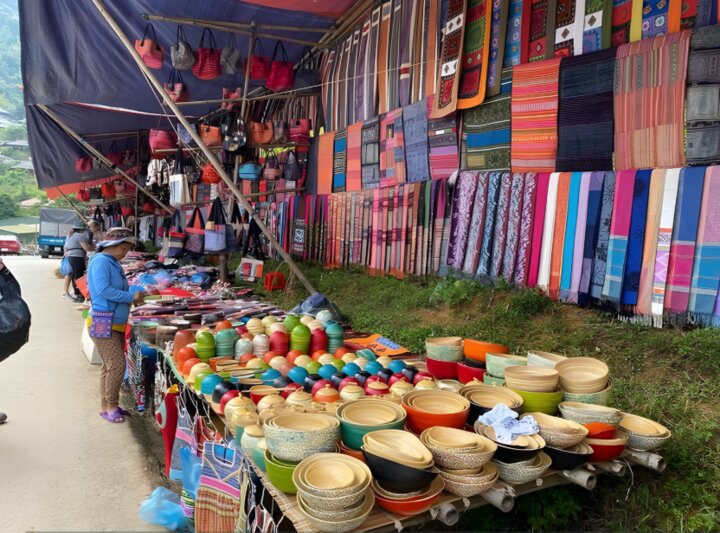
The brocade stalls at Can Cau Market are an ideal destination for those who love traditional hand-woven products. Various types of dresses, piêu scarves, embroidered bags, blankets, pillowcases, and hats are created by the skillful hands of H'Mong and Dao women. Each pattern and color on every product clearly reflects the ethnic culture and traditional stories.
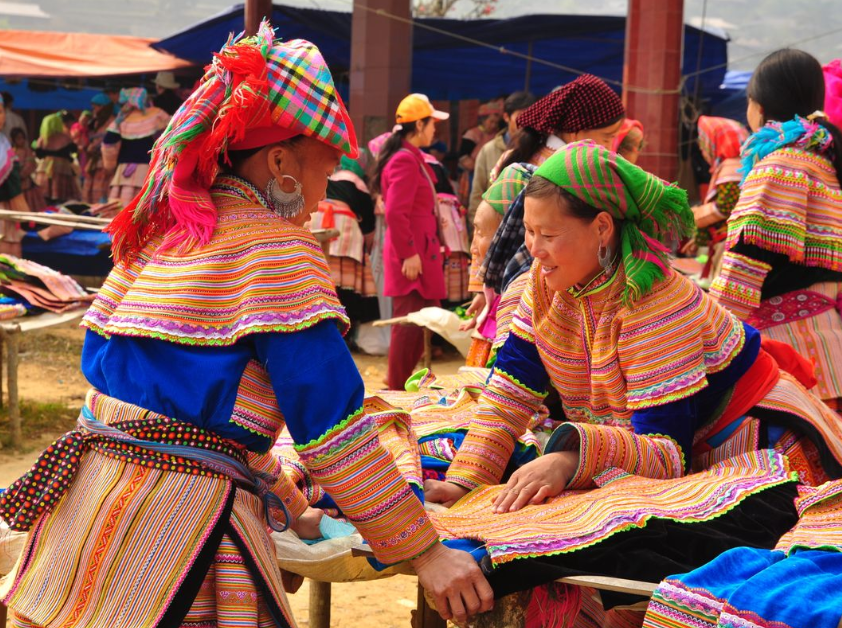
Brocade stalls at Can Cau market are an ideal destination. (Source: Collected)
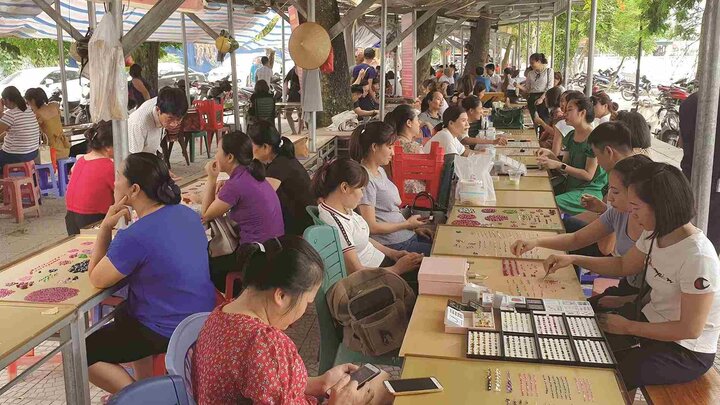
In addition, visitors can also choose silver items, handmade jewelry, woven bamboo baskets, or accessories made from natural materials. These products are suitable as souvenirs or for daily use, both preserving aesthetic value and expressing cultural significance.
3.4. Market's culinary area
The culinary area at Can Cau market always leaves an unforgettable impression on every visitor. The most special dish is Thang Co – a traditional hot pot made from buffalo, beef, and horse meat and offal combined with characteristic mountain spices. When enjoying Thang Co with Bac Ha corn wine or Can Cau rice wine, diners will feel the cozy atmosphere and strong local culture.
In addition, familiar dishes such as five-colored sticky rice, banh day, banh nep, banh ran, corn porridge, grilled corn, or local pho with black chicken or local pork are always appealing to everyone. Some specialties are also neatly packaged for visitors to easily take home as gifts for friends and relatives.
4. Unmissable experiences at Can Cau market
4.1. Traditional mountain-style trading methods
The most outstanding characteristic of Can Cau market is its traditional mountain-style trading approach. Many transactions here are completed with a firm handshake and a friendly smile, with rare arguments or haggling over prices.
This custom reflects mutual trust and the sincere nature of the highlanders. Visitors here will clearly feel the rustic, straightforward demeanor of the sellers through their words and actions throughout the shopping process.
4.2. Multi-ethnic cultural exchange
Can Cau market is not only a place for goods exchange but also an occasion for ethnic groups to interact, meet, and inquire about each other. Notably, it is also a space for young men and women from the villages to chat, make friends, and sing love duets, creating a lively and joyful atmosphere.

Many tourists feel a sense of closeness when they chat with the local people. (Source: Collected)
The image of young women wearing colorful brocade outfits, selling goods while chatting with tourists, is the unique beauty of this market. These natural interactions bring everyone a friendly, close feeling with the highland culture.
4.3. Check-in and explore highland life
Every small corner at chợ Cán Cấu holds its own stories worth exploring and keeping as memories. Whether it's the bustling buffalo market, the vibrant brocade stalls, or the steaming Thang Co stalls, they all become beautiful backdrops for photos full of Northwestern charm.
Tourists also have the opportunity to directly observe how locals prepare traditional dishes, listen to them talk about their lives, about farming and animal husbandry. This authentic experience is something rarely found elsewhere besides chợ Cán Cấu .
5. Shopping experience and notes when visiting chợ Cán Cấu
Before coming to chợ Cán Cấu , tourists should prepare warm clothes and closed-toe shoes, especially in the early morning when the weather in the highlands can be cold with fog. In winter, temperatures can drop below 10 degrees Celsius in the early morning, so staying warm is essential.
If you intend to buy buffaloes or cattle, you need to contact transportation services in advance or prepare specialized vehicles to ensure smooth transport. For specialties like corn wine, dried Thang Co, and brocade, careful packaging is needed for safe long-distance transport.
During shopping, tourists can gently bargain for handicrafts and brocade items. However, it's advisable to maintain a friendly and respectful attitude to blend into the warm atmosphere and show appreciation for the highland culture.
Chợ Cán Cấu is a unique destination, offering not only valuable products but also a treasure trove of distinctive cultural experiences of the Northwest. Plan to visit the market early to fully appreciate the vibrant and characteristic atmosphere of this highland market!