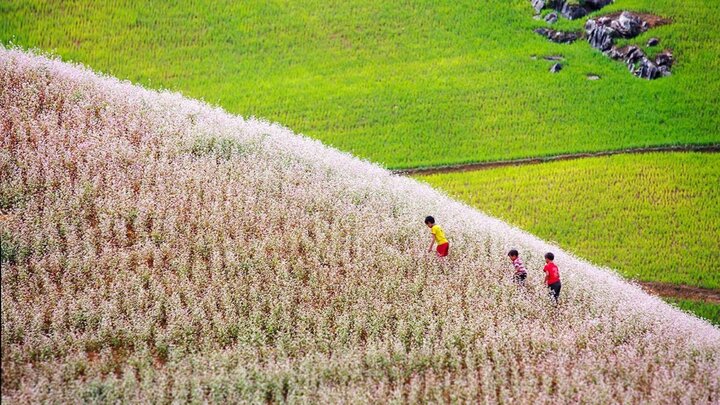
















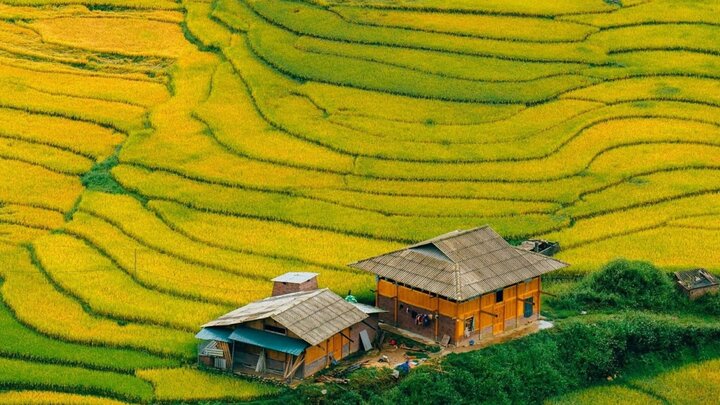
1. Overview of Sa Pa Rice Planting Season
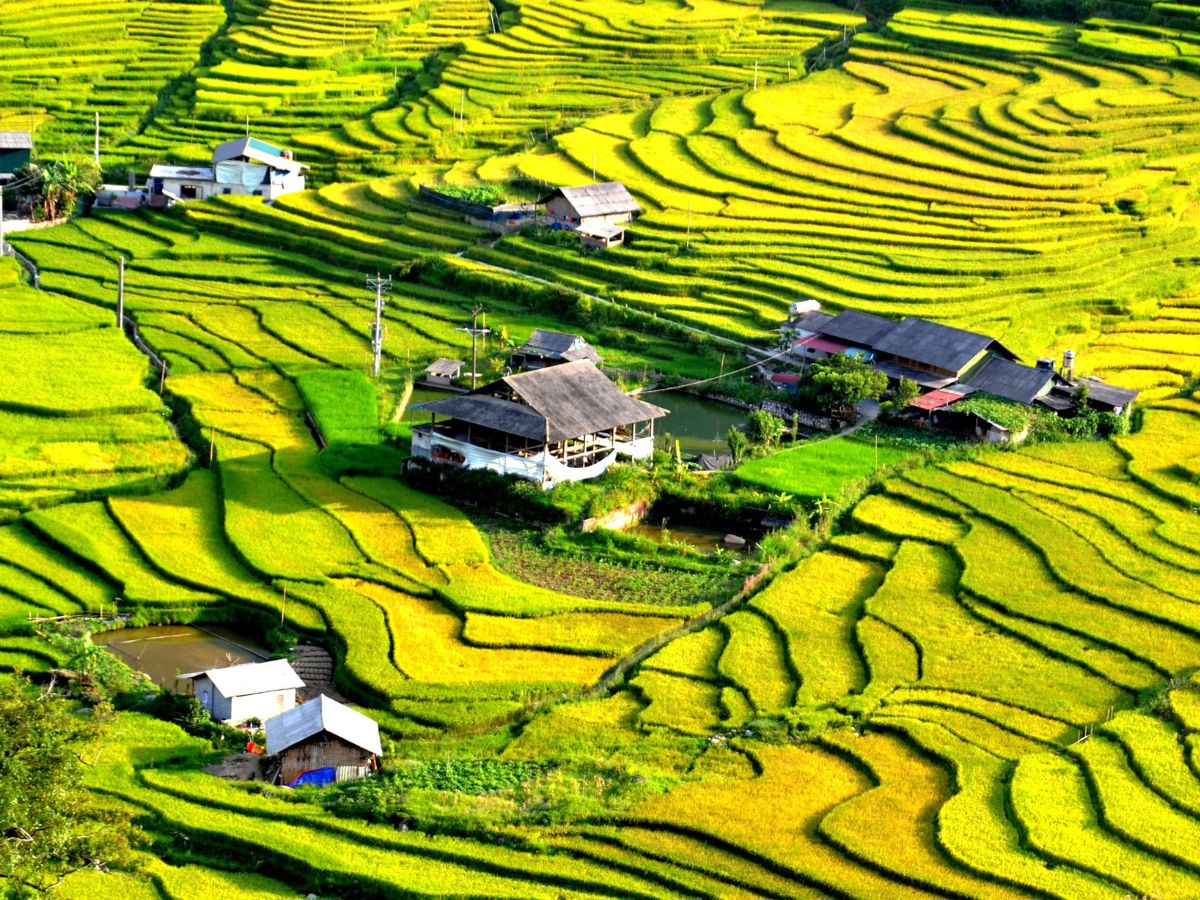
The rice transplanting season in Sa Pa is a beautiful time to travel. (Source: Collected)
The rice transplanting season in Sa Pa is a moment when nature and humans blend, as the lush green terraced fields are meticulously sown with seedlings and transplanted by ethnic people. This is not only an important period of the year for the local people but also an attractive time for tourists who want to admire the pristine, vibrant beauty of the Northwest mountains and forests.
1.1. Timing of the rice transplanting season in Sa Pa
As the first days of April arrive, with the spring air still lingering on the Hoang Lien Son peak, the rice transplanting season in Sa Pa officially begins. The ideal time to witness this scene lasts from mid-April to early May, when the H'Mong, Dao, and Tay ethnic groups busily go to the fields to sow seedlings and transplant young, green rice shoots, creating a prosperous spring picture on the terraced fields.
Due to the high mountain climate at an altitude of 1,500 – 1,800 m above sea level, Sa Pa only has one rice crop per year. The long winter and the 5–6 month growth cycle of mountain rice force the people to choose the warmest time for sowing and transplanting. This ingenuity has created the unique characteristic of the rice transplanting season in Sa Pa , becoming a moment eagerly awaited not only by the local people but also attracting a large number of nature lovers and photographers who want to capture the pristine, vibrant beauty of the Northwest mountains and forests.
1.2. Seasonal Calendar: Transplanting – Green Rice – Ripe Rice
The rice cultivation process in Sa Pa follows natural rhythms, divided into three characteristic stages. The rice transplanting season begins from April to May, when the terraced fields are filled with clear water, reflecting the sky and white clouds like giant mirrors. H'Mong, Dao, and Tay ethnic families are busy going to the fields to sow seedlings and transplant rice using traditional methods, creating a bustling and lively picture of labor throughout the villages.
The lush green rice stage takes place from June to August, bringing a vast green carpet to the slopes of Sa Pa. The average daytime temperature of 25–28°C is favorable for rice growth, while also creating a vibrant natural landscape amidst the Northwest mountains and forests.
From late August to October, the brilliant ripe rice season appears, especially in the first two weeks of September, when the terraced fields turn golden, transforming Sa Pa into a vast "golden sea" that captivates everyone. This is also the time when the locals prepare for the harvest, concluding a diligent labor chain that lasts for many months and leaving behind the unique agricultural cultural imprint of the highlands.
2. The beauty of terraced fields during the rice transplanting season in Sa Pa
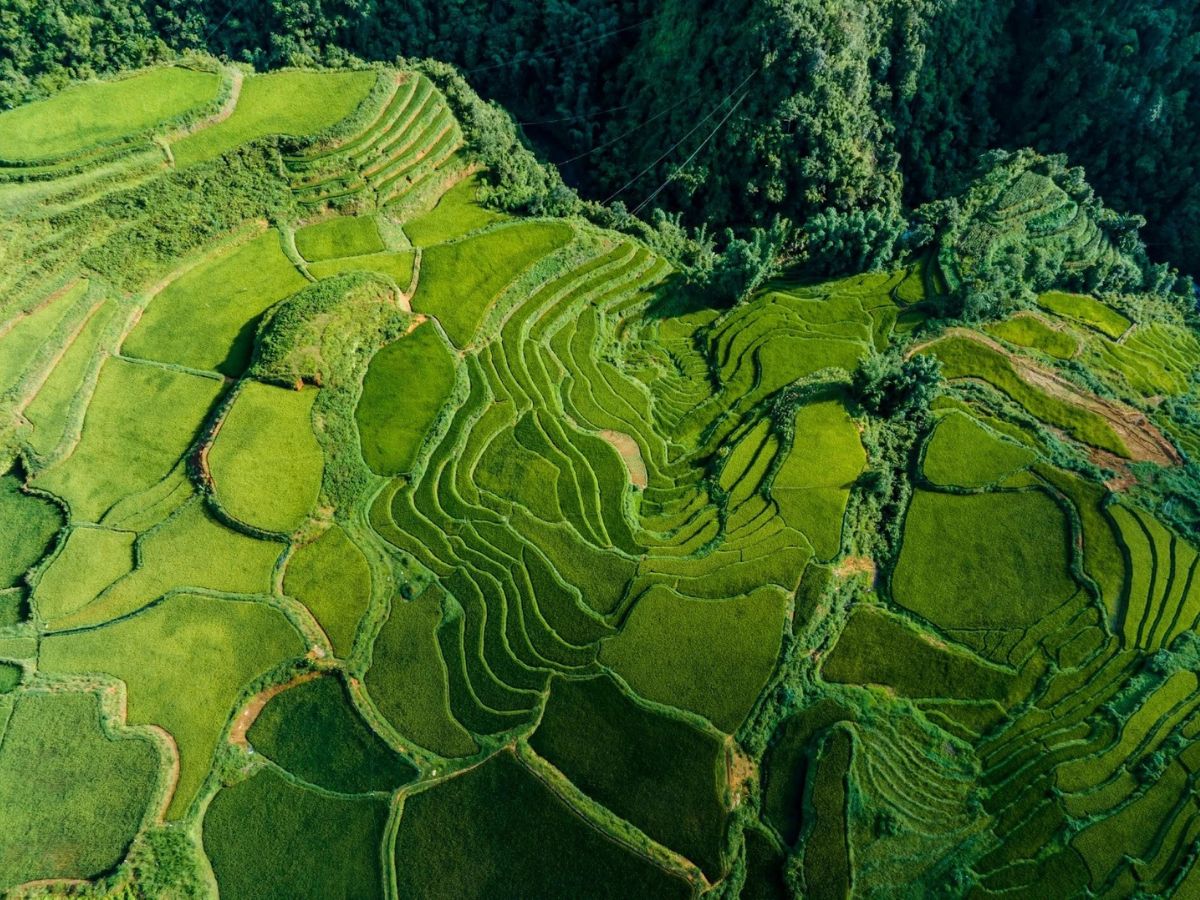
The Sa Pa rice planting season brings a beautiful landscape. (Source: Collected)
Terraced fields during the Sa Pa rice planting season appear like "sky mirrors" reflecting clouds and mountains, creating a magical and poetic scene amidst the Northwest highlands. Each terraced field gently curves, embracing the villages, and combined with the light of dawn and dusk, offers an unforgettable natural and cultural experience characteristic of the mountainous region.
2.1. Terraced fields in the flooding season: "sky mirrors" amidst the highlands
As water begins to fill the terraced fields, Sa Pa emerges as a land of shimmering "sky mirrors" reflecting the light. The rice planting season here creates a unique effect: the clear water surface reflects white clouds, lush green mountains, and the clear sky, giving the feeling of stepping into a vibrant watercolor painting. The terraced fields curve along the natural terrain, creating soft lines that blend with the majestic mountain scenery.
Dawn and dusk are the two most beautiful moments of the day. When the sun just peeks through the thin mist, the first rays of light shine down on the water, making the entire valley glow with golden light. In the afternoon, the scene is equally romantic as the sunset paints the water-filled fields with shades of orange and purple, creating a magical and poetic atmosphere.
The harmony between nature and people is evident in the image of terraced fields embracing the simple stilt houses of ethnic minorities. Gentle cooking smoke drifts in the afternoon, children's laughter echoes, and the sounds of livestock resound throughout the valley… all creating a peaceful, vibrant picture of agricultural life in the Northwest mountainous region.
2.2. The most beautiful spots to admire the Sa Pa rice planting season
Muong Hoa Valley, especially the Lao Chai – Ta Van route, is an ideal destination for photography enthusiasts who want to capture the moments of the Sa Pa rice planting season . The vast terraced fields here stretch out, reflecting sunlight on the water, creating a mesmerizing panoramic view of the entire valley. The trekking route of about 7 km from Lao Chai to Ta Van offers a relaxing experience, allowing visitors to enjoy the scenery and capture beautiful photos along the way.
Cat Cat village stands out with its simple, rustic beauty. Small terraced fields nestle beside the characteristic wooden houses of the H'Mong people, along with the babbling Cat Cat stream and small waterfalls winding through the village, creating a peaceful atmosphere, rich in highland culture.
Meanwhile, Ta Phin village of the Red Dao people is serene amidst the valley, with continuous terraced fields and characteristic thatched-roof houses, making it a perfect place to admire the beauty of the Sa Pa rice planting season while learning about the customs and cultural life of the local ethnic communities. This is an ideal choice for trips combining cultural and natural experiences.
3. Traditional activities and experiences during the Sa Pa rice planting season
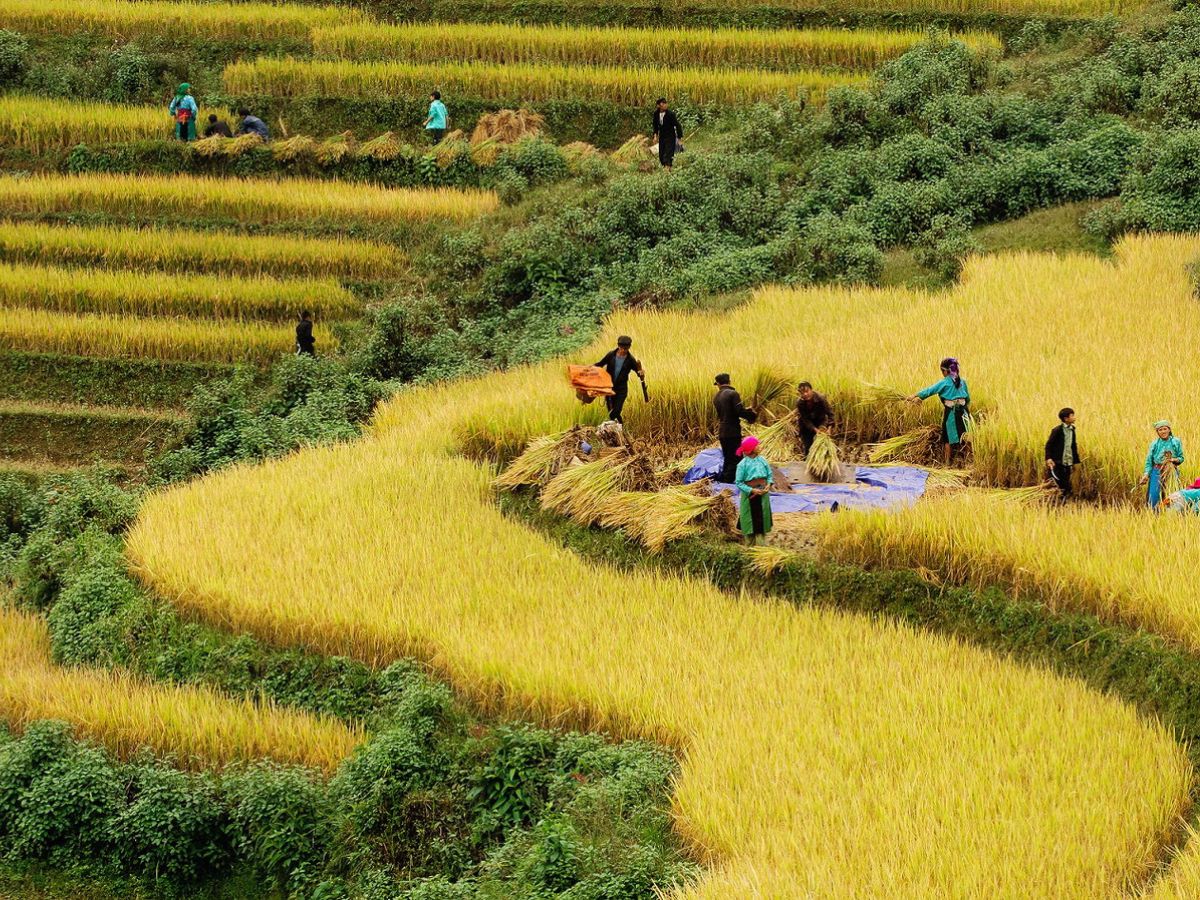
The rice planting season in Sa Pa is an occasion for tourists to immerse themselves in the life of the highlanders. (Source: Collected)
The rice planting season in Sa Pa is not just a time for farming but also an occasion for tourists to immerse themselves in the traditional life of the highlanders. Here, you will directly experience working on the terraced fields, participate in unique praying-for-harvest rituals, and feel the distinctive culture through every moment of labor and festivals.
3.1. A Day of Labor During the Planting Season on the Terraced Fields
As the first rays of dawn shine over the Hoang Lien Son mountains, the people of Sa Pa wake up to prepare for a bustling day of labor during the Sa Pa rice planting season. This work is prepared weeks in advance, starting with the sowing of seedlings in meticulously prepared fields. The seeds are carefully selected and germinated according to the correct process to ensure the highest germination rate.
After 20-30 days of care, when the seedlings are mature and strong, the locals skillfully uproot each clump, preserving the root system. Rice transplanting requires skillful technique and years of experience: planters must bend over in the mud for hours, planting each seedling evenly and at the correct depth for vigorous growth.
The community spirit is evident in the beautiful tradition of " đổi công" (labor exchange) in the villages, where one family helps another today and receives similar support tomorrow. Laughter and cheerful chatter, interspersed with folk songs, echo across the rice fields, creating a vibrant working atmosphere that is both lively and deeply rooted in the culture of the Northwest.
3.2. Festivals and Rituals Associated with the Planting Season in Sa Pa
Before the Sa Pa rice planting season begins, ethnic minorities often hold ceremonies to descend to the fields, praying for an abundant harvest. This is an occasion for everyone to respectfully worship the deities, praying for favorable weather and plentiful crops. The ritual usually takes place in the fields of reputable families in the village, and then spreads to surrounding households.
The H'Mong people perform the field worship ritual with traditional offerings such as corn wine, pork, and boiled chicken placed on the field's edge. The shaman recites prayers of gratitude to ancestors and earth deities, asking for protection for the harvest. Meanwhile, the Dao people organize praying-for-harvest ceremonies accompanied by traditional dances, where young women in vibrant brocade costumes dance around the fields.
The most distinctive ritual is that of the Giay people in Ta Van, organized on a large scale, combining many characteristic cultural activities. The festival not only holds spiritual significance but also serves as an opportunity for the community to gather, share agricultural knowledge, and strengthen solidarity. These rituals have been recognized by UNESCO as intangible cultural heritage, contributing to the preservation and promotion of the traditional cultural values of the Northwest highlands.
3.3. Experiencing the Sa Pa Rice Planting Season for Tourists
Many families in Sa Pa's villages have opened homestays and organized community tours, allowing tourists to directly participate in the Sa Pa rice planting season. Ms. Vang Thi Su, a H'Mong woman from Lao Chai village, shared: "Tourists are very excited to try holding seedlings and practice transplanting rice using traditional techniques. They are a bit clumsy at first, but after a short while, they get the hang of it and do quite well."
The experience program usually starts at 6 AM, when the air is still cool and fresh. Tourists are given detailed instructions step-by-step: how to hold the seedlings, move on the muddy fields, and plant rice evenly and at the correct spacing. Despite some initial fumbling, most people enjoy the fun and capture unforgettable memories.
After working in the fields, tourists are treated to a traditional meal with the host family, featuring local specialties such as suckling pig, sticky rice cooked in bamboo tubes, boiled wild vegetables, and fragrant corn wine. This is a wonderful opportunity to learn more deeply about the culture, life, and customs of the ethnic people in the highlands. Souvenir photos in traditional ethnic costumes, along with the scenery of terraced fields during the water-flooding season, are essential for capturing a complete and unforgettable experience.
4. Tips for Traveling During the Sa Pa Rice Planting Season
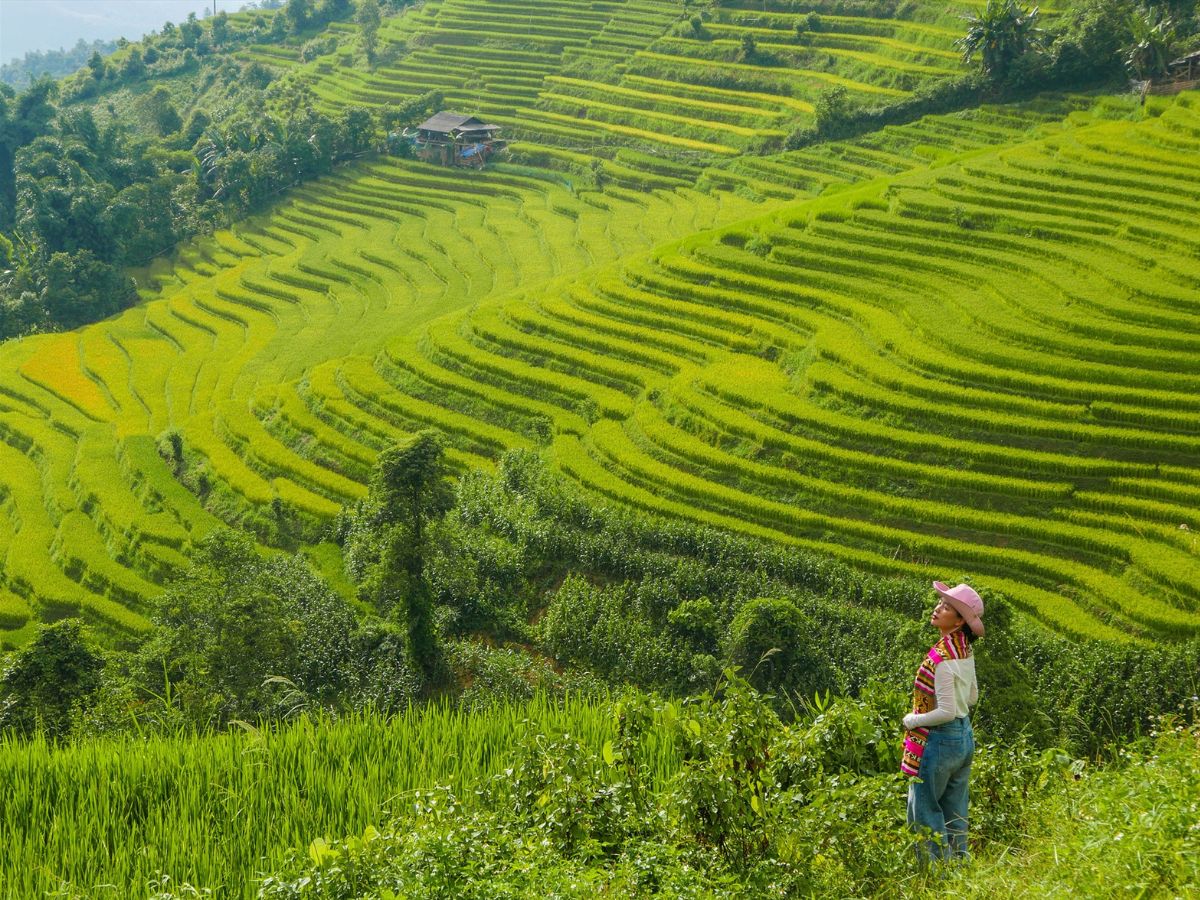
Choose the beautiful time to experience the rice transplanting season in Sa Pa. (Source: Collected)
The rice transplanting season in Sa Pa offers visitors a unique experience with sparkling, water-filled terraced fields, reflecting the sky and mountains like a vibrant painting. This is also a great opportunity to admire the majestic nature while learning about the culture and life of the ethnic minorities in the highlands.
The ideal time to admire the Sa Pa rice transplanting season is usually from April 15th to May 10th annually, when the terraced fields are filled with water, ready for the locals to begin planting.
Sa Pa's climate during this period is quite pleasant, with temperatures ranging from 15-18°C, very conducive to outdoor activities.
To capture the most shimmering moments, visitors should wake up early around 5:30 AM to admire the sunrise at famous spots like Ta Van and Lao Chai.
Preparing suitable clothing and accessories is crucial for a safe and complete experience of the Sa Pa rice transplanting season. Hiking boots or shoes with non-slip soles are the optimal choice, as many paths and terraces can be slippery after rain.
Clothing should be made of breathable, easy-to-wash, and quick-drying cotton fabric. A light jacket or windbreaker will help keep you warm when the temperature drops below 10°C in the morning and evening.
For those who want to capture the beauty of the terraced fields, a camera equipped with a wide-angle lens (14-24mm) will help capture the majestic scenery.
When participating in the Sa Pa rice transplanting season, respecting community culture is extremely important. Always maintain a polite and courteous attitude, and ask for permission before participating in activities or taking photos with the locals.
The Sa Pa rice transplanting season is not just an agricultural season, but also carries deep cultural significance along with unique natural beauty that appears only once a year. Plan early to not miss the opportunity to admire the magical "sky mirror" in the Northwest valley and experience the traditional working rhythm with the ethnic communities here.