
















1. A brief overview of O Quy Ho Pass – "the king of the Tay Bac passes"
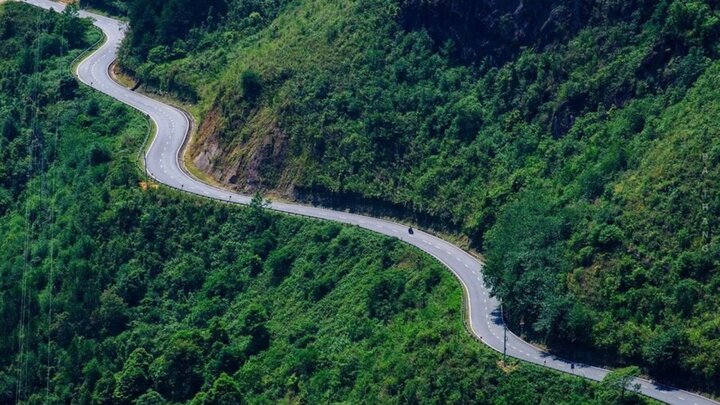
On National Highway 4D, amidst the majestic mountains of the Northwest, O Quy Ho Pass is the route connecting Sa Pa (Lao Cai) with Tam Duong (Lai Chau), stretching nearly 50 km at an altitude of approximately 2,000 m above sea level. The pass spans across two provinces, with the majority of its length belonging to Tam Duong district, Lai Chau province, while the remainder lies within Sa Pa town, Lao Cai province.
The name "O Quy Ho" originates from the distinctive sound of a bird on the pass, linked to tragic love stories of young mountain dwellers. Besides its common name, the pass is also known as Hoang Lien Son Pass, as it traverses the mountain range of the same name, or May Pass, due to the year-round white clouds covering its summit.

O Quy Ho Sky Gate, where clouds touch mountains and the view extends to infinity. (Source: Collected)
O Quy Ho Pass is called the "king of passes in the Northwest region" due to its majestic natural scenery with winding roads around steep mountain slopes. Here, clouds always cover the area, creating a mystical natural picture, especially impressive during the cloud hunting season. When winter arrives, dense fog and snow can appear, bringing a rare sight.
The most challenging aspect of the pass is its terrain with about 30 hairpin bends, many sections with steep gradients from 10% to 15%. The summit of the pass, often called the "Sky Gate," is the ideal place to admire the panoramic view of Sa Pa valley, the Hoang Lien Son mountain range, and Fansipan peak. The continuous curves, limited visibility, and rapidly changing weather require careful preparation for the journey.
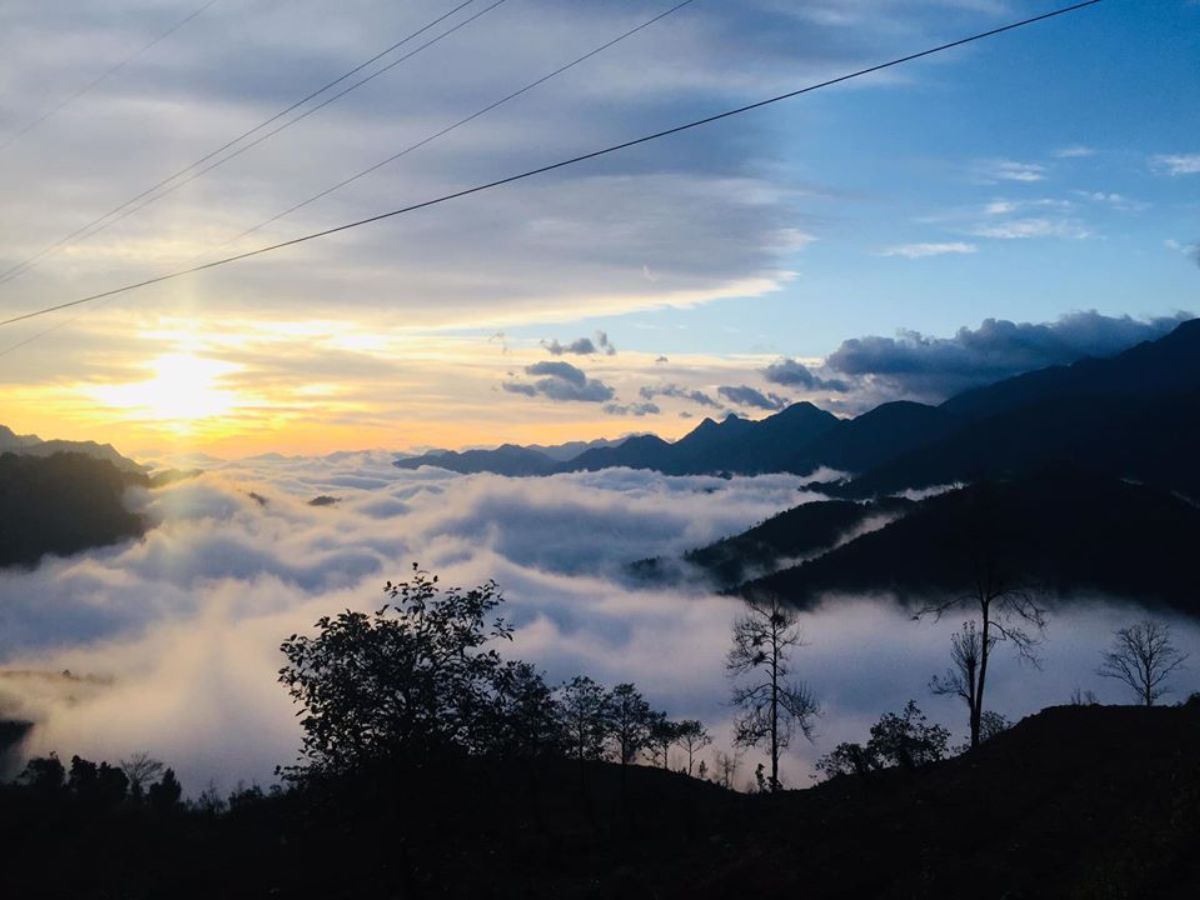
Sea of clouds covers the Hoang Lien Son mountain range, a peak "cloud hunting" moment in the Northwest. (Source: Collected)
2. Safe travel experience on O Quy Ho pass for all groups
2.1. Health check and personal equipment
On O Quy Ho pass, the weather can change unexpectedly with the characteristic features of the high mountains. Before starting the journey, visitors should have a general health check, paying special attention if they have cardiovascular disease, high blood pressure, or respiratory-related illnesses, as the thin air at an altitude of nearly 2,000 m can affect health.
Besides personal documents and money, prepare a complete personal first-aid kit. Those prone to motion sickness should bring anti-motion sickness medication and headache relievers to cope with changes in air pressure. Bring drinking water and snacks like biscuits and candy to replenish energy when needed. A spare warm jacket is necessary when the temperature drops suddenly. One of the safe travel tips for O Quy Ho pass is to never underestimate your health. A mobile phone and a power bank should be carried to maintain communication in all situations. A map downloaded on your phone can be helpful when there is no signal.
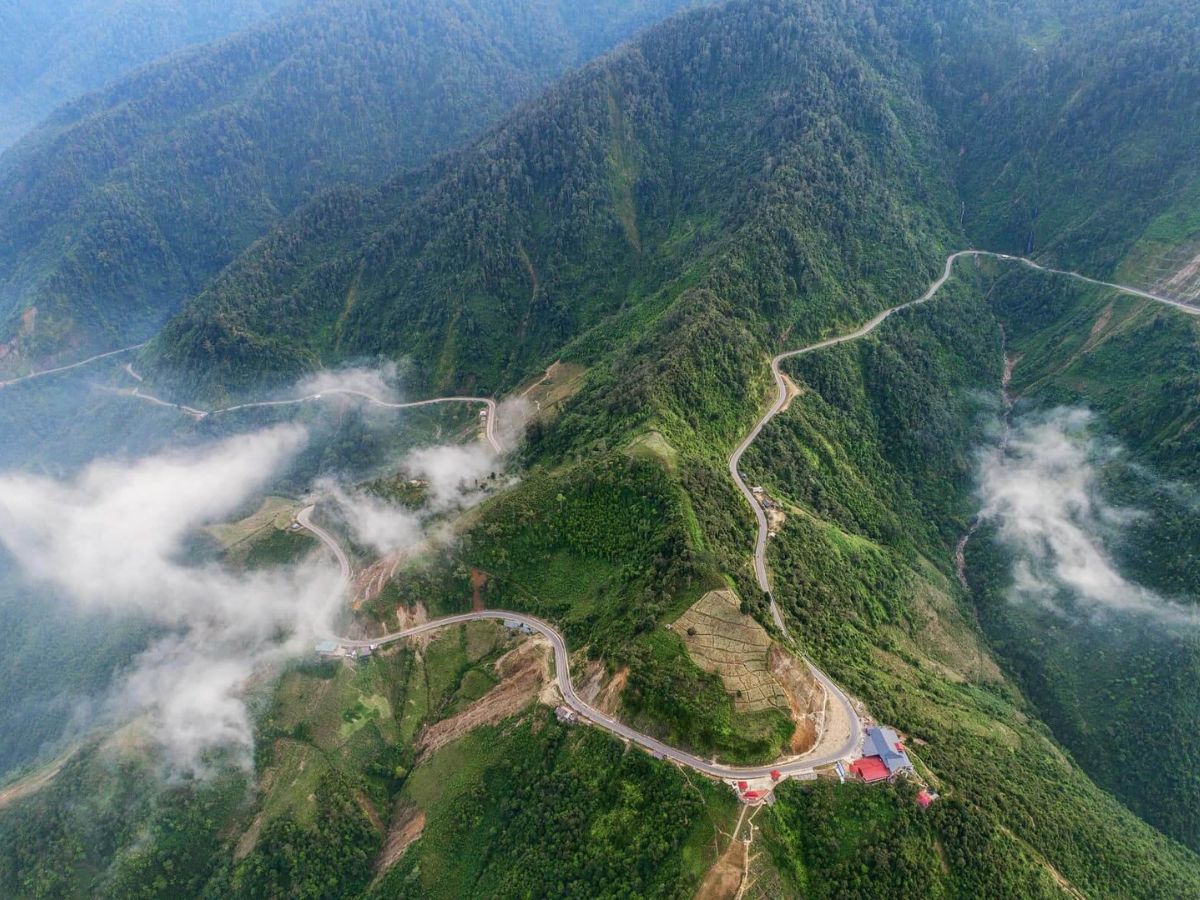
The road hugs the mountainside, with dramatic hairpin bends on O Quy Ho Pass. (Source: Collected)
2.2. Choose appropriate clothing and luggage
The temperature at the pass is usually lower than in the plains, especially in winter when the wind is strong and snow sometimes falls. Warm and windproof clothing is essential to ensure a comfortable journey. A thick jacket, a puffer jacket, or a waterproof windbreaker will help you retain heat effectively.
Choose sneakers or hiking boots with good grip soles for safe movement, avoiding slips on wet sections. Although summer here is still cool, fog often appears in the early morning and late afternoon, so a spare warm jacket is still very necessary.
Gloves, windproof glasses, a woolen hat, and a scarf are useful items, especially for those riding motorcycles over the pass. These accessories not only keep you warm but also protect you from strong winds and dust, making the trip more enjoyable.
2.3. Check your vehicle
If traveling by motorcycle, it is advisable to prioritize manual transmission bikes due to their better handling capabilities on steep terrain and numerous bends. Before the trip, thoroughly check the front and rear brake systems, the chain, the tires, and their grip. Ensure the headlights and rearview mirrors are functioning well for visibility in foggy conditions. Fill up the gas tank before ascending the pass as it is very difficult to find a gas station along the route.
For cars, choosing a high-clearance vehicle will be more convenient on rough roads. Check the brake system, paying attention to the handbrake as it will be used frequently on steep roads. A spare tire and a complete tire repair kit are indispensable.
Bring safety signs, a flashlight, a tow rope, and basic repair tools to handle any emergencies. Experience traveling safely on O Quy Ho Pass is to always be prepared for unexpected situations that may occur while traveling on the pass.
3. Choose a reasonable time and duration for travel
3.1. Ideal time to "hunt for clouds" on O Quy Ho Pass
Each season of the year brings its own charm to O Quy Ho Pass, promising unique experiences for visitors. The period from October to April, with dry weather and clear skies, is a popular choice for cloud hunting and admiring the mountain scenery, especially Fansipan peak.
In spring, from February to April, the pass is covered with plum and peach blossoms blooming on the mountainsides. The cool, gentle air is perfect for spring outings and capturing photos of flowers amidst the mountains. This is also the time photographers often choose to capture moments in the highlands. In summer, from May to August, the air is fresh, and the terraced fields are green, creating poetic scenery. Clouds often cover the pass, making the atmosphere cool and mystical. June and July are the most suitable months for cloud hunting when the weather is pleasant and there is little fog.
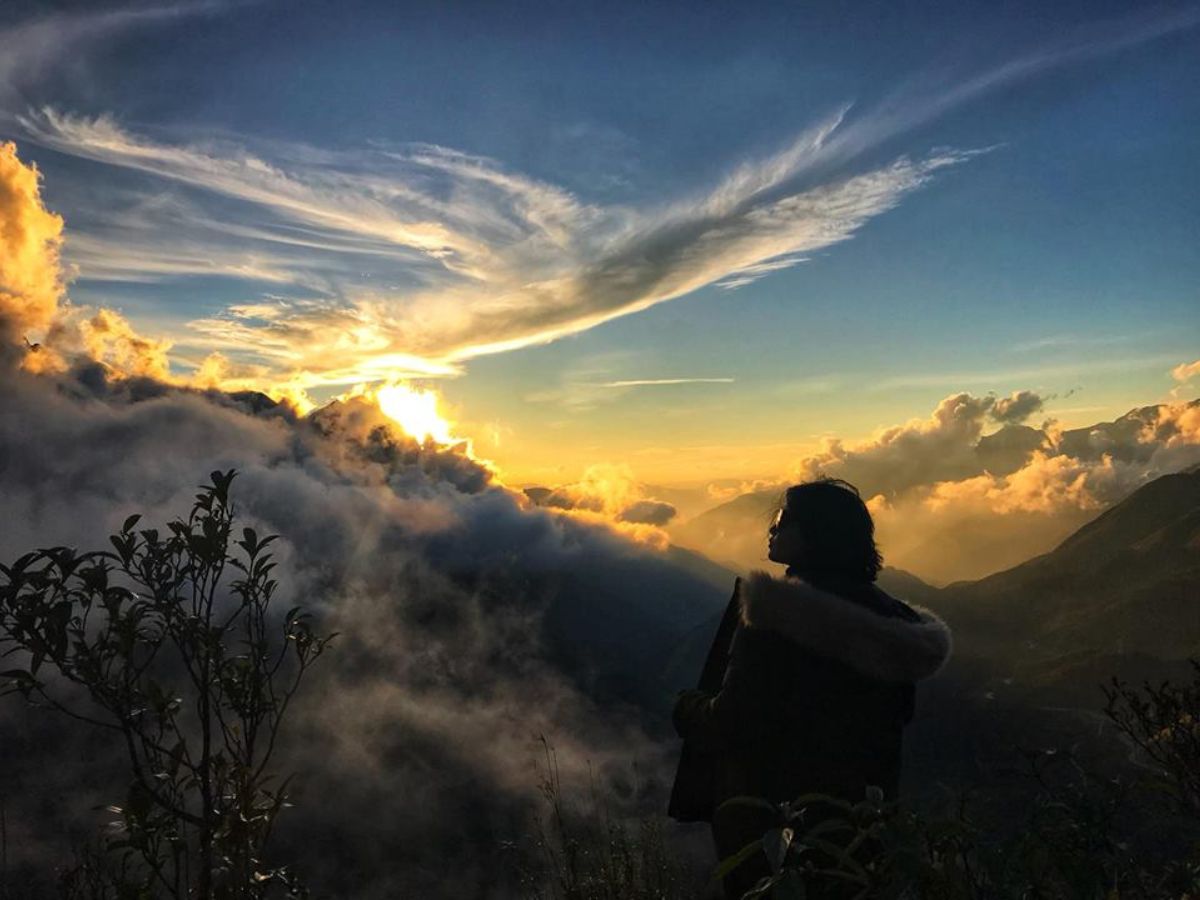
Windy pass peak, a legendary check-in spot overlooking the entire Sa Pa valley. (Source: Collected)
Autumn, from September to November, golden terraced rice fields with ripe rice create a peaceful, poetic scene. Stable weather, little rain, and gentle golden sunshine make the journey over the pass safer and more convenient. Winter, from December to January, is a unique time to see snow, ice, and thick fog, creating a magical scene. However, it is advisable to avoid days with heavy rain or when there are snow and ice warnings from the National Center for Hydro-Meteorological Forecasting to ensure safety.
3.2. Best Departure Time
Departure time greatly affects the safety and experience of the trip. It is recommended to start in the morning until early afternoon, when daylight ensures good visibility on dangerous curves. Avoid traveling at night or early in the morning when thick fog can reduce visibility.
If you wish to chase clouds and watch the sunrise at O Quy Ho Pass Gate, head to the pass between 5:00 AM and 6:30 AM to enjoy the sunrise light piercing through the clouds. However, you need to start early and drive carefully before it gets light.
The sunset hour, from 5:00 PM to 5:30 PM, is also an ideal time for sightseeing and photography. The afternoon golden light highlights the beauty of the Northwest mountains. O Quy Ho Pass safety travel experience is to always monitor the weather forecast for Sa Pa or Tam Duong before departing to prepare best.
4. O Quy Ho Pass Safe Driving Experience
4.1. Control Speed, Do Not Overtake Recklessly on the Pass
With its terrain of many hairpin bends and steep slopes, O Quy Ho Pass requires drivers to control their speed and concentrate fully. Some areas, like the Heaven's Gate peak, pose accident risks if one is careless or lacks experience. Maintain a speed below 40 km/h when cornering or descending to control the vehicle more easily. Avoid accelerating rapidly or braking suddenly, especially when the road surface is wet or scattered with gravel. Always observe carefully and anticipate potential situations to react promptly.
Do not drive if you are tired, sleepy, or have consumed alcohol. In high-altitude areas, the thin air can slow down reactions, so rest before starting your journey. If you feel tired while driving, find a safe place to stop and rest.
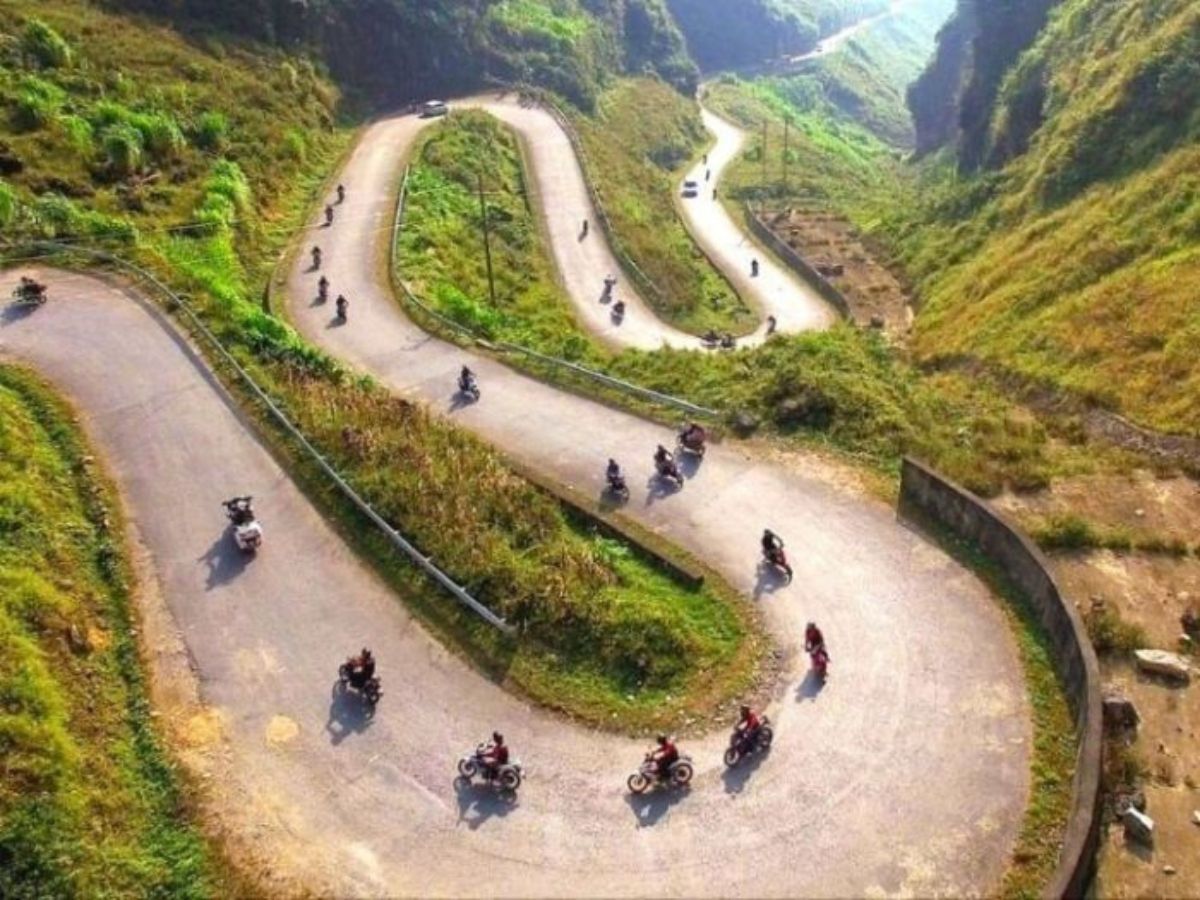
Motorcycle trekking journey, fully experiencing the breath of the mountains and the cold wind of the highlands. (Source: Collected)
4.2. Skills for handling corners & braking when going uphill/downhill
When entering curves, especially blind spots, gradually reduce speed and use the horn to signal oncoming vehicles. Some points have been fitted with convex mirrors to aid visibility; utilize them to the fullest to observe the road ahead. When going uphill, select an appropriate gear to maintain engine torque without overloading. Avoid changing gears while climbing to prevent the risk of skidding or stalling. If using a manual transmission, coordinate the clutch and accelerator smoothly.
Going downhill is the most critical time; use engine braking by downshifting instead of relying solely on the brakes. Continuous braking can overheat the brakes, reduce their effectiveness, and easily lead to loss of control. Safe Ô Quy Hồ Pass riding experience involves a reasonable combination of engine braking and handbrake to maintain a stable speed.
4.3. Riding in a group – peace of mind on every kilometer
Although Ô Quy Hồ Pass is attractive to explorers, traveling alone is not truly safe. When traveling in a group, members can support each other in case of breakdowns or technical issues. The group should have an experienced rider to lead, guide, and instruct other members. Use walkie-talkies or phones to stay in communication, update road conditions, and monitor everyone's health.
Group members should ride at a speed suitable for the slowest person in the group, and agree in advance on rest stops, vehicle checks, and health monitoring. Mutual support not only ensures a safe trip but also enhances team spirit.
5. Special notes for stopping, taking photos, and trekking on the pass
5.1. Stop at designated areas
When choosing a stopping point on Ô Quy Hồ Pass, pay attention to safety and terrain awareness. Only stop at designated parking areas or wide observation spots that ensure visibility and do not obstruct traffic flow. These areas usually have signs and sufficient space for safe entry and exit.
Do not stop at locations like curves, steep slopes, or narrow road shoulders, as this can be dangerous for yourself and others. These spots are difficult to see from a distance, and restarting the vehicle is also more challenging.
After stopping, turn on your hazard lights and place a warning triangle at least 50 meters away for other vehicles to notice. Ensure the handbrake is firmly engaged, especially when parked on slopes. Safe Ô Quy Hồ Pass riding experience reminds us that every small detail contributes significantly to ensuring safety.
5.2. Safe photo opportunities & preserving the landscape
Locations like the pass summit or beautiful curves are ideal for photos with a spectacular natural backdrop. Times for cloud hunting, sunrise, and sunset are always attractive to photography enthusiasts. However, safety is always the top priority when capturing memories here.
Only take photos in areas with safety signs, sturdy railings, and stable ground. Do not climb over railings or approach the edge of the cliff for unique photo angles. There have been unfortunate incidents due to overconfidence while posing.
When taking photos with local people, ask for permission to show respect for their customs and privacy. Maintain general cleanliness, do not litter, do not break branches or pick flowers for photos. Every tourist needs to be conscious of protecting nature so that future generations can still admire the pristine beauty of the pass.
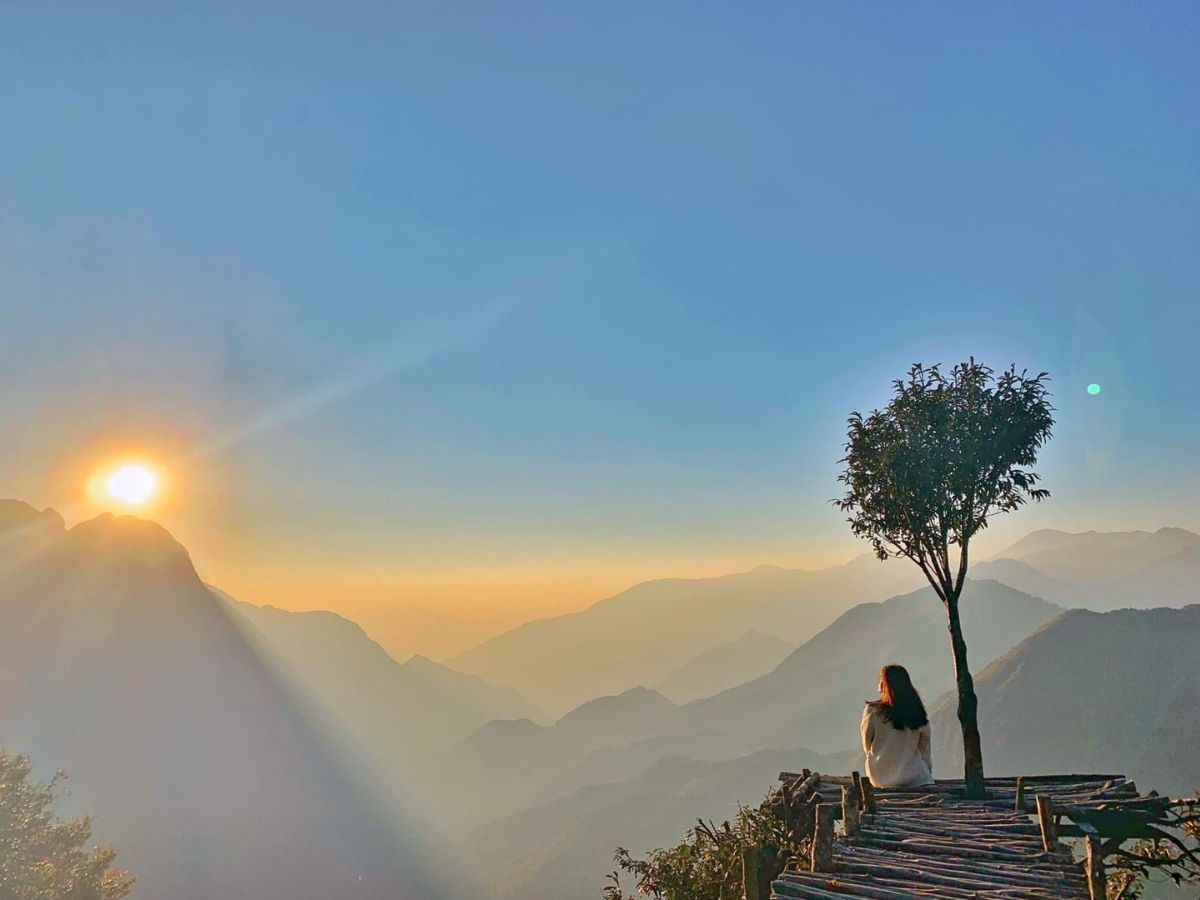
Winter on O Quy Ho Pass, when thick fog and snow transform the scenery into a fairy tale land. (Source: Collected)
5.3. Participating in trekking, hiking in permitted areas
Experiencing trekking on O Quy Ho Pass is a wonderful opportunity to immerse yourself in wild nature, crossing spectacular mountain paths and feeling the changing landscape. However, strict safety regulations must be followed when participating in this activity.
It is advisable to choose trekking tours with professional guides who understand the terrain and have skills to handle incidents. Listen to instructions regarding the route, timing, and safety warnings. Absolutely do not venture into deep forests or dangerous areas without the guide's consent.
Prepare thoroughly for trekking with hiking boots, breathable clothing, a hat, sunglasses, and sufficient drinking water. Bring a whistle or signaling device in case of needing assistance. O Quy Ho Pass safety experience for trekking is to always stay in groups, do not split up, and regularly update your health status with the guide.
6. Suitable vehicles and support services when traveling O Quy Ho Pass
6.1. Vehicle selection: Motorbike, car, hired car with driver
Motorbikes are suitable for those who want to conquer every curve of the pass themselves and experience the thrill of riding. It is recommended to choose a manual transmission bike with an engine capacity of 125cc or more to ensure sufficient power. Before departing, check the brakes, chain, tire pressure, lights, and mirrors. Fill the fuel tank and prepare some spare fuel as the distance between gas stations is quite far.
Traveling in groups helps you support each other easily when encountering problems or when the weather changes. Prepare a basic repair kit such as screwdrivers, pliers, electrical tape, and tire patches. Wear a quality helmet, use protective gear, and wear protective shoes to enhance safety.
Personal cars or family cars are suitable for large groups, with children or the elderly. Choose high-clearance vehicles like SUVs or crossovers to easily navigate rough road sections. Before starting, thoroughly check the brakes, brake fluid, brake pads, spare tire, and tire changing kit.
Opting for a hired car with a driver is suitable for tourists traveling in groups or those who are not confident driving on mountain passes. Local drivers are familiar with the terrain, weather conditions, and points of caution, making the trip safer.
6.2. Accommodation, lodging, and entertainment services
Visitors wishing to visit the O Quy Ho Pass summit need to purchase an entrance ticket priced at 120,000 VND for adults, 60,000 VND for children from 1 m to 1.4 m in height, and free for children under 1 m. The ticket includes access to the Sky Gate area and the panoramic view of the Northwest mountains from the highest point of the pass.
Choosing to stay around Sa Pa is very convenient for exploring the pass as well as other tourist attractions. From Sa Pa, visitors can easily combine a visit to O Quy Ho Pass with destinations like Sun World Fansipan Legend, which features a modern cable car system leading to the peak of Fansipan, the "Roof of Indochina".
Restaurants and eateries along the route serve a full range of local specialties and dishes that suit most tourists' tastes. Grilled fermented pork (thit chua), bamboo-tube rice (com lam), grilled wild vegetables, and stream fish dishes are flavors not to be missed. O Quy Ho Pass safety experience recommends you enjoy local cuisine to fully experience the highland culture.
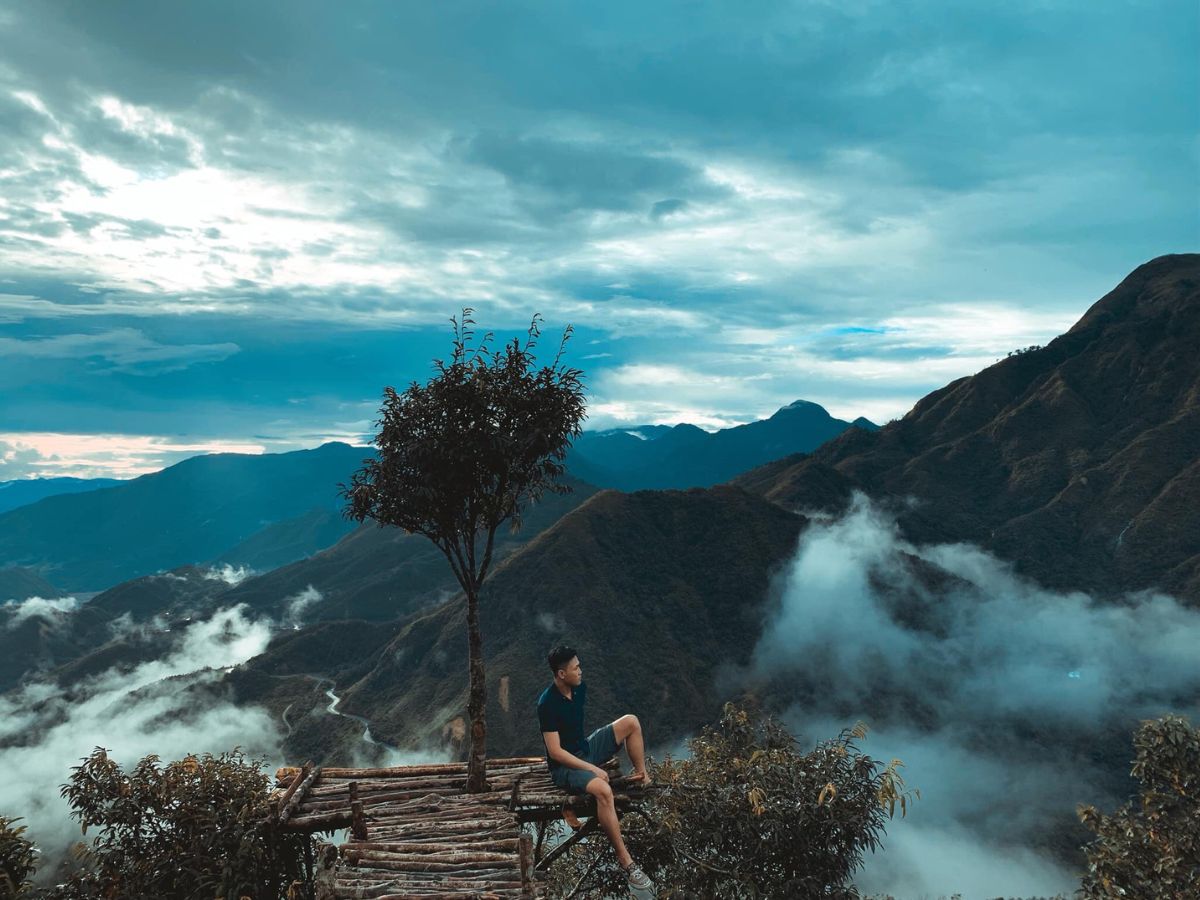
Stop at the spacious viewpoint, to rest and capture the most beautiful moments of the pass. (Source: Collected)
7. Notes for a safe journey to conquer O Quy Ho Pass
The weather on O Quy Ho Pass changes quickly, characteristic of high mountain regions, so you should not be negligent when checking the weather forecast and pay attention to your own health. Always bring a fully charged phone, a power bank, and inform your loved ones of your itinerary in advance for support when needed.
Being proactive and adhering to traffic safety regulations is key to a complete trip. Everyone needs to be environmentally conscious by not littering, not breaking branches, picking flowers, and preserving the natural beauty of the pass. Be polite to the local community, ask for permission when taking photos, and avoid making noise or displaying inappropriate attitudes.
For families with young children or the elderly, their health should be considered before deciding to join the journey. It is advisable to prioritize good weather, choose accommodation near the pass, or hire a driver to ensure the highest safety.
Avoid traveling during the rainy season or at night when the road is slippery and visibility is limited, posing many risks to the trip. The final O Quy Ho Pass safety travel experience tip is to always prioritize safety above all else, do not trade safety for experience.
Conquering O Quy Ho Pass offers a wonderful experience amidst the Northwest mountains, but it also requires thorough preparation. With the tips in the O Quy Ho Pass safety travel experience, tourists can enjoy a complete journey, admire the majestic scenery while ensuring their own safety and that of their group. Save these suggestions to make the trip a memorable, safe, and exciting journey on the legendary pass.