















1. Overview of the Sa Pa Village Sweeping Festival: The Special Spiritual Aspect of the Xa Phó People
1.1. Introduction to the Sa Pa Village Sweeping Festival
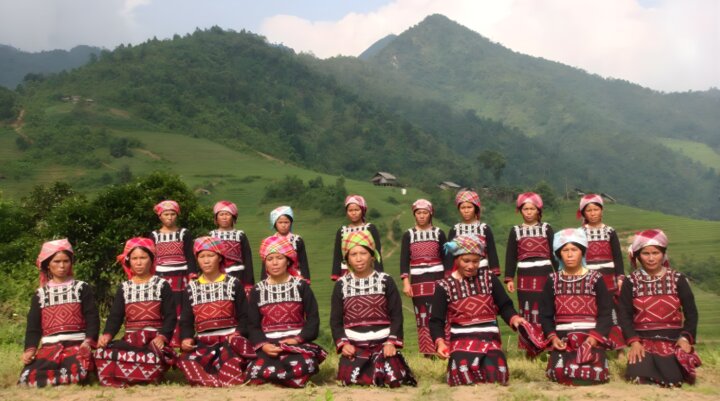
The Sa Pa Village Sweeping Festival is a traditional community worship ritual imbued with the belief elements of the Xa Phó people - a subgroup of the Phù Lá ethnic group, currently residing mainly in Sa Pa and some neighboring areas of Lào Cai. The ritual is performed by the people to ward off evil spirits and diseases, thereby protecting the peace of the village.
On the day of the ritual, all members of the village, regardless of age or gender, gather at the largest open ground in the hamlet to participate in traditional ceremonies. The entire community's presence and participation in the ritual not only demonstrates spiritual belief but also clearly reflects community cohesion - a sustainable cultural value of the Xa Phó people in village life.
1.2. Reasons why this festival stands out among the rituals of the Northwest Highlands
Amidst the diverse cultural space of the ethnic communities in Sa Pa, the Sa Pa Village Sweeping Festival creates its own mark with its simplicity in form but depth in meaning. The ritual does not focus on performance elements but concentrates on belief practices closely tied to daily life, demonstrating a harmonious relationship between humans, the community, and the spiritual world.
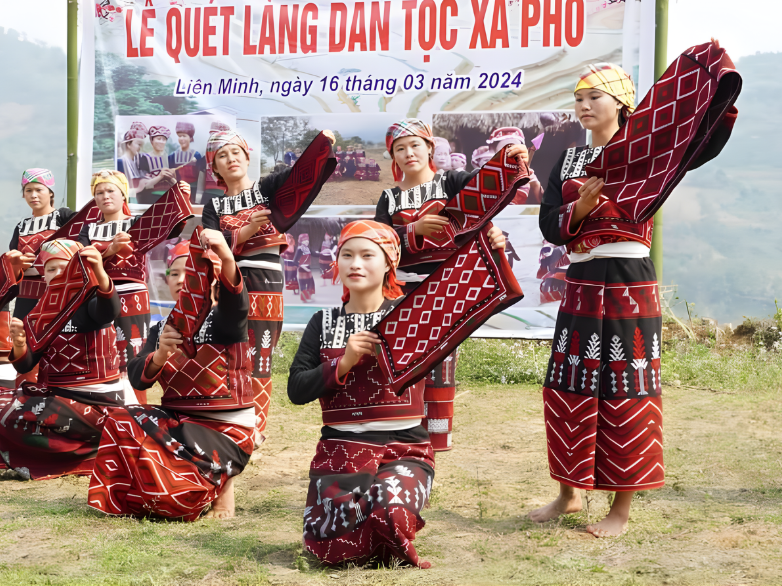
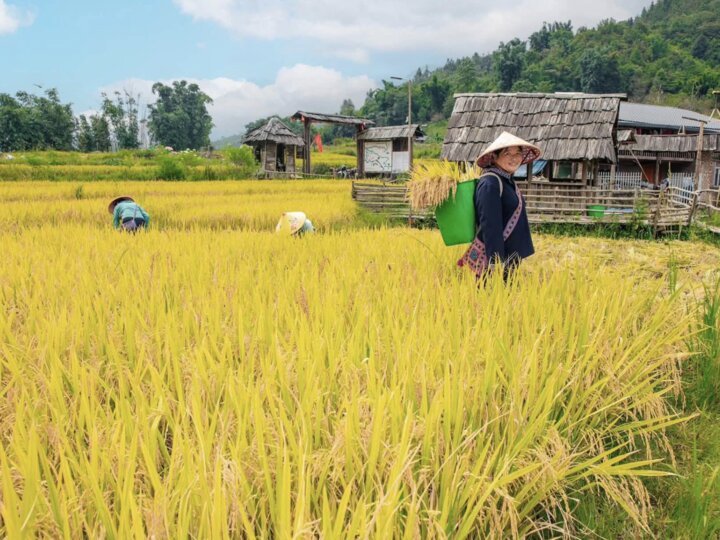
Sa Pa Village Sweeping Festival (Le quet lang Sa Pa) creates a unique mark with its rustic form. (Source: Collected)
In the context of Sa Pa developing towards cultural-experiential tourism, Sa Pa Village Sweeping Festival (Le quet lang Sa Pa) contributes to preserving the traditional identity of the Xa Pho people, while opening up opportunities for tourists to understand more deeply the spiritual life of the local residents. This cultural depth has helped the ritual become a unique piece in the cultural tapestry of the Northwestern highlands, especially suitable for tourists interested in local values and living cultural heritage.
2. Origin and Meaning of the Sa Pa Village Sweeping Festival
2.1. Origin from the "Ghost of Hunger" belief of the Xa Pho people
According to beliefs passed down through generations, the Xa Pho people believe that the 2nd lunar month is when "hungry ghosts" appear. These wandering spirits during this period are believed to return to disturb the village, causing epidemics, damaging crops, and affecting livestock.
Legend has it that, in a context where life was threatened by evil spirits, a deity appeared and instructed the villagers on how to perform a ritual to ward off bad luck. Since then, every time the 2nd lunar month arrives, the Xa Pho community in Sa Pa organizes the Sa Pa Village Sweeping Festival (Le quet lang Sa Pa) as a way to express gratitude to the deities, while praying for protection and peace for the village. This ritual gradually became an important religious practice, closely associated with the spiritual life of the Xa Pho people.
2.2. Spiritual Significance, Prayer for Peace, and Community Cohesion
The Sa Pa Village Sweeping Festival (Le quet lang Sa Pa) signifies praying for peace, warding off evil energy and welcoming good fortune for the new year. Through the ritual, people express their aspirations for a year of favorable harvests, livestock development, stable life, and peace.
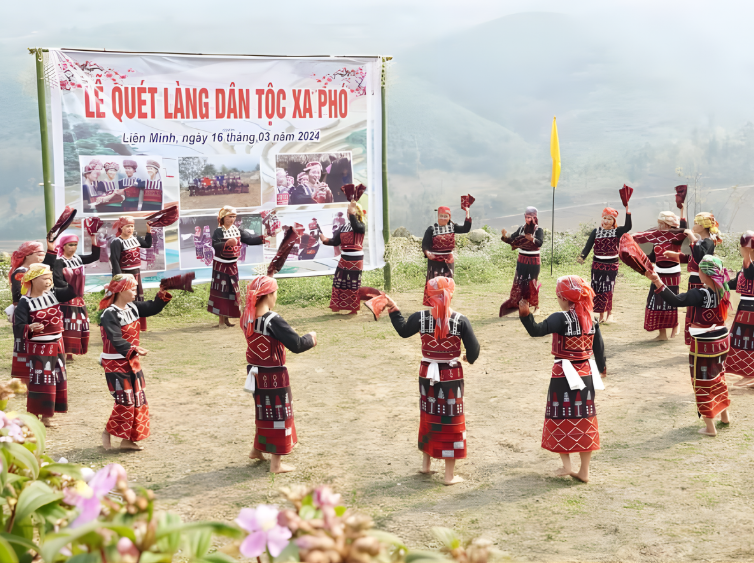
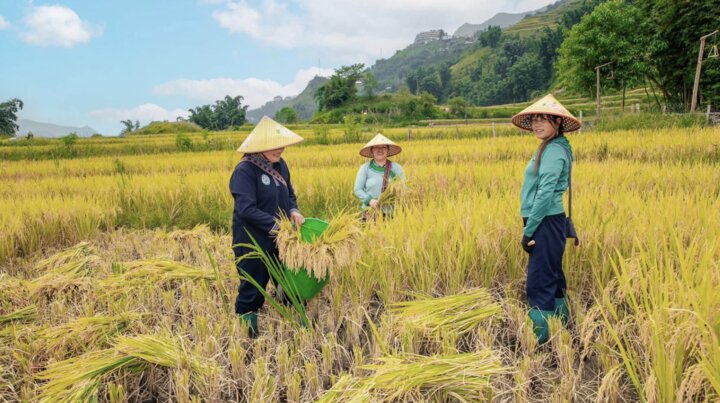
Solidarity has helped the community overcome life's difficulties together. (Source: Collected)
Besides spiritual value, the ritual clearly demonstrates the community spirit of the Xa Pho people. Each member actively participates and contributes effort, with no one standing outside the common activities of the village. This solidarity contributes to strengthening the bond between families, creating a strong attachment between generations, and helping the community overcome life's difficulties together.
3. Time and Place of the Sa Pa Village Sweeping Festival Organization
3.1. Time of Occurrence of the Sa Pa Village Sweeping Festival
The Sa Pa village sweeping festival is organized annually by the Xa Pho community in the 2nd lunar month, a time associated with the belief in the "month of hungry ghosts". The date of the ritual is not fixed but is chosen by the shaman casting lots, often falling on the Day of the Horse, Day of the Sheep,... according to the traditional calculations of the Xa Pho people.
The ritual takes place after the Lunar New Year, when the early year's activities begin to stabilize. According to folk belief, this is an important transitional period in the year, suitable for performing rituals to ward off misfortune and pray for peace for the village, marking the beginning of a new production cycle.
3.2. Location and Space for Organizing the Ritual in Sa Pa
The main ritual of the Sa Pa village sweeping festival is usually held in Nam Sang village, Lien Minh commune, Sa Pa - an area where a large Xa Pho community lives. The space for performing the ritual is a large open ground at the beginning of the village, which is suitable for the entire village to gather and participate in community worship rituals.
The chosen area is carefully selected to ensure openness and convenience for ritual activities and common life. Surrounding this space are the traditional stilt houses of the Xa Pho people, creating a landscape that strongly reflects the indigenous culture. When the ritual takes place, the village space becomes the center of spiritual activities, clearly reflecting the spiritual life and community spirit of the local residents.
4. Ritual Progression and Notable Activities during the Sa Pa Village Sweeping Festival
4.1. Preparation, Offerings, and the Role of the Shaman
Before the Sa Pa village sweeping festival officially begins, the Xa Pho community has started the preparation process many days in advance. Representatives of families in the village gather at the home of an elder or the village chief to discuss, agree on tasks, and divide responsibilities. This is an organizational preparation step and an occasion for families to show their consensus, working together for the community's ritual.
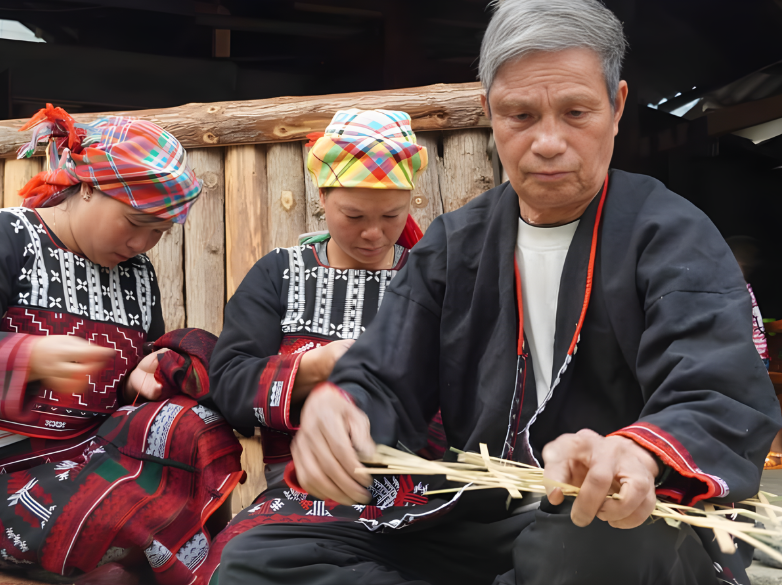
Each household prepares offerings according to their means. (Source: Collected)
Each household prepares offerings including rice, chicken, money, incense, and wine according to their means. Families with the ability will contribute additional pigs, goats, or dogs, and in return, they receive support from the villagers in other tasks. This form of mutual assistance clearly reflects the close-knit relationship, where community values are always placed above personal interests.
On the day of the ceremony, young men are responsible for preparing and slaughtering the offerings in the open field at the beginning of the village. Throughout the entire process, the shaman plays a key role, acting as both a community connector and a bridge between humans and the spiritual world. With a wooden sword in hand, forest branches or peach leaves as ritual tools, and faces smeared with ash according to belief, the shaman leads the rituals with solemnity and experience passed down through generations.
4.2. Village sweeping ritual: Procedure and depth of meaning
When the offerings are fully prepared, the village sweeping ritual begins with the shaman visiting each household in the village one by one. At each house, the shaman pours a cup of wine onto the altar, clearly stating the names and ages of the family members, as a way of reporting to ancestors and deities. Next, the shaman dances with the wooden sword throughout the living space, signifying the expulsion of evil spirits and misfortunes accumulated in the past year. The host designates someone to follow behind, tossing corn kernels over the shaman's head, completing the ritual according to traditional customs.
Parallel to the ritual at each family's home, a communal offering tray is set up in the central area with bowls, chopsticks, and many cups of wine, surrounded by rice brought by the families. In that solemn space, the shaman recites prayers, inviting spirits to receive blessings and leave the village, so as not to continue disturbing human lives.
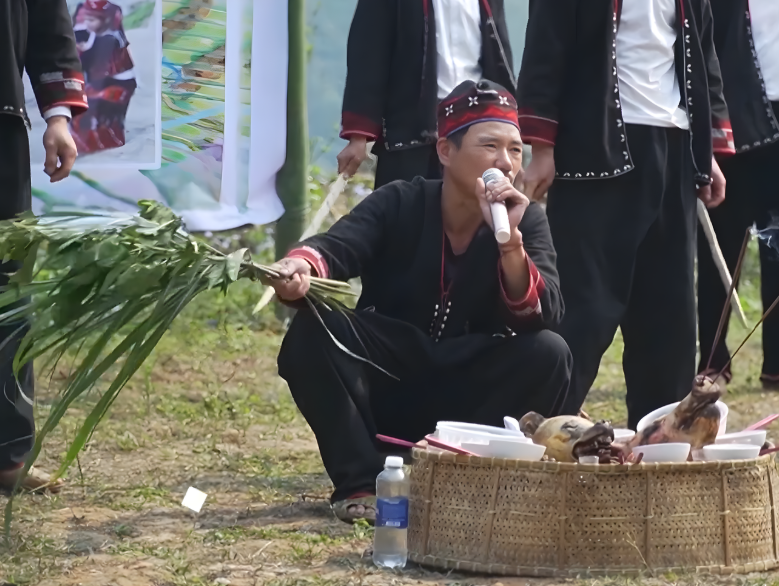
Branches of forest trees or peach leaves, symbolizing the "sweeping away" of bad luck in the village. (Source: Collected)
The "sweeping" tools used in the ritual consist of small woven mats made from bamboo, forest branches, or peach leaves, symbolizing the sweeping away of risks, diseases, and bad luck. When the ritual concludes, bamboo branches along with dog ears and tails are planted around the ceremony area, acting as a spiritual "barrier" to prevent evil spirits from returning to the village.
4.3. Festival Part: Atmosphere of Connection and Community Celebration
After the spiritual rituals are completed, the atmosphere in the village gradually shifts to the openness and warmth of the festival part. The villagers eat together from the offerings that have been sacrificed, as a way to fully close the cycle of the ritual.
Interspersed with the community meal are cultural activities, folk dances, and songs of the Xa Pho people. The simple melodies, passed down from generation to generation, are sung not for display, but to connect people within a shared cultural space. The festival part thus becomes an occasion for everyone to meet, chat, and share, from the elderly to the young children.
It is this simplicity yet warmth that creates the unique charm for the Sa Pa village sweeping festival . It can be seen that the village sweeping ritual is a moment for the community to look back, look forward, and nurture strong bonds - the factor that makes the culture of the Xa Pho people in Sa Pa long-lasting.
5. Cultural Characteristics and Conservation Value of the Sa Pa Village Sweeping Festival
5.1. Identity of the Xa Pho People, a Closely-Knit Community
The Sa Pa village sweeping festival clearly expresses the cultural identity of the Xa Pho people through their strong community spirit and the sense of shared responsibility of each individual. In this ritual, all members of the village participate fully in all stages, from preparing offerings, performing the ceremony, to community activities after the festival. The presence of everyone is not merely formal, but reflects the belief that maintaining peace for the village is a common responsibility of the entire community.
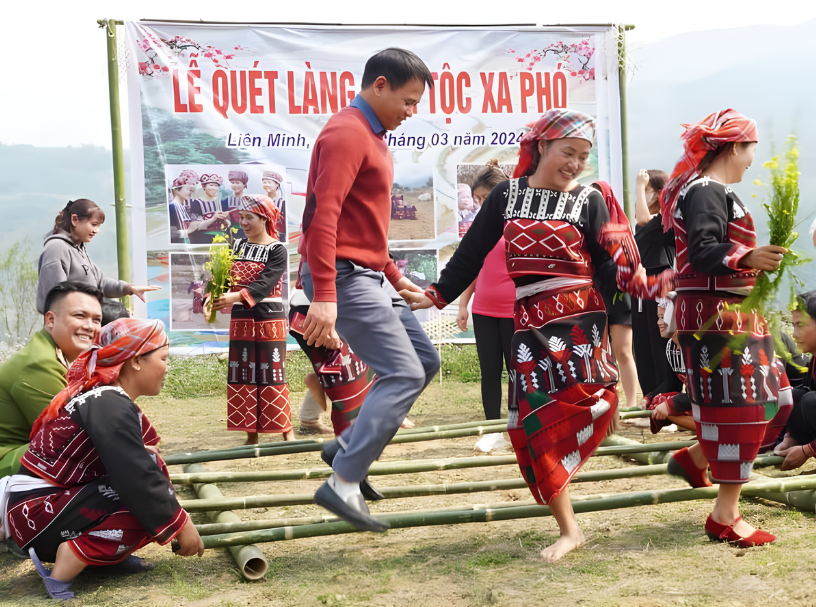
Sa Pa Village Sweeping Ceremony clearly reflects the cultural identity of the Xa Pho people. (Source: Collected)
This mandatory spiritual significance has contributed to consolidating unity and solidarity among families. In the diverse cultural space of the Northwest highlands, the Xa Pho people's village sweeping ceremony still maintains its role as a highly cohesive community religious practice, where spiritual elements are inseparable from daily life. Thanks to this, the ceremony not only preserves traditional beliefs but also fosters strong bonds between generations, creating internal strength for the Xa Pho community.
5.2. The Sa Pa Village Sweeping Ceremony in the flow of cultural tourism
In the context of Sa Pa tourism increasingly expanding towards experiential and local cultural exploration, the Sa Pa village sweeping ceremony is gradually becoming known to many tourists as a unique ritual in the spiritual life of the Xa Pho community. Not for performance or mass tourism, the ceremony is still primarily organized for the religious needs of local residents, thereby preserving its authenticity and cultural depth.
For tourists who have the opportunity to learn, the village sweeping ceremony offers different experiences compared to visiting familiar natural landscapes. Instead of just observing, viewers can clearly feel the spirit of solidarity, community consciousness, and the harmonious relationship between humans and the spiritual world of the highland residents. From there, the ritual becomes a special cultural slice, helping tourists broaden their perspective on Sa Pa - a space that preserves vibrant and enduring cultural values.
In the current flow of cultural tourism, religious practices like the village sweeping ceremony have contributed to enriching the tourist experience, while also posing requirements for preservation and respect for identity. Preserving the ritual in its proper space, community, and original meaning is the foundation for the Sa Pa village sweeping ceremony to continue to be maintained as a living cultural heritage of the Xa Pho people in Sa Pa.
6. Experience and notes when attending the Sa Pa village sweeping ceremony
6.1. Attire, behavior, and notes on respecting culture
When attending the Sa Pa village sweeping ceremony, visitors should choose simple, modest attire, suitable for the sacred atmosphere of the ritual and the highland climate. It is best to choose warm clothing and sturdy shoes for convenient movement on mountainous terrain. The important thing is to comply with the ceremony's regulations, do not take offerings home but consume them all on-site together. Visitors will be guided to walk through the bonfire according to traditional rituals and must follow the instructions correctly. When taking photos, focus on maintaining solemnity, avoiding recording sacred moments of the ritual. Behaving politely and respecting the villagers is a way to help protect the solemn atmosphere and meaning of the village sweeping ceremony.
6.2. Suggestions for a complete travel experience combined with other destinations
To make the exploration journey complete and in-depth, visitors should proactively research and book community-based tours early through reputable travel agencies experienced in organizing local cultural tours.
Besides attending the village sweeping ceremony in Lien Minh, the trip can be enriched by combining visits to other typical destinations in the Sa Pa area such as Sun World Fansipan Legend - where tourists can easily conquer the 3,143m Fansipan peak, Muong Hoa terraced rice valley, or Sa Pa love market. The interweaving of local cultural experiences and exploration of highland landscapes and life will help the trip balance depth and diversity.
Additionally, tourists should contact local services in advance to get advice on accommodation, transportation and especially a guide knowledgeable about the customs and traditions of the Xa Pho people. A guide or tour guide will help explain the meaning of the ritual and assist tourists in integrating more naturally into community life.
During the experience journey, tourists can bring cameras or notebooks to record memorable moments. However, show tact by asking for permission before taking photos or recording. It is this respect and integration that will bring tourists deeper experiences at ethnic festivals.
The Sa Pa village sweeping ceremony is a symbol of unique cultural values, clearly reflecting the community spirit and beliefs of the Xa Pho people in the Northwest region. As Sa Pa increasingly asserts its position as a cultural-experiential tourist destination, a festival with spiritual depth like the village sweeping ceremony becomes more precious than ever. Don't miss a trip to Sa Pa to capture meaningful moments and explore the spiritual depth amidst the natural mountains and forests on this special occasion!