

















1. Reasons to choose to go by car to Sa Pa
Many families and groups of young people increasingly choose the experience of going by car to Sa Pa due to the clear advantages this mode of transport offers. When driving yourself, you can comfortably arrange your departure time as you wish and easily stop to admire the scenery along beautiful routes like the Noi Bai and Lao Cai expressways and the Sa Pa surrounding areas. This is very suitable for large groups or families with young children, as carrying luggage and personal belongings will be more convenient and lighter.
The economic aspect is also of great concern: when traveling in a large group, the total cost for gasoline and road tolls is about 1,200,000 to 1,500,000 VND for one way with a 7-seater car carrying 4-6 people, which calculates to about 200,000 to 375,000 VND per person, saving quite a lot compared to other types of transportation such as buses or limousines.
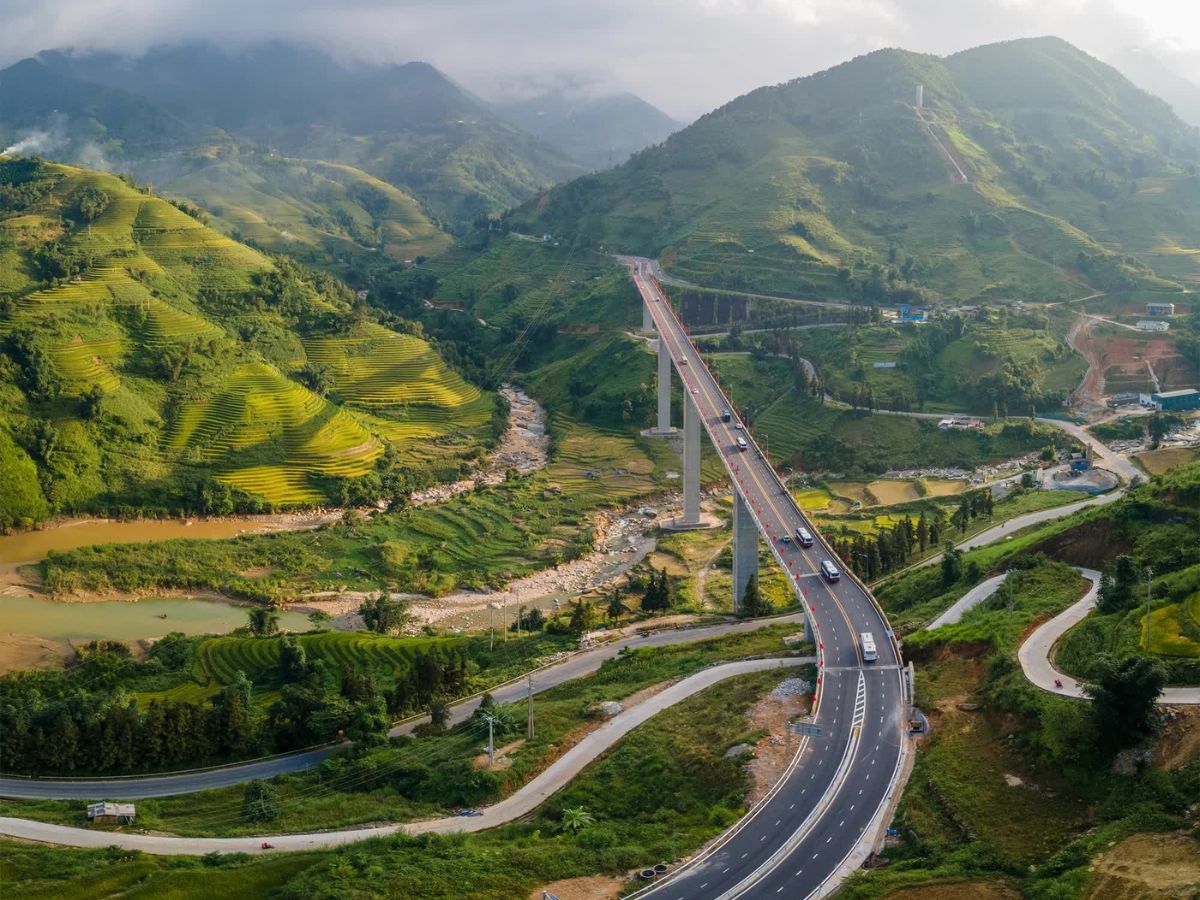
The Noi Bai – Lao Cai expressway leads directly to Sa Pa, suitable for self-driving trips with friends or family. (Source: Collected)
The modern Noi Bai – Lao Cai expressway has 4 lanes, with good quality road surface, helping to shorten travel time to about 5-6 hours depending on traffic conditions. Clear signs and convenient rest stop system along the way support you to stop, refuel, and rest, creating a journey that is much safer and more convenient than before.
2. Detailed Route to Sa Pa by Car
2.1. Overview of Hanoi – Sa Pa Route
To drive to Sa Pa from Hanoi, you will depart from the city center, cross Nhat Tan Bridge, and then merge onto the Noi Bai – Lao Cai expressway. This expressway is about 245 km long, ending at Lao Cai city. From here, you continue to turn onto National Highway 4D to cross another 30 km of mountain pass road to reach Sa Pa town.
The total journey from Hanoi to Sa Pa is about 320 km, with an estimated travel time of 5 to 6 hours depending on traffic density and the driver's experience. This is a safe and convenient route, suitable even for those new to long-distance driving.
2.2. Notes When Driving the Hanoi – Lao Cai Expressway
On the Noi Bai – Lao Cai expressway, service stations are located at various points such as Phu Ninh rest stop in Phu Tho, and at IC14 and IC19 exits. These locations offer full services like refueling, dining, and resting, which are ideal for a short break every 100-150 km of the journey.
The permitted speed limit on the expressway can range from 80 to 100 km/h depending on the lane; the outermost lane is for faster vehicles while the inner lane is for slower traffic. Drivers should prepare cash or an ETC card for convenient toll payment at toll stations to avoid interrupting the trip. In winter, when the weather is foggy or rainy, visibility is reduced, you should slow down, use low beam headlights, and maintain a safe distance from the vehicle in front to ensure the safety of the group.
2.3. Conquering the 30 km Mountain Pass to Sa Pa from Lao Cai
After leaving Lao Cai city, the final 30 km of mountain pass road to Sa Pa is a challenging and emotional segment in the Sa Pa car travel experience. National Highway 4D is famous for its steep slopes, continuous curves, with dense forests on both sides, creating a feeling of excitement and requiring high concentration.
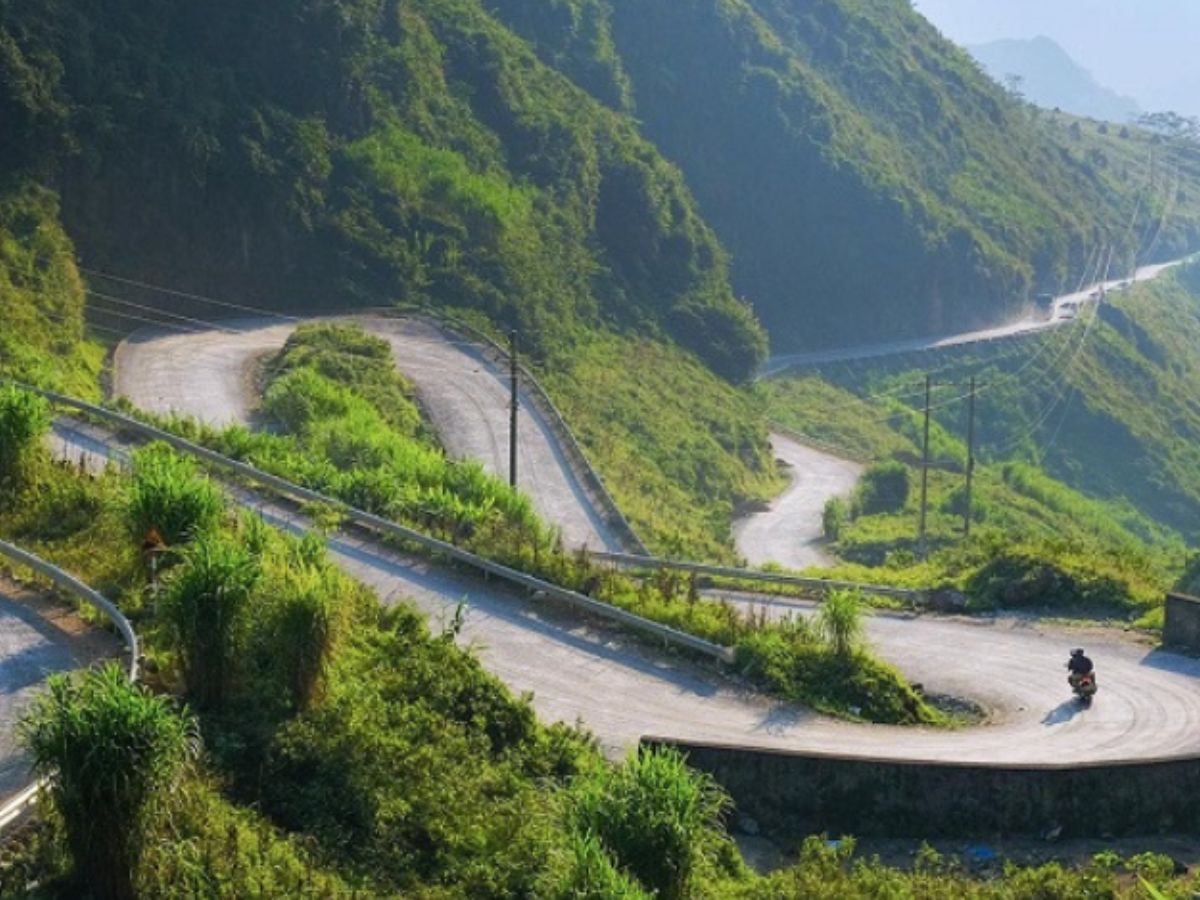
The final pass from Lao Cai to Sa Pa with its curves and majestic mountain scenery requires focused and safe driving. (Source: Collected)
You should proactively reduce your speed to about 30-40 km/h, prioritizing the use of engine braking instead of continuous braking to prevent brake pad overheating. Headlights should be turned on even during the day to increase visibility to other vehicles, especially when encountering thick fog.
It is advisable to plan your pass crossing during daylight hours, ideally before 4 PM to take advantage of natural light. In dark conditions or thick fog, consider stopping to wait for the weather to clear or proceed with extreme caution to ensure absolute safety for the entire group.
3. Ideal Time to Drive to Sa Pa by Car
Choosing the right time will determine the quality of your journey in the Sa Pa car travel experience. From December to February, Sa Pa frequently experiences freezing weather, with temperatures potentially dropping below 0 degrees Celsius, dense fog, and sometimes frost in high areas like Fansipan or O Quy Ho pass. During this time, visibility is limited, and tires can easily slip, requiring drivers to have extra experience and be well-prepared.
In February and March, Sa Pa transforms with plum and peach blossoms blooming across the villages. The weather is mildly cold and fresh, creating favorable conditions for exploring local culture and capturing impressive photos. Daytime temperatures range from 10 to 18 degrees Celsius, quite pleasant for outdoor activities. From May to June is when the weather is mild, and the terraced fields are covered in lush green. Temperatures range from 15-25 degrees Celsius, suitable for picnics, trekking, or family outings, while also avoiding the heavy rainy season of July-August.
Especially, from August to October is when Sa Pa transitions into its golden season, with rice fields ripening vibrantly and magical cloud-hunting scenery, particularly in late September. Days are cool, nights are chilly, and low rainfall makes the Sa Pa car journey more convenient. This is also the time when photography enthusiasts and backpackers often choose to capture the most beautiful moments of Sa Pa.
4. Preparing Vehicle and Documents for Driving to Sa Pa
4.1. Vehicle Maintenance and Inspection Before the Trip
A safe Sa Pa car trip begins with vehicle preparation. Drivers need to thoroughly check tires, ensuring sufficient tread depth and correct tire pressure (2.2-2.5 bar) as Sa Pa's roads have many steep passes and sharp turns. A set of standard tires helps reduce the risk of losing control or skidding on slippery roads, especially after rain.
The braking system needs a comprehensive check, including brake pad thickness and remaining brake fluid level. Driving on mountain roads frequently requires responsive braking to control speed effectively. Engine coolant must also be replenished, as the engine will operate continuously for many hours on long uphill stretches, posing a high risk of overheating.
Do not forget to check the engine oil, lighting system, wipers, and windshield. The fuel tank should be filled before setting off, and you can also carry 5-10 liters of spare fuel in case you cannot find a gas station on deserted stretches.
4.2. Documents to Bring for Long-Distance Self-Driving
When planning your Sa Pa car travel experience, drivers need to prepare the original vehicle registration certificate, a valid driver's license, civil liability insurance, and an ID card (CCCD) or passport. You should keep these documents in a waterproof pouch to have them readily available when needed. Vehicle material insurance is a recommended option, especially when traveling on long journeys and challenging terrains like Sa Pa. The cost of insurance is not too high but will give you more peace of mind against unexpected risks.
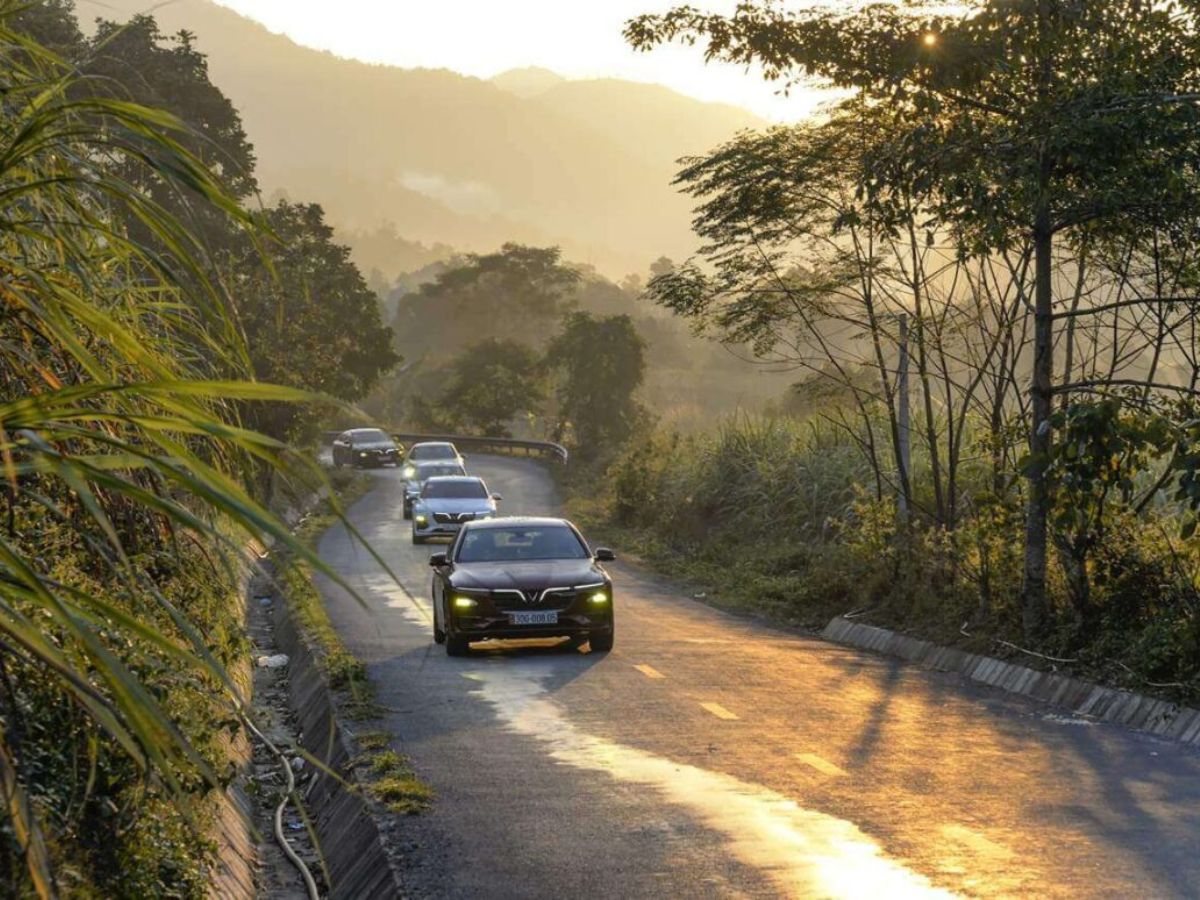
Check vehicle and documents before departure: new tires, good brakes, complete permits — the secret to safe driving in Sa Pa. (Source: Collected)
If the group is large, arrange for 2 to 3 people who know how to drive, have valid licenses, and are ready to take turns driving on long routes. This will help everyone rest, maintain alertness, and make the trip safer.
4.3. Necessary equipment and emergency medical supplies
In the packing list for the Sa Pa car travel experience, an emergency medical kit is an indispensable item. It should contain medicines such as motion sickness medication, headache pills, stomach medicine, bandages, a thermometer, and antiseptic alcohol. Motion sickness medication is very useful when traveling on winding mountain passes. You should also prepare drinking water and some light snacks like biscuits, ginger candies, and dried fruits to refuel along the journey. Ginger candies have a natural anti-motion sickness effect, suitable for both children and adults.
Regarding clothing, a thick jacket, scarf, gloves, and a woolen hat are essential, especially if traveling in the cold season. The temperature in Sa Pa can change rapidly; it can be warm during the day but drop to 5-10 degrees Celsius at night. If there are young children in the group, parents should prepare small toys, milk, baby food, and specialized fever reducers for children.
5. Tips for exploring Sa Pa by car independently
When traveling to Sa Pa by car independently, you have the opportunity to stop comfortably at famous cloud-hunting spots and check-in points along the way. O Quy Ho Pass is called the "love road" with winding curves amidst a sea of white clouds, especially captivating in the early morning from 6 to 8 AM. Fansipan Peak, with its modern cable car system, is an ideal destination to reach the "Roof of Indochina" in the cool mountain air.
Muong Hoa Valley and Sa Pa Heaven Gate are beautiful places for photos with terraced fields and rolling mountains. In the late afternoon, around 4 to 6 PM, the golden sunlight shines through the rice paddies, creating a picturesque scene like an oil painting.
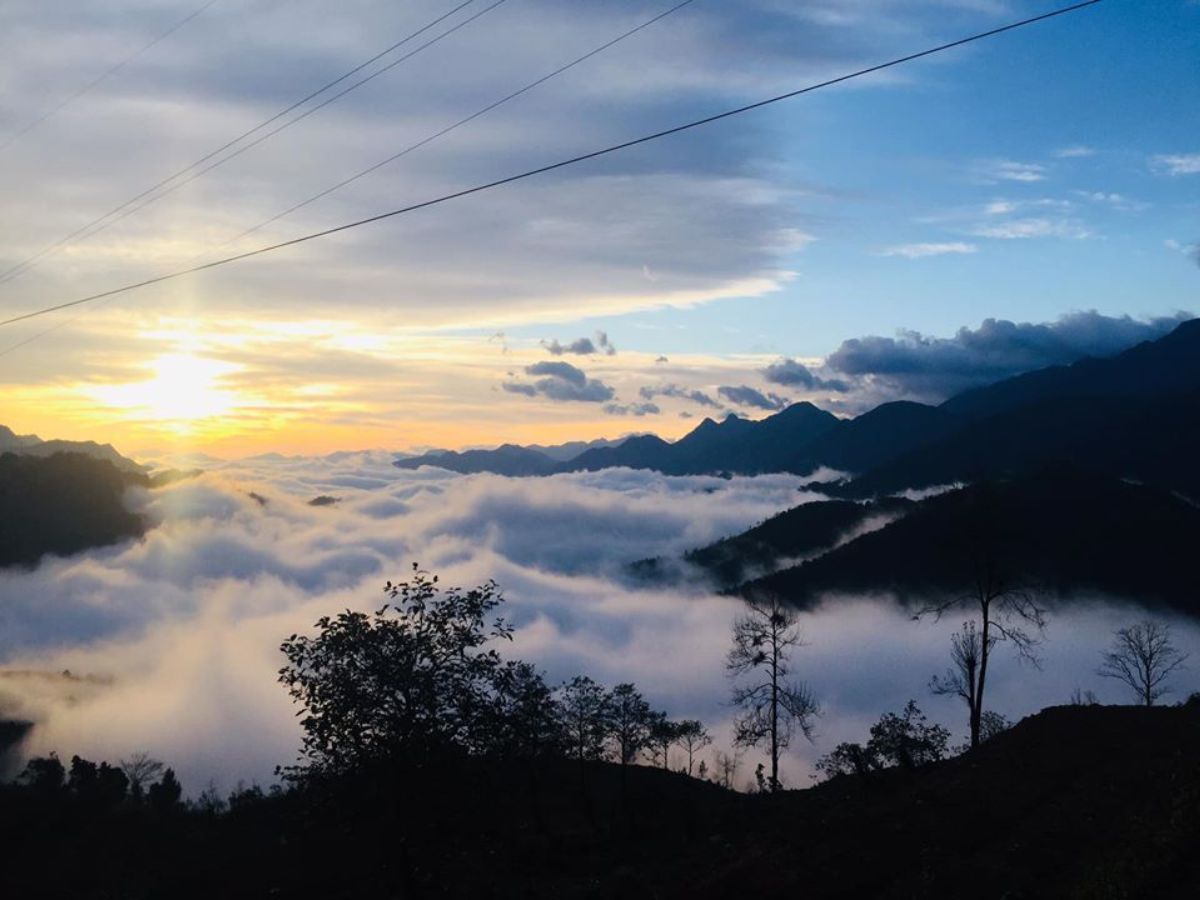
Morning mist on O Quy Ho Pass — turn on low beams, reduce speed, and maintain distance when driving in the mountain season. (Source: Collected)
In the center of Sa Pa, the demand for motorbike rentals to visit villages is easily met with many reputable shops. The rental price for manual transmission bikes is about 70,000 to 100,000 VND/day, suitable for the many steep and rocky roads in the villages. You should choose manual transmission bikes over automatic scooters because manual bikes are more powerful and better suited to the terrain.
Sa Pa's cuisine is very diverse with dishes such as salmon hot pot, đặc trưng thắng cố, grilled free-range pork on charcoal, and traditional corn wine. Some restaurants around the square like Hai Lam, A Phu, and Hoa Dao are highly rated for their quality and reasonable prices. On weekends or holidays, you should book a table in advance to ensure the most comfortable seating.
6. Suggested famous tourist destinations in Sa Pa.
6.1. Sun World Fansipan Legend – The symbol of "The Roof of Indochina"
Sun World Fansipan Legend is one of the outstanding destinations that cannot be missed on the journey of Sa Pa car travel experience. Part of the Sun Group ecosystem, this place boasts an advanced cable car system that allows tourists to easily reach the Fansipan peak at 3,143 m. From above, you will admire the majestic Hoang Lien Son mountain range and endless seas of clouds.
At the spiritual complex on the mountaintop, the 21.5 m tall Amitabha Buddha statue, Bao An Zen Monastery, and the 6-ton Great Bell create a sacred atmosphere amidst the vast mountains. Especially, the largest rose garden in Vietnam with thousands of imported rose bushes directly from Europe, blooming all year round, is an impressive highlight in the characteristic cool mountain weather.
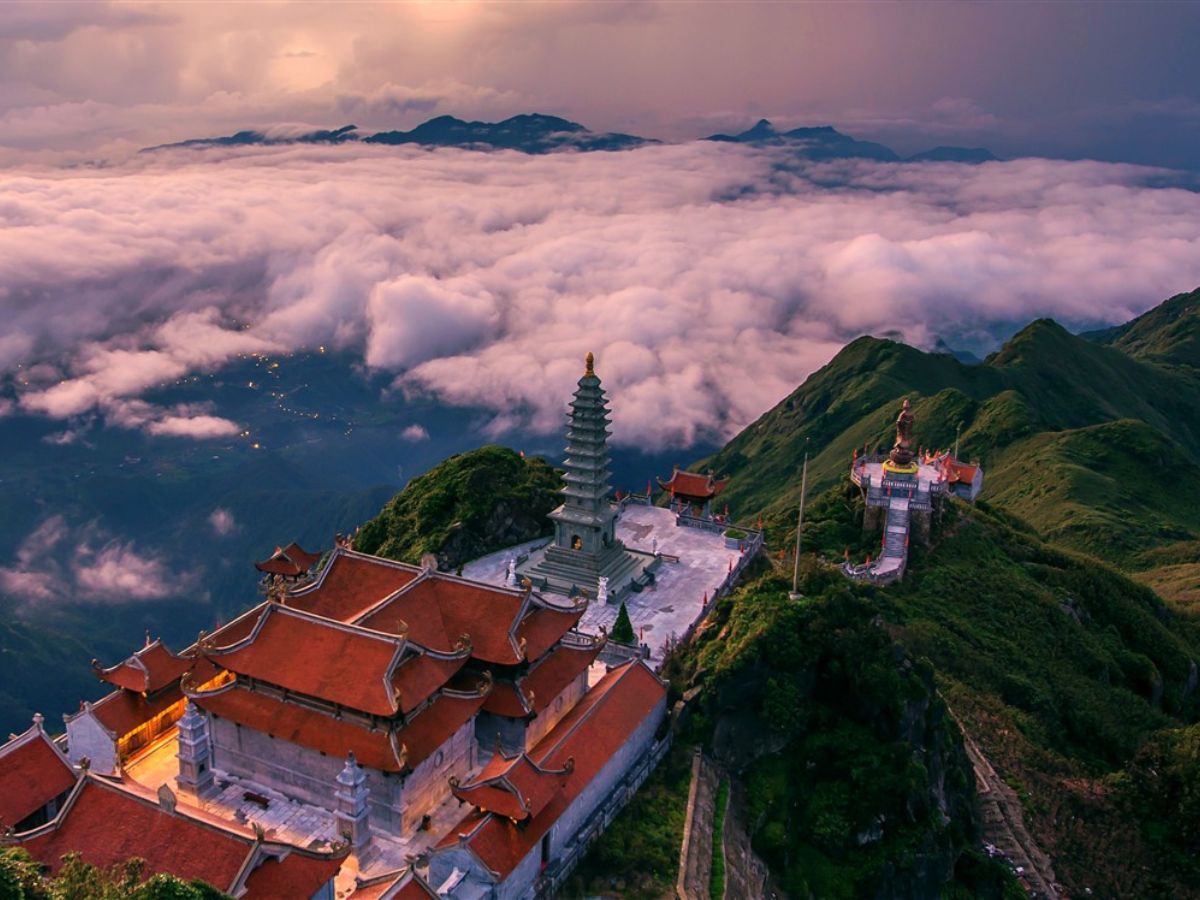
Fansipan Peak – The Roof of Indochina, a legendary destination where seas of clouds surge at the traveler's feet. (Source: Collected)
You can choose to visit in the early morning (7-9 AM) or late afternoon (3-5 PM), when the gentle sunlight and leisurely drifting clouds create an unusually beautiful scene. The round-trip cable car ticket price is 800,000 VND/adult, including the ticket for the Muong Hoa mountain train.
6.2. Cat Cat Village – Cultural space of the H'Mong people
Just 2 km from the town center, Cat Cat village is an ideal place to feel the traditional rhythm of the H'Mong people during your Sa Pa car travel experience. The path into the village is paved with natural stones, winding along the mountainside, with yin-yang tiled wooden houses on both sides, showcasing the ethnic group's characteristic architecture.
Cat Cat Waterfall with its clear blue water cascading from a height of 30 meters, combined with ancient water wheels and wooden bamboo bridges, creates attractive photo stop points. The earth-walled houses of the H'Mong people, adorned with vibrant brocade artworks, tell stories of cultural identity through generations.
You can try wearing traditional costumes for 50,000 to 80,000 VND, and enjoy clear corn wine, thang co, and delicious grilled dishes characteristic of the highlands. The entrance fee for Cat Cat village is 70,000 VND/adult, and it is open daily from 6 AM to 8 PM.
6.3. Muong Hoa Valley – May Bridge – Lao Chai – Ta Van.
Muong Hoa Valley is likened to a golden silk ribbon winding through the Northwest mountains, nổi bật bởi ruộng bậc thang bậc nhất Việt Nam. When traveling to Sa Pa by car, you can stop at many scenic spots to admire the valley's beauty from above, especially during the water-flooding season in April-May or the ripe rice season in September-October.
May Bridge is a famous photo spot with its dreamy sea of clouds, attracting photographers and young explorers. The time from 5:30 AM to 7 AM is the ideal moment when clouds swirl around the bridge, creating a feeling of being in a fairy-tale land.
Lao Chai and Ta Van villages, located along the valley, allow visitors to trek through paths amidst the terraced fields, visit local homes, and experience traditional agricultural life. Half-day trekking tours typically cost from 300,000 to 500,000 VND/person, including a guide and a local lunch.
6.4. Sa Pa Stone Church and Central Square
Sa Pa Stone Church is an iconic structure built in 1903, featuring French Gothic architecture. The 20-meter-high building is constructed entirely of natural stone, creating an ancient and solemn beauty amidst the majestic natural landscape.
The central square in front of the church is where the Sa Pa love market is held every weekend evening, a cultural exchange venue for the Mong and Dao ethnic groups with their vibrant costumes and sweet folk songs. Here, visitors can try learning the 'Xoe' dance, dress up in ethnic costumes, and enjoy many attractive street food options.
In the evening, the square area often hosts performances of traditional musical instruments such as the 'khen', 'dan tinh', and 'ken bau'. Food stalls offer grilled spring rolls, grilled rice paper, and fish cakes at prices ranging from only 10,000 to 30,000 VND, perfect for enjoying in Sa Pa's cool weather.
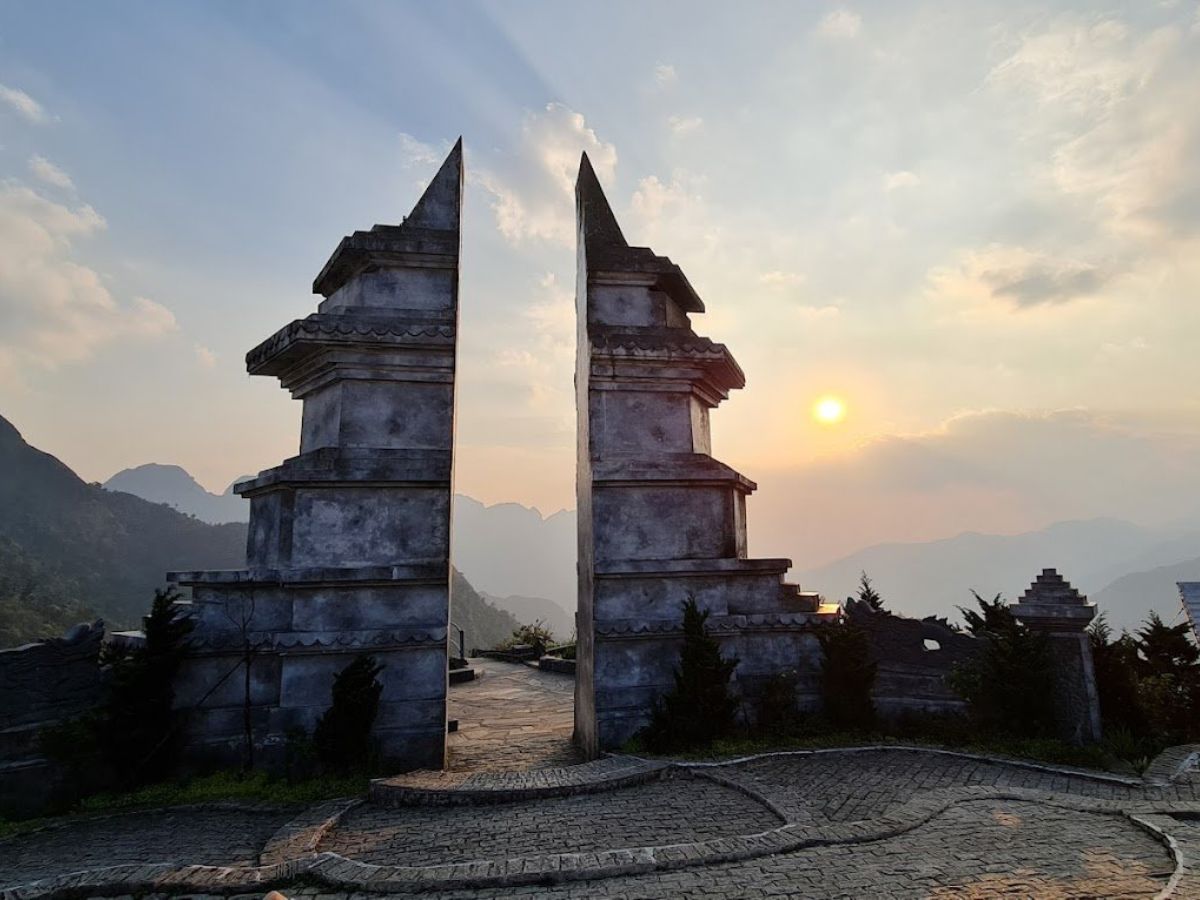
Stop at Heaven's Gate Sa Pa (Cổng Trời Sa Pa) by car to admire the panoramic view of mountains and white clouds — a perfect check-in spot. (Source: Collected)
6.5. Dragon Jaw Mountain (Núi Hàm Rồng) – Town panoramic view
Dragon Jaw Mountain (Núi Hàm Rồng) is located right behind the stone church, making it a light trekking spot suitable for all ages on the journey of Sa Pa car travel experience. The path up the mountain is built with natural stone steps with a moderate slope, taking about 45 minutes to climb to an altitude of 1,800 m.
From the summit of Dragon Jaw Mountain (Núi Hàm Rồng), you can gaze out over Sa Pa town nestled in the valley, the shimmering central lake, and the Fansipan peak hidden in the ethereal white clouds. The period from 6-8 AM and 4-6 PM is ideal for enjoying the fresh air and the best light.
The Orchid Garden on the mountain gathers over 100 rare wild orchid species characteristic of the Northwest region. Heaven's Gate (Cổng Trời) and Cloud Yard (Sân Mây) are popular check-in spots. The entrance fee for Dragon Jaw Mountain (Núi Hàm Rồng) is 70,000 VND/adult, open from 5 AM to 9 PM, convenient for visitors to watch the sunrise or sunset.
6.6. Silver Waterfall (Thác Bạc) – Ô Quy Hồ Pass – Heaven's Gate Sa Pa (Cổng Trời Sa Pa)
The journey from Sa Pa center to Silver Waterfall (Thác Bạc) is 12 km long, an ideal choice for those who love conquering challenges in the Sa Pa car travel experience. Silver Waterfall (Thác Bạc) is over 200 m high with a strong flow creating white foam all year round, echoing throughout a large area.
Ô Quy Hồ Pass is notable for its winding curves hugging the mountainside. From here, you can see the majestic Fansipan peak rising and the mystical sea of clouds surrounding it. The pass stretches 50 km, connecting Sa Pa with Lai Châu, with its highest point at an altitude of 2,000 m, making it one of Vietnam's most beautiful mountain passes.
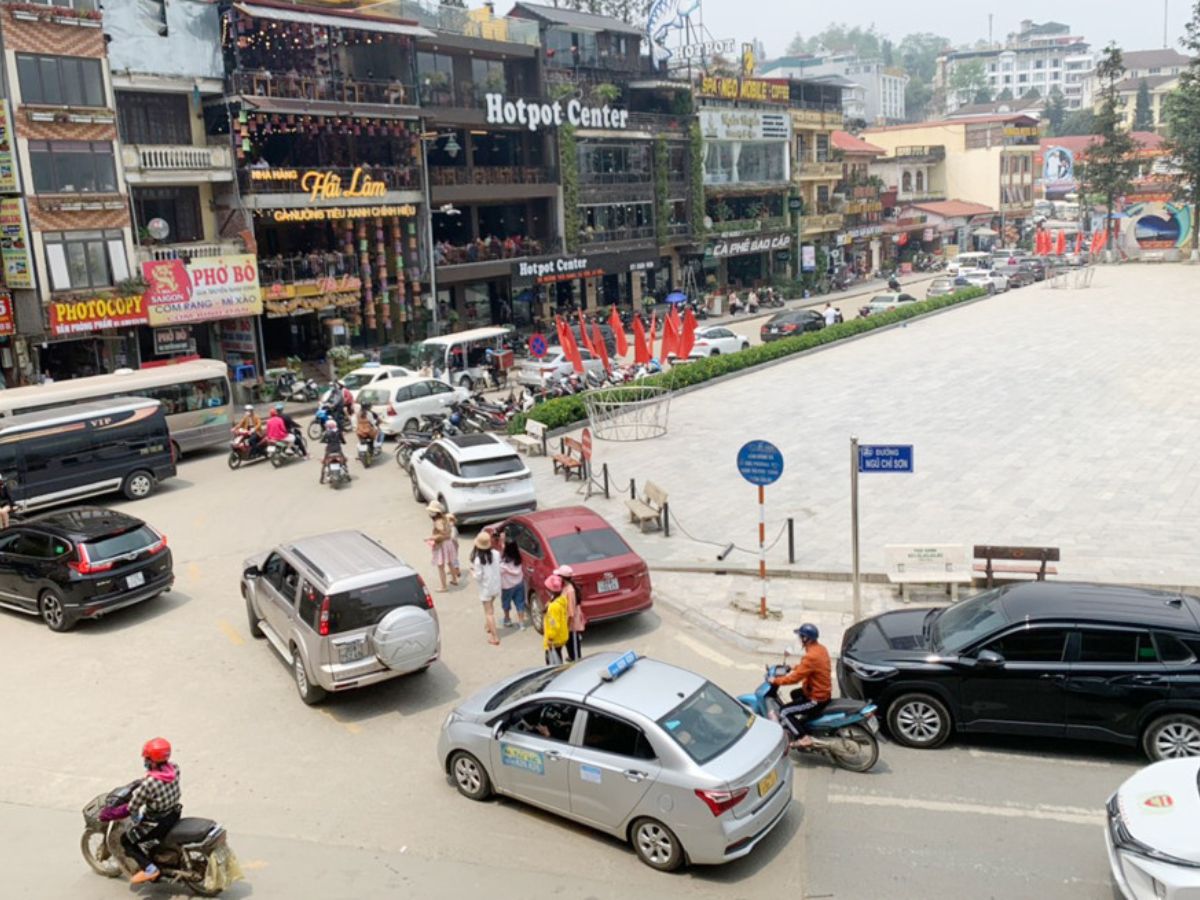
Parking in the center of Sa Pa town, convenient for walking to visit the stone church, night market, and enjoy local cuisine. (Source: Collected)
The Sa Pa Sky Gate, located on O Quy Ho Pass, is an ideal stop to gaze at the year-round lush mountains and forests. You should choose the period from September to November to explore, as the weather is cool, with dense clouds and little rain. Departing in the morning from 7-8 AM will give you plenty of time to explore and return before dark.
Sa Pa car travel experience offers you wonderful experiences that cannot be obtained by other means. From thorough preparation, choosing the right time to explore each route, every detail contributes to a memorable trip. Apply the above tips for a safe, complete, and emotional Sa Pa journey!