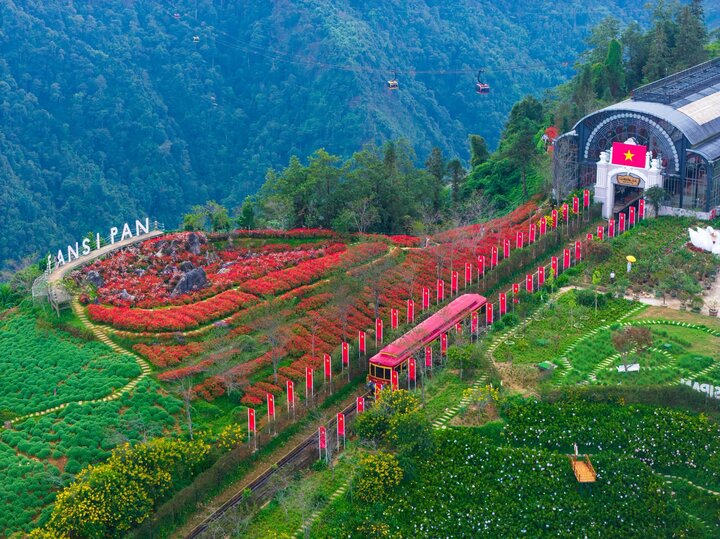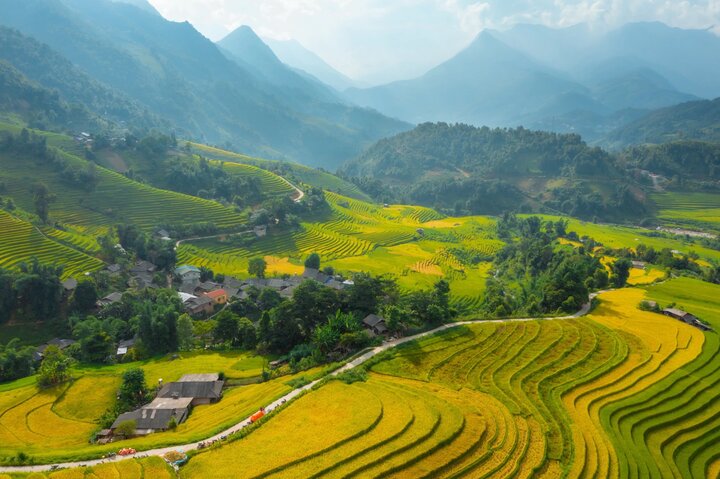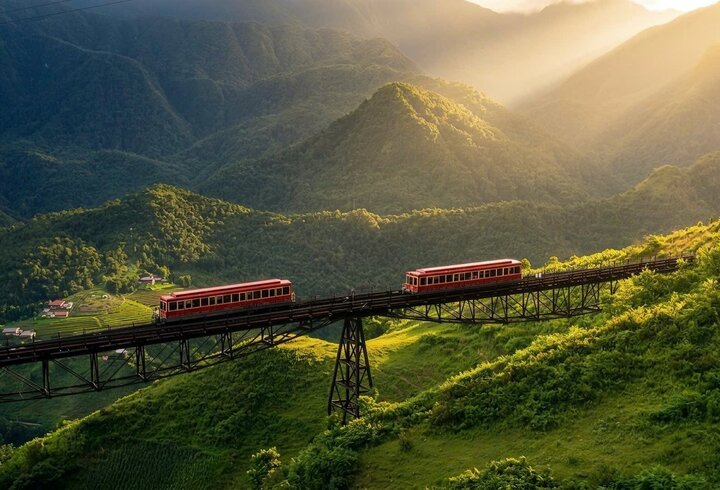

















1. Fansipan Overview: 4 Seasons Year-Round
Which is more beautiful, Fansipan in summer or winter is a common question for tourists before planning to conquer the “roof of Indochina” at Sun World Fansipan Legend. However, Fansipan does not have a fixed “most beautiful season”, because each time of year opens up a different layer of landscape, changing with the altitude over 3,000m, wind direction, and the movement of clouds and sky. It is this continuous transformation that makes Fansipan always retain its special charm, no matter which season tourists return.
In spring, Fansipan possesses a gentle and pure beauty, as if just waking up from winter's long sleep. The air is still chilly, thin mists weave through the mountains and forests, while the trees begin to bud and sprout, creating a fresh and vibrant feeling. This is a time when nature is not yet too brilliant but has depth, suitable for those who love tranquility and want to experience a gentle, slow-paced Fansipan.

Fansipan each season brings a unique beauty
In summer, Fansipan enters the most vibrant period of the year. The entire space is covered by the green of the Hoang Lien Son mountains, interspersed with continuous drifting clouds, sometimes dense, sometimes dissipating to reveal deep valleys below. The cool weather makes the journey pleasant, while also opening up unique experiences such as cloud hunting, sightseeing from the cable car, and exploring the high mountain ecosystem in ideal conditions.
In autumn, Fansipan becomes clearer and more balanced in terms of weather and landscape. The sky is often clear, with a wide field of vision, making the entire Northwest mountain range appear sharper and more profound. Gentle sunlight, dry air, and little rain create favorable conditions for sightseeing, enjoying the scenery, and taking photos. This is when Fansipan possesses a tranquil beauty, not overly brilliant but very harmonious and pleasant.
In winter, Fansipan takes on a completely different appearance: deep cold, thick fog, and sometimes frost or rime ice at the high peak. The space becomes quiet, almost detached from the world below, creating a sense of mystery and awe. This harshness creates its own unique charm, making Fansipan one of the few destinations in Vietnam that can offer a true high mountain winter experience.
2. What's special about Fansipan in the summer?
If asked which is more beautiful, Fansipan in summer or winter, summer is often considered the time that offers the “most comfortable and activity-rich” experience at Sun World Fansipan Legend. Not as harsh as winter, nor as volatile as the transitional seasons, summer Fansipan creates a balance between cool climate, lush green scenery, and frequent dense clouds, making it very suitable for both sightseeing and exploration.
2.1. Cool and pleasant climate
One of the things that makes summer Fansipan so attractive is its characteristic cool temperature, ranging from about 15–22°C. While many lowland areas are experiencing scorching hot sunny days, Fansipan peak offers a completely opposite atmosphere: pleasant, airy, and sometimes chilly in the early morning or late afternoon.
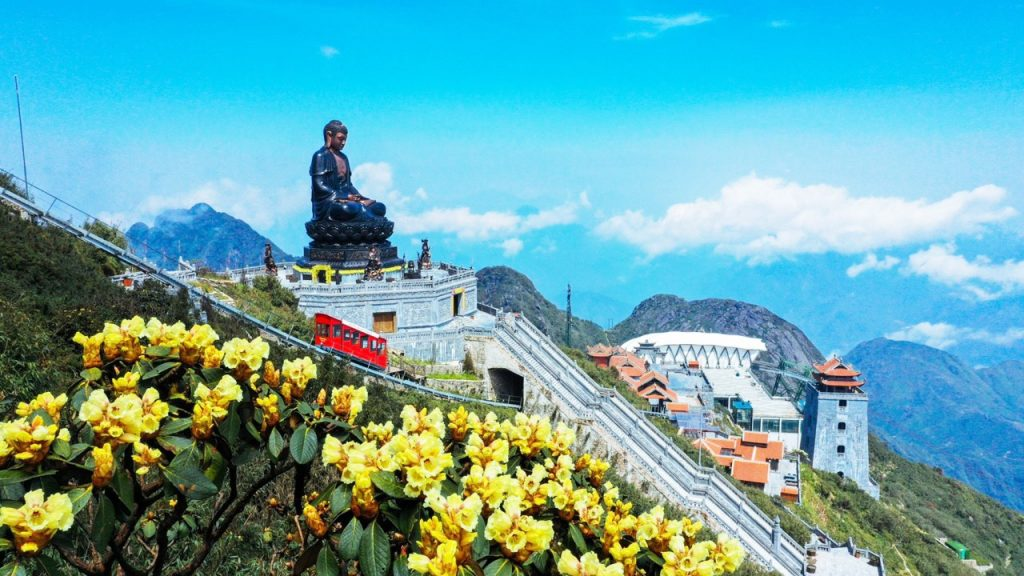
Cool and pleasant climate at the summit of Fansipan during summer days
This clear temperature difference makes the journey to Fansipan an interesting experience. The higher you go, the milder the air becomes, and the feeling of heat almost completely disappears, replaced by a gentle mountain breeze and the characteristic coolness of the highlands. This allows tourists to comfortably visit, walk, and explore without being significantly affected by the weather.
Furthermore, the cool climate also makes Fansipan an ideal "heat escape" destination in the summer. Without needing to travel far from the North, tourists can still enjoy the feeling of being in a miniature temperate climate right in the Northwest.
2.2. Constantly changing sea of clouds
The point that makes Fansipan particularly attractive in the summer is the clouds. This is the time when clouds appear frequently, move quickly, and change continuously throughout the day, creating dynamic and ever-new scenes at different times.
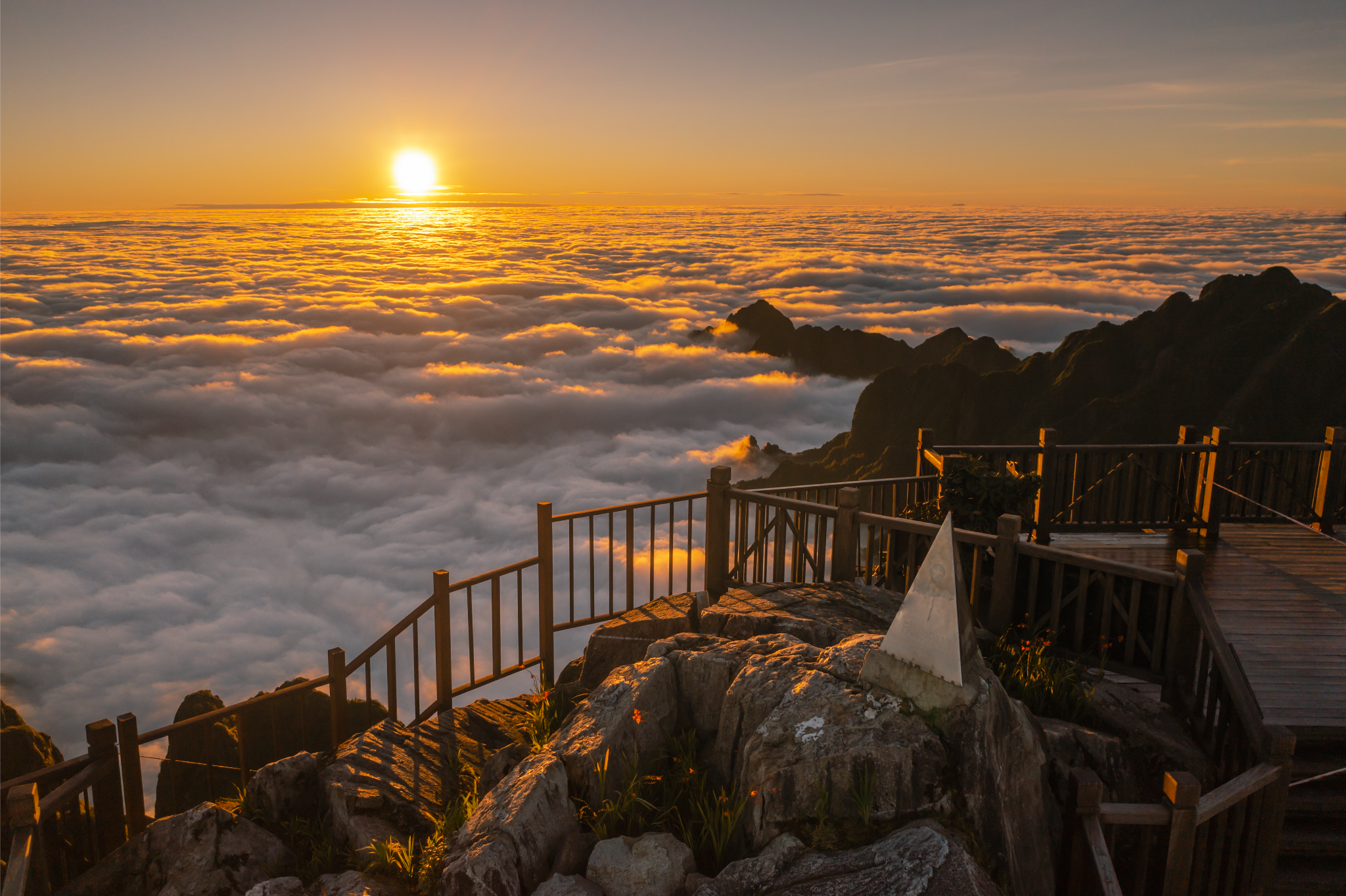
A picturesque sea of clouds under the sunset on Fansipan peak
Early morning is usually the most ideal time to admire the sea of clouds, when the entire Muong Hoa valley and surrounding mountains can be covered by a thick layer of white clouds. Viewed from above, this scene resembles a vast ocean of clouds, with only mountain peaks emerging like 'small islands' amidst the sky.
By noon or early afternoon, the clouds may dissipate, revealing the green patches of the Hoang Lien Son mountain range, and then quickly return in the late afternoon. This constant change makes every summer trip to Fansipan a different, unique experience.
2.3. Lush green landscapes and vibrant high-mountain ecosystems
Summer is also the time when Fansipan's nature reaches its clearest greenest point of the year. The entire Hoang Lien Son mountain area is covered by dense vegetation, creating continuous green patches from the foot of the mountain up to thousands of meters in altitude.
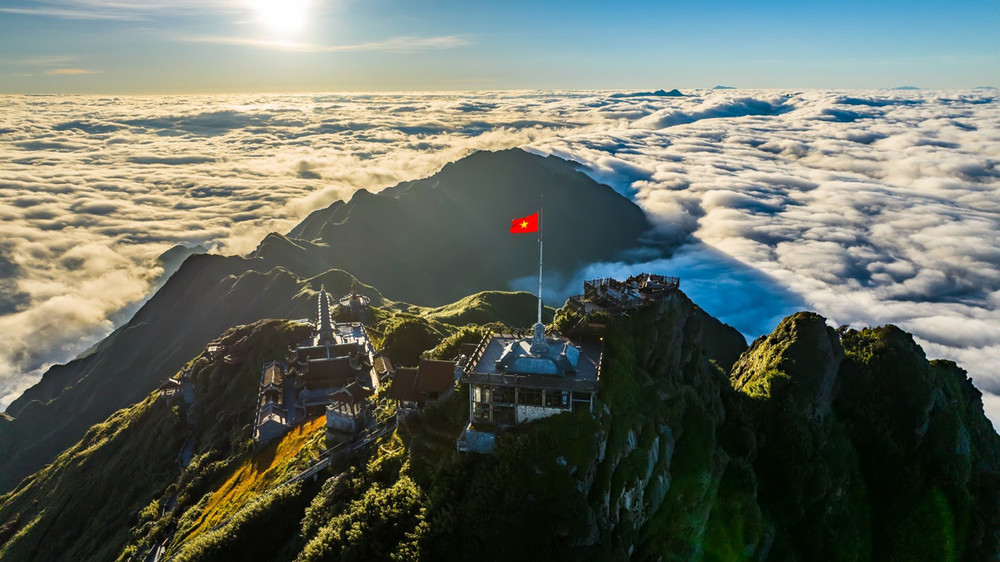
The lush green landscape of Hoang Lien Son mountains in summer
When clouds and sun interweave, the landscape becomes more profound, sometimes soft in mist, sometimes sharp under natural light. This change gives Fansipan in summer a very “flexible” beauty, both majestic and intimate, not too cold like winter but not too dry like the dry season.
Besides, the high mountain ecosystem becomes more vibrant, with many plant species thriving in humid and cool conditions. This contributes to creating a lively natural picture, very characteristic when compared in the question Is Fansipan more beautiful in summer or winter.
2.4. Convenient travel experience and diverse activities
Another great advantage of Fansipan in summer is the convenient sightseeing conditions. The weather is less harsh than in winter, making it easier for tourists to travel by cable car, walk to visit spiritual areas, flower gardens, or check-in spots on the mountaintop.
Summer is also an ideal time to combine many experiences in one trip: admire the scenery from the cable car, hunt for clouds in the morning, visit the architecture on Fansipan peak, and stroll in the vast natural space. Thanks to this flexibility, tourists can make the most of their time without being too limited by the weather.
It is the combination of pleasant climate, constantly changing scenery, and rich tourist activities that makes Fansipan in summer a very balanced choice in the question of Is Fansipan more beautiful in summer or winter.
3. What is characteristic of Fansipan in winter?
When weighing Is Fansipan more beautiful in summer or winter, winter is always the time that brings a completely different appearance to Sun World Fansipan Legend. If summer is green and soft drifting clouds, then winter is deep cold, thick fog, and sometimes snow and ice. It is this strong contrast that makes Fansipan in winter not just a tourist destination, but also a special, emotional, and unforgettable natural experience.
3.1. Deep cold air
Winter in Fansipan is characterized by a sharp drop in temperature, especially in the area above 3,000m. Right from the start of the cable car journey, visitors can feel the distinct change: the air gradually cools, then becomes biting cold as you ascend higher. The mountain wind blows stronger, carrying moisture and mist, making the cold sensation come not only from the temperature but also from the 
Temperature on Fansipan in winter can drop below zero degrees
Unlike the dry cold in the city, the cold at Fansipan is all-encompassing, seeping into every layer of clothing, every breath. This creates a very "real" experience of the Northwestern highlands – a place where the weather is not just felt by temperature but by all senses. For many tourists, this is the first time they truly "touch winter" in its truest sense.
3.2. Dense fog and mystical scenery
One of the most distinct characteristics of Fansipan in winter is the dense fog that lingers for many hours of the day. When fog blankets the area, the entire landscape at Sun World Fansipan Legend seems to have its boundaries "erased," leaving only hazy shapes of architecture, stone statues, and pathways amidst the white expanse.
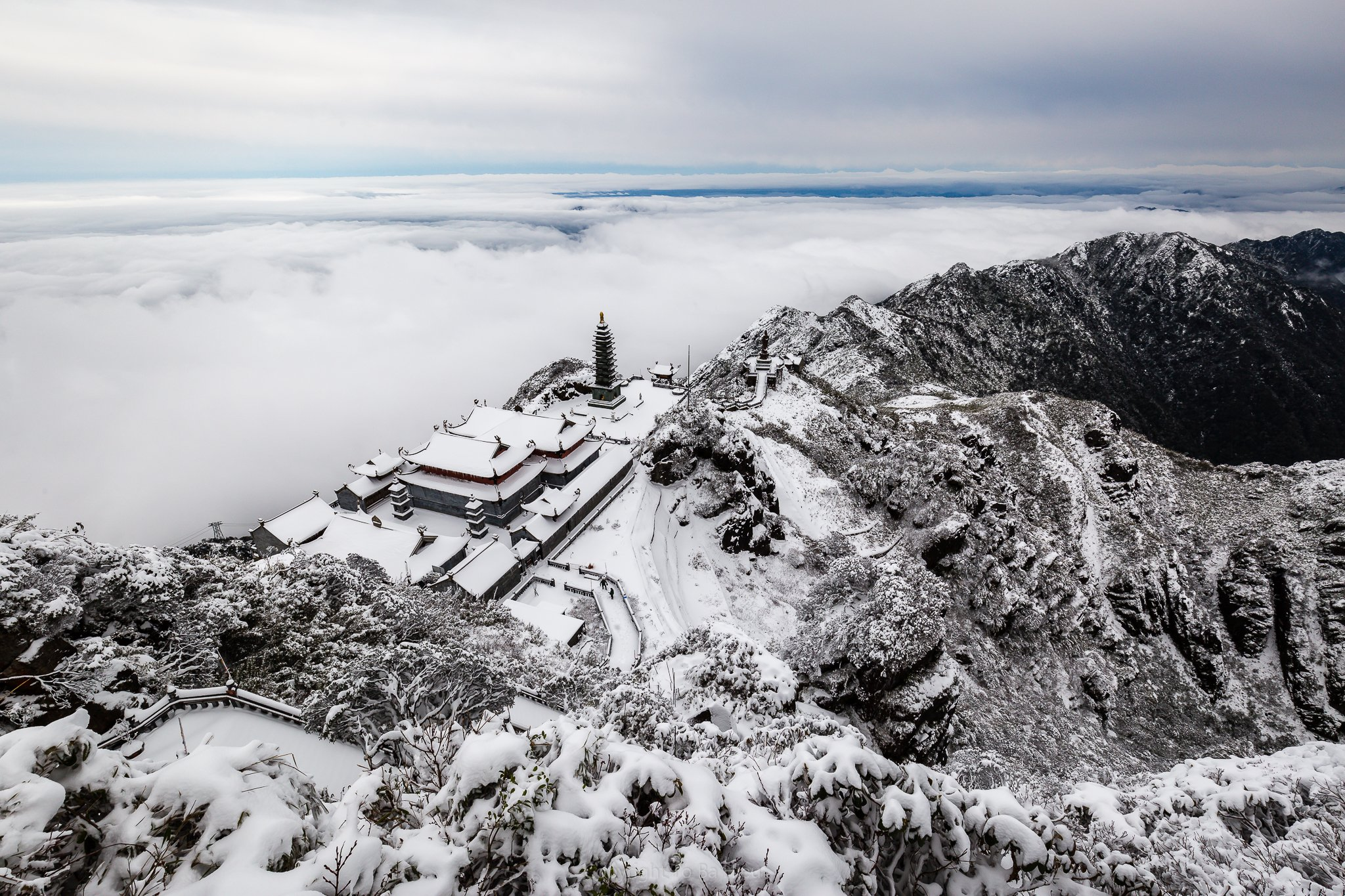
Mist and snow cover Fansipan peak
In these conditions, Fansipan possesses a very different beauty: not vibrant, not sharp, but leaning towards a sense of mystery and tranquility. Spiritual structures, appearing and disappearing in the mist, create a feeling like another world, where everything slows down and becomes lighter. It is this 'vagueness' that captivates many tourists, as it opens up more space for imagination and personal emotions.
3.3. Ice and frost – a rare but captivating phenomenon
One of the reasons why many people are interested in the question Is Fansipan more beautiful in summer or winter is the possibility of ice and frost appearing in winter. Although it doesn't happen every year, when the temperature drops low enough, the Fansipan peak area can experience a thin layer of ice or frost covering the landscape.

Tourists have the opportunity to admire ice and snow when visiting Fansipan in winter
At that time, the entire space transforms completely: trees, railings, architectural roofs, and stone steps are all covered with a faint white layer, creating a rare scene in Vietnam. Many tourists liken Fansipan at this time to a “little Europe” in the heart of the Northwest, both unfamiliar and impressive.
This rare element makes winter a time for “experience hunting”, rather than just sightseeing. Many people are willing to follow the weather to have the chance to witness the moment Fansipan turns white.
3.4. Tranquil atmosphere and emotion-centric experiences
Compared to the hustle and bustle of summer, Fansipan in winter has a much slower and quieter rhythm. The number of visitors is usually not too crowded, combined with the cold weather, making the space quiet, almost completely separated from the world below. In such conditions, tourists tend to walk slower, observe more closely, and feel every detail around them more deeply. The sound of the wind, the mist, and the tranquility of the mountains create a very special atmosphere, which is more contemplative than purely recreational.
This contrast makes Fansipan in winter an ideal choice for those seeking emotion-centric experiences, tranquility, and a sense of “escape” from the daily grind. And for this reason, the question Is Fansipan more beautiful in summer or winter always depends heavily on how tourists want to “feel” Fansipan.
In conclusion, the question Is Fansipan more beautiful in summer or winter has no fixed answer, as each season at Sun World Fansipan Legend offers a completely different experience. Summer is suitable for those who love lush green nature, enjoy cloud hunting, and convenient travel, while winter is attractive for its deep cold, mystical fog, and rare opportunities to witness ice and snow. Therefore, choosing the right time to visit Fansipan depends on each person's emotions and purpose of experience. Regardless of the season, Fansipan always offers special moments amidst the clouds and sky of the Northwest, making every trip a memorable journey in its own unique way.