















1. Overview of Hoang A Tuong Mansion and reasons to visit
1.1. Location and general information about Hoang A Tuong Mansion
Hoang A Tuong Mansion is located in the center of Bac Ha town, Lao Cai province, specifically at 257 Ngoc Uyen, right in the middle of the famous white plateau of the Northwest. This is one of the prominent destinations when traveling to Sapa – Bac Ha, conveniently accessible from the center of Lao Cai city, and also close to many other unique cultural and historical landmarks. Visitors coming here can not only admire the ancient architectural work but also have the opportunity to explore the rich life and history of the northern mountainous region.
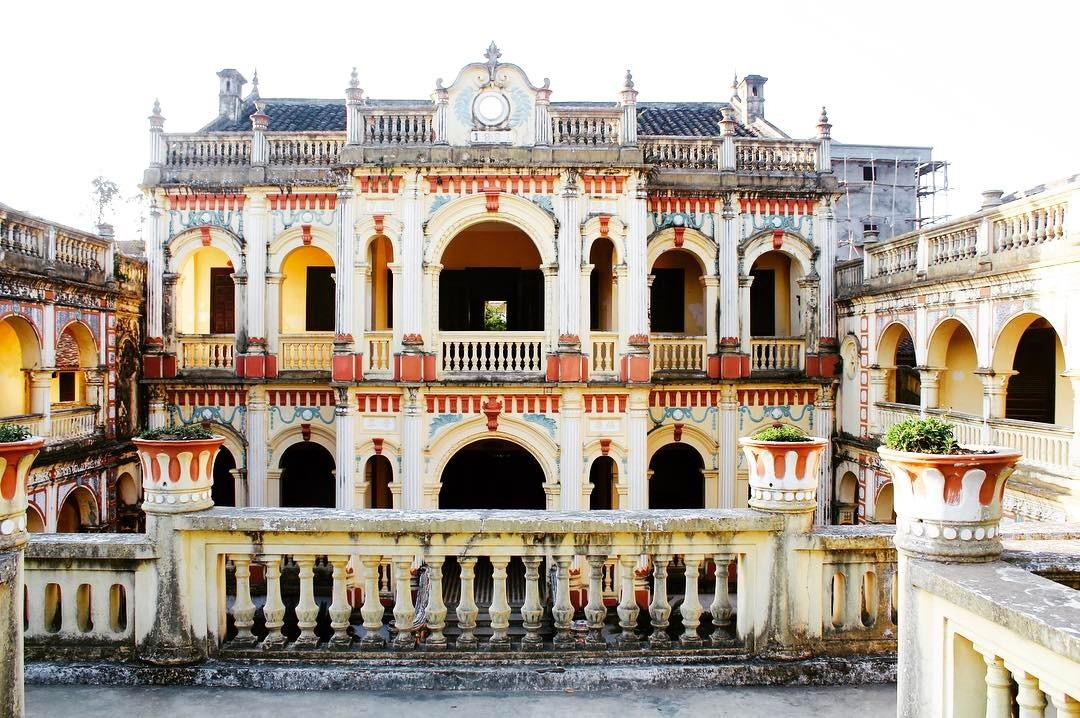
Hoang A Tuong Mansion is a famous ancient mansion in the highlands of Bac Ha (Source: Collected)
The mansion is open daily from 8:00 AM to 5:00 PM, suitable for both morning and afternoon visits. The current ticket price is approximately 20,000 VND for adults, 10,000 VND for children aged 6–16, children under 6 and people with disabilities are free, and those eligible for policy benefits will receive a 50% discount on tickets, making visits easier and more convenient for many types of tourists.
1.2. Why does Hoang A Tuong Mansion attract tourists?
The highlight that makes Hoang A Tuong Mansion an unmissable choice when visiting Bac Ha lies in the harmonious combination of historical value, unique architecture, and vivid visiting experience. Historically, this mansion was the center of political and economic activities of the "Cat King" Hoang Yen Chao in the early 20th century. Built from 1914 and completed in 1921, this work is a living testament to the power and distinct culture of the ruling class in the mountainous region at that time. In addition, Hoang A Tuong Mansion also preserves many historical stories about the French colonial period and the feudalism of the North, creating an attraction for tourists who love to learn about local history and culture.
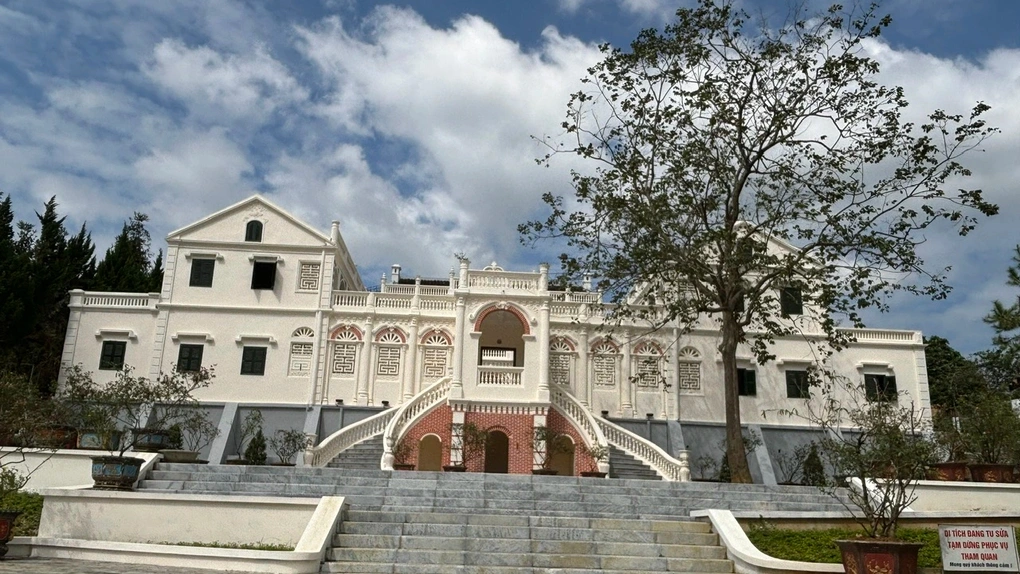
Asian - European style combined in the architecture of the Hoang A Tuong mansion (Source: Collected)
In terms of architecture, the Hoang A Tuong mansion impresses with its sophisticated blend of Asian and European styles. The yin-yang roof tiles, French-style arched windows, laurel leaf motifs, and spiral staircase create an overall appearance that is both elegant and imposing. The structure also adopts the Feng Shui layout of "leaning on mountains – stepping on water," combined with a spacious garden, airy corridors, and numerous elaborately decorated rooms, offering a space that is both ancient and harmonious with nature. This unique architecture not only makes the Hoang A Tuong mansion an ideal check-in spot but also a repository of the distinctive artistic and cultural values of the Northwest region.
The experience of visiting the Hoang A Tuong mansion is further enhanced by its spaciousness and numerous vibrant photo opportunities, from the ancient corridors and imposing gardens to the intricate decorative details. Visitors can explore, learn about history, and immerse themselves in the grandeur of a magnificent architectural work amidst the Northwest mountains, providing a comprehensive experience for families, friends, or photography enthusiasts.
2. History and the Hoang Family's Imprint on the Hoang A Tuong Mansion
2.1. The Hoang A Tuong Mansion during the time of the "King of the Hmong" in Bac Ha
The Hoang A Tuong mansion is closely associated with the name "King of the Hmong" Hoang Yen Chao, a prominent and powerful figure in the Bac Ha highlands in the early 20th century. Hoang Yen Chao was born into the Hoang family, one of the wealthiest and most influential clans in the Northwest region. Legend has it that the Hoang family had been present in Bac Ha for generations, involved in local administration, trade, and politics, establishing a strong position in society at the time. When Hoang Yen Chao built the Hoang A Tuong mansion, it served not only as a residence but also as a center of power, a venue for important events, and a place to host guests, French officials, and local leaders.
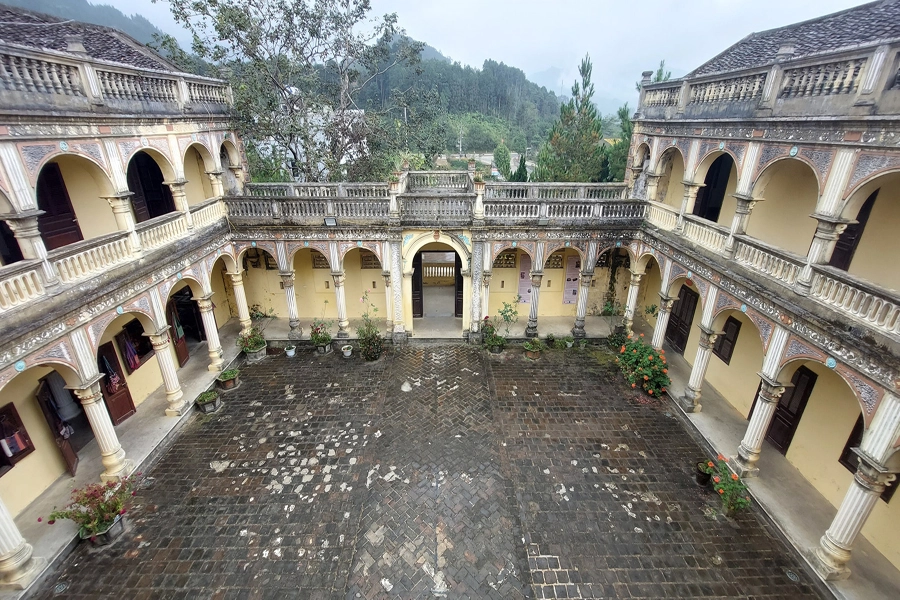
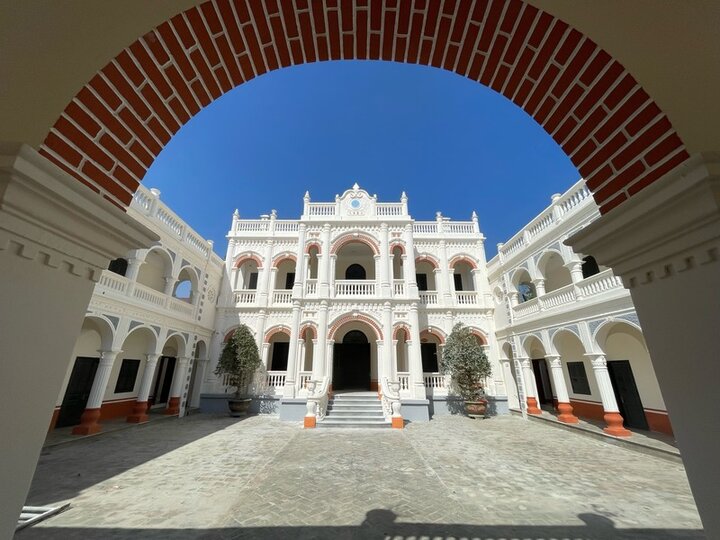
A large courtyard of the Hoang A Tuong mansion (Source: Collected)
The mansion was designed and built to both demonstrate authority and meet the living needs of the Hoang family. Every architectural detail, from the corridors, rooms, to the vast garden, reflects the power, wealth, and refined aesthetic taste of the clan. It is thanks to this combination that the Hoang A Tuong mansion is not only an architectural work but also a symbol of the history and culture of the Bac Ha region.
2.2. The Hoang A Tuong Mansion Through 100 Years of Historical Changes
Over a century of existence, the Hoang A Tuong mansion has undergone many historical changes associated with the shifts in power and society in the Northwest region. From its early years of construction, the mansion was where Hoang Yen Chao implemented economic and social policies, controlled trade, collected taxes, and managed land in the area. At the same time, it has witnessed notable stories about relations with the French administration, important family marriages, and political-economic upheavals that lasted throughout the 20th century.
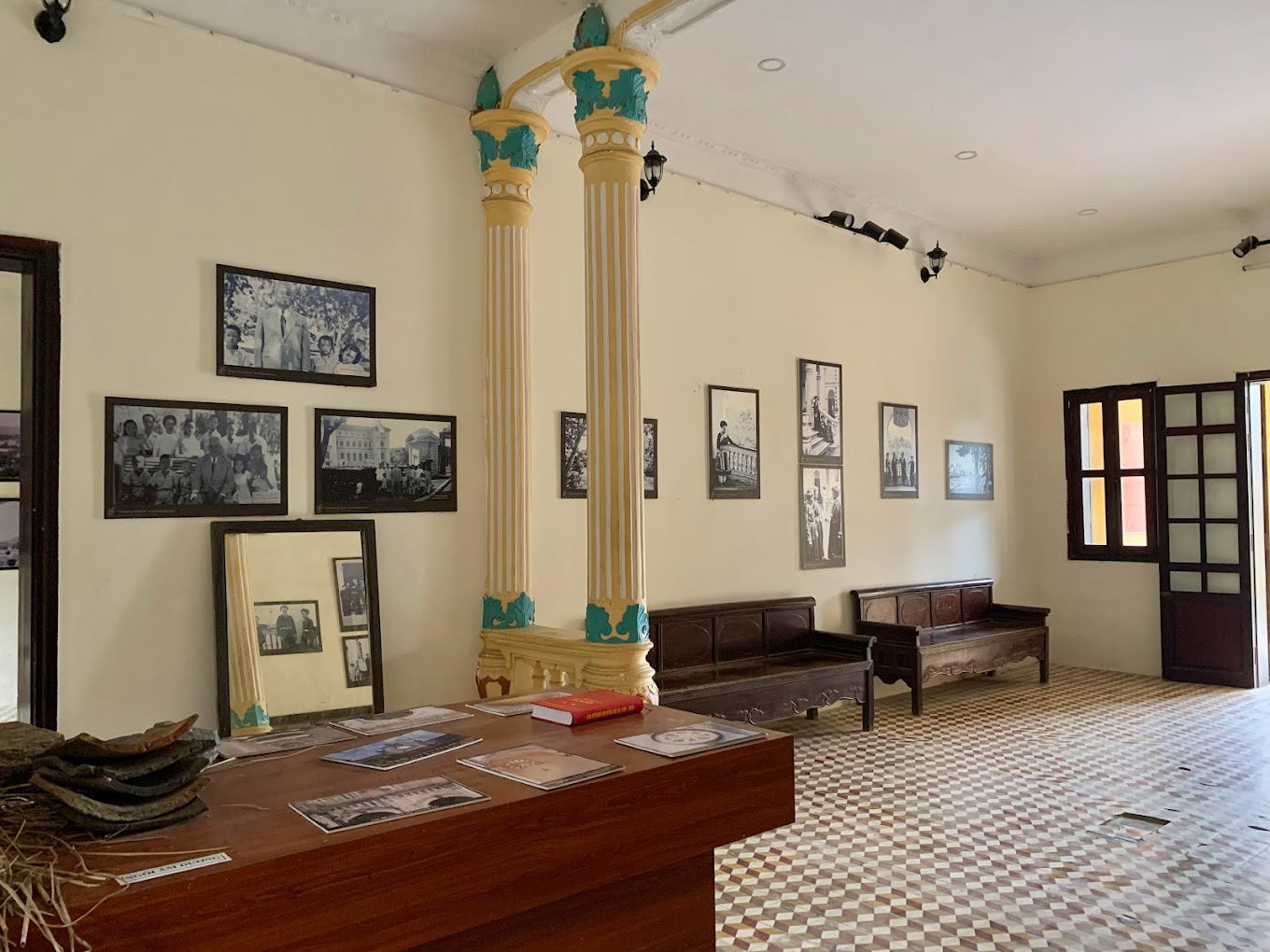
Workspace inside Hoang A Tuong mansion (Source: Collected)
Besides its powerful role, Hoang A Tuong mansion is a living testament to the indigenous culture and the blend of Vietnamese-Chinese traditions with French architecture. Decorative details, tiled roofs, spiral staircases, and arched doors all bear historical imprints, while also helping visitors gain a deeper understanding of the life and power of the "Cat King" and the Hoang family. The stories associated with the mansion – from rituals and meetings to political and commercial events – make this place a destination that offers not only aesthetic value but also rich educational and historical significance.
After more than 100 years, Hoang A Tuong mansion is not only a symbol of the Hoang family's power but also a structure that marks historical events, possessing unique cultural and architectural values, worthy of becoming an unmissable destination when visiting Sa Pa – Bac Ha.
3. Exploring the Architecture and Scale of Hoang A Tuong Mansion
3.1. Overall Layout and Interior Space
Hoang A Tuong mansion is a unique architectural complex with a closed, interconnected rectangular layout, situated on a gentle hill in the center of Bac Ha town, Lao Cai province. It covers a total area of approximately 10,000 m² and comprises 36 rooms of various sizes, harmoniously arranged according to their functional use. This layout not only reflects the residential model of a once-powerful clan but is also designed in accordance with traditional Feng Shui principles of "leaning on mountains – facing water," creating a sense of solidity and majesty when viewed from afar.
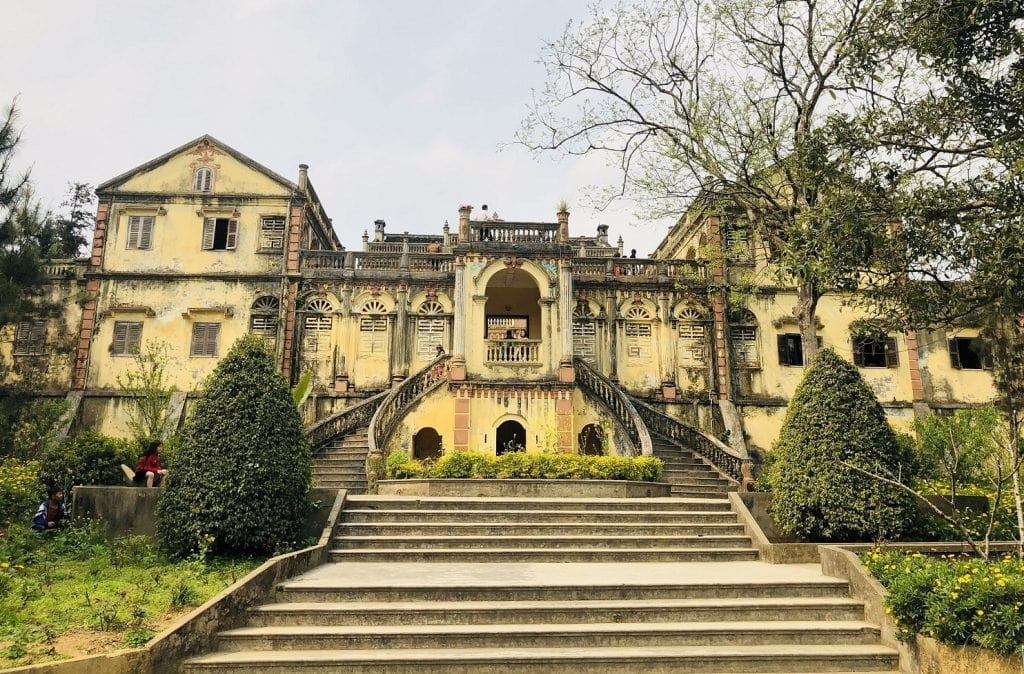
Overall architecture of Hoang A Tuong mansion viewed from the outside (Source: Collected)
The exterior features a solid enclosing wall with loopholes and a walkway on the ramparts, facilitating easy patrols for guards. Inside, a spacious central courtyard was used for ceremonies, receiving guests, and important daily activities of the Hoang Yen Chao and Hoang A Tuong families. Passing through the wide courtyard, visitors would ascend the stairs on both sides to enter the waiting area, then proceed to the main house and the auxiliary houses on either side. Each section clearly demonstrates functional division according to the needs for living, meetings, receiving guests, and the clan's administrative activities.
3.2. Unique East-West Architectural Highlights at Hoang A Tuong Mansion
One of the characteristics that makes the Hoang A Tuong mansion a "architectural gem amidst the white plateau" is the sophisticated fusion of Eastern architecture and French-European style. Right from the entrance, the arched doorways, symmetrical columns, and spiral staircases bear the strong imprint of Western classicism, creating an impression of nobility and grandeur, completely different from the traditional housing architecture of the northern mountainous region. Decorative motifs on the roof, ceiling, and doors often feature laurel and grape patterns, symbolizing prosperity and abundance – a decorative style popular in European fashion in the early 1900s. Meanwhile, the spatial arrangement follows Eastern Feng Shui principles, ensuring balance and harmony with the terrain and surrounding nature. Wide corridors connect functional rooms, windows of various sizes, and geometric decorative details clearly show the subtle integration of Eastern and Western architecture, meeting living needs while enhancing the aesthetic appeal of the entire structure.
3.3. Building Materials and Functional Areas
The building materials of the Hoang A Tuong mansion also reflect the high investment and durability of this over 100-year-old structure. During its construction from 1914 to 1921, the Hoang family used local materials and high-quality raw materials transported from outside the region, such as cement and steel from Hanoi – Lao Cai, along with limestone, sand, and tiles produced locally, and precious wood flooring from the Hoang Lien Son region, creating a solid structure with a unique aesthetic value. The yin-yang tiled roof not only protected the building from the harsh highland weather but also served as an important architectural element contributing to its ancient appearance. Inside, rooms were clearly divided by function: the main reception room for guests and meetings, private rooms for family members, rooms for French and Chinese advisors, storage rooms, guards' quarters, and even an escape tunnel system at the back of the mansion, indicating considerations for both terrain and security in the design. Some of these areas are now used to display artifacts, local community cultural information, and handicrafts, enhancing the visitor experience.
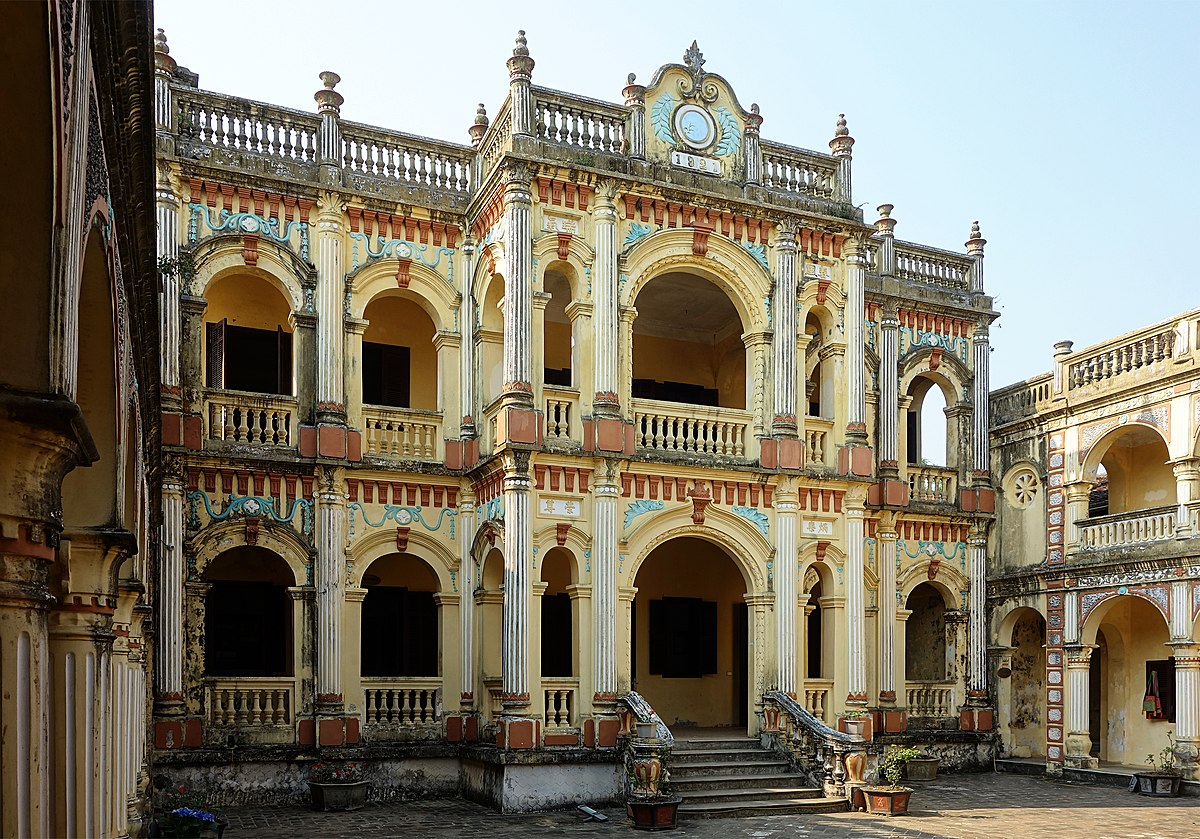
Design details that showcase the power and wealth of the Hoang family (Source: Collected)
The architecture and scale of the Hoang A Tuong Mansion are a unique blend of Asian-European styles, with a balanced layout, durable materials, and meticulous consideration for the functional use of each area – all contributing to a structure that holds historical value and is an attractive destination for those who love exploring culture and architecture when visiting Bac Ha.
4. Experiencing the Hoang A Tuong Mansion
4.1. Directions to Hoang A Tuong Mansion from Hanoi, Lao Cai
To explore the Hoang A Tuong Mansion, visitors can combine their trip with famous destinations like Sa Pa or the Bac Ha market. The most popular starting point is Hanoi, where you can take a sleeper bus directly to Bac Ha or to Lao Cai town and then continue by shuttle bus. The total distance from Hanoi to the Hoang A Tuong Mansion is about 300 km, usually taking about 6–7 hours of travel, depending on the mode of transport and route you choose.
If you start from Lao Cai city, the distance is shorter, about 70 km, so you can rent a motorbike, a tourist car, or take a local bus to Bac Ha town, where the mansion is located right in the center. From Sa Pa, the distance to Bac Ha is also quite convenient (about 90 km), so many tourists often combine visits to Sa Pa – Bac Ha – Hoang A Tuong Mansion in one trip.
Upon arriving in Bac Ha, finding the Hoang A Tuong Mansion is easy as the structure is located in the center of town. Visitors can walk or rent bicycles/motorbikes to explore the surrounding area, combining it with a visit to the famous Bac Ha market, enjoying highland cuisine, and strolling around nearby scenic spots.
4.2. Participating in events, festivals, and special activities within the mansion grounds
Although the Hoang A Tuong Mansion currently operates mainly as a cultural and historical attraction, it remains a vibrant stop on the journey to explore Bac Ha. The spacious grounds and ancient architecture of the mansion are often visited by tourists during the region's prominent festival seasons. One of the special experiences is the Bac Ha Horse Racing Festival, held annually on the 7th day of the 7th lunar month, attracting a large number of locals and tourists with thrilling races, folk games, and a festive atmosphere deeply rooted in the Tây Bắc culture.
Inside the grounds, the exhibition of artifacts, documentary photos, and models of local life helps visitors gain a deeper understanding of Bac Ha's past culture and history, from the life of the "King of Cats" to traditional corn wine production or the unique brocade weaving demonstrations, offering a more intimate and authentic experience than just "visiting the architecture."
Especially, if you visit in spring, you will have the chance to admire the scenery of plum blossoms blooming white all over the plateau – a wonderful time to visit the mansion, creating a space that is both poetic and rich in cultural value.
4.3. Notable 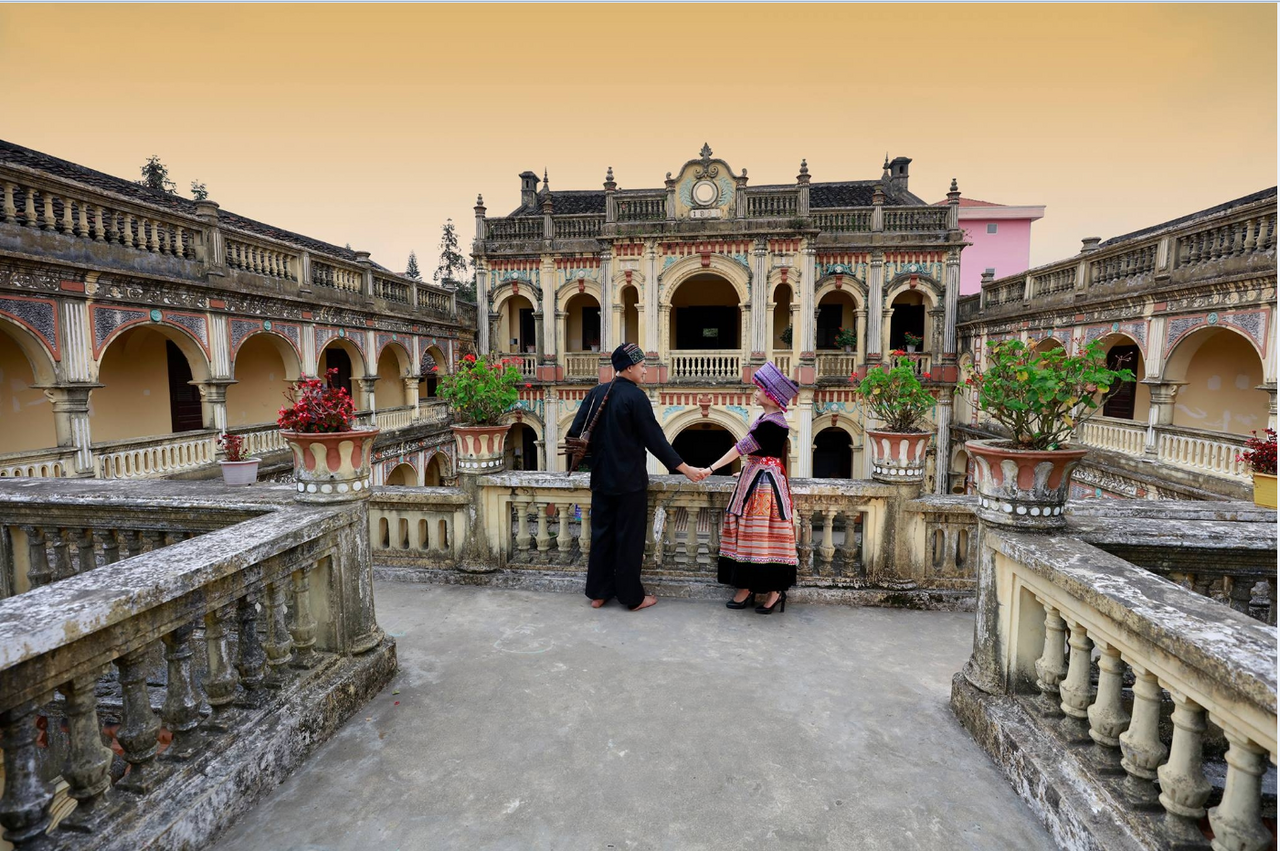
Visitors enjoy checking in at Hoang A Tuong Mansion (Source: Collected)
The unique arched doorways, the curved staircase leading to the main rooms, the pillars, and the carved balustrades are highlights chosen by many visitors for photo opportunities, especially in the early morning or at sunset when the light creates an impressive shadow-light effect on the light yellow background of the mansion after renovation.
Additionally, the spacious central courtyard is an ideal spot to enjoy the atmosphere, admire the scenery, and take panoramic photos of the entire mansion along with the majestic mountains in the distance – a natural landscape blending with historical architecture, offering you unmissable "virtual living" pictures.
5. Tips for Visiting Hoang A Tuong Mansion
5.1. Suggested Itinerary Combining Hoang A Tuong Mansion – Bac Ha Market
To make your visit to Hoang A Tuong Mansion truly complete, visitors can combine exploring the relic with experiencing the unique culture at the Bac Ha market. An ideal half-day itinerary starts early in the morning at the mansion, spending about 2–3 hours to explore the entire premises, learn about the functional rooms, admire the unique Asian-European architecture, and enjoy vibrant photo opportunities. After the visit, you can move down to Bac Ha market, just a few minutes' walk or motorbike ride from the mansion, to enjoy local cuisine, shop for handicrafts, and observe the distinctive daily life of the highlanders. With a full-day itinerary, visitors can also combine exploring surrounding villages, mountains, and waterfalls around Bac Ha, creating a trip that is both relaxing and rich in cultural and natural experiences. This itinerary is suitable for families, groups of friends, or those who love discovery tourism, making the journey more diverse and complete.
5.2. Notes for a Complete Visit to Hoang A Tuong Mansion
To ensure a comfortable and memorable experience at Hoang A Tuong Mansion, visitors should note a few important points. Firstly, prepare comfortable clothing and soft-soled shoes for easy movement within the large premises, and choose colors that harmonize with the scenery and architecture for beautiful check-in photos. The ideal times to visit are early morning or late afternoon, when the natural light is both gentle and creates beautiful shadow-light effects on the corridors, stairs, and pillars of the mansion. Visitors should also respect the living space and tour guides, avoid making noise, do not trespass into restricted areas, and protect the artifacts and decorative details within the mansion. Additionally, it is advisable to prepare drinking water, a hat, a camera or phone, and a map or navigation app to make the visit convenient and comfortable. By following these notes, your trip to Hoang A Tuong Mansion will be both enjoyable and safe, while helping you capture impressive check-in moments amidst the unique heritage space of Bac Ha – Lao Cai.
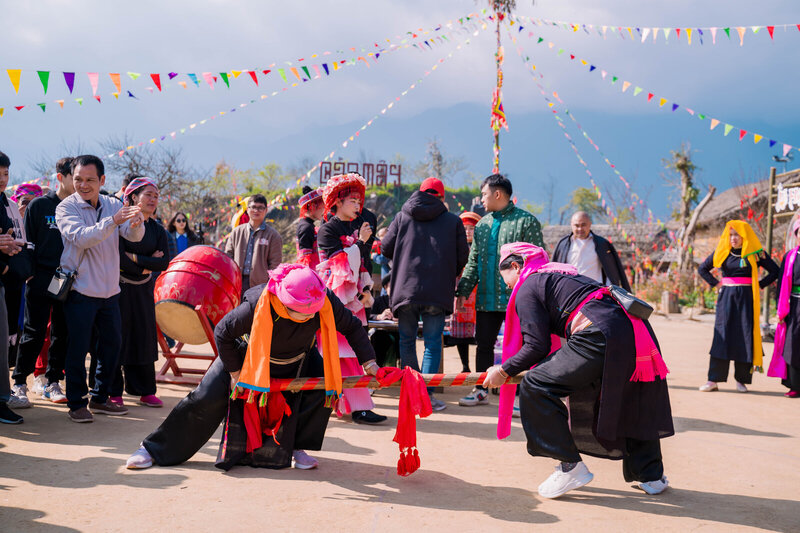
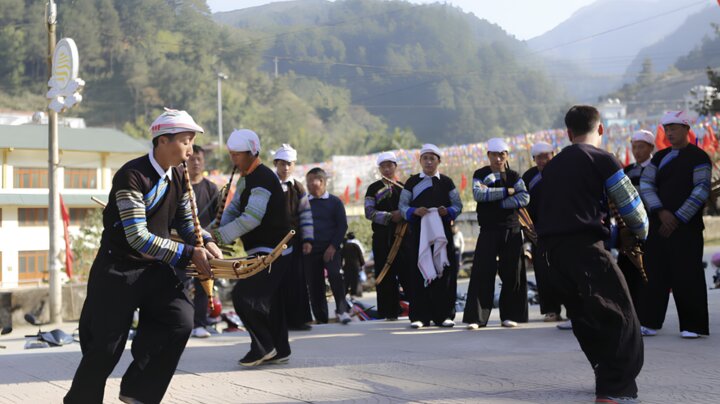
Tourists experience traditional games at Ban May, Sun World Fansipan Legend (Source: Collected)
Coming to Lao Cai, besides visiting Hoang A Tuong Mansion and experiencing Bac Ha market, tourists can also explore famous landmarks in Sa Pa such as Fansipan mountain – “the roof of Indochina”, Muong Hoa valley, Cat Cat village, Silver Waterfall and O Quy Ho pass. This journey not only helps you learn about the unique culture and history of the highlands but also enjoy majestic mountain scenery, colorful ethnic villages and the opportunity to enjoy local cuisine, bringing a complete trip, combining historical site exploration with experiencing nature and Northwest culture.
Hoang A Tuong Mansion is not only an ancient, imposing architectural work with a sophisticated blend of Asian and European styles but also a historical and cultural symbol of the Bac Ha – Lao Cai plateau. For over 100 years, the mansion has witnessed historical events, the power of the Hoang family, and unique local culture, while still retaining its aesthetic value and vivid sightseeing experience. For those who love culture, history, and a complete travel experience, Hoang A Tuong Mansion is definitely a must-visit destination when coming to Lao Cai – Bac Ha.