














1. Introduction to the Tet Com Moi Festival
1.1. What is the Tet Com Moi Festival?
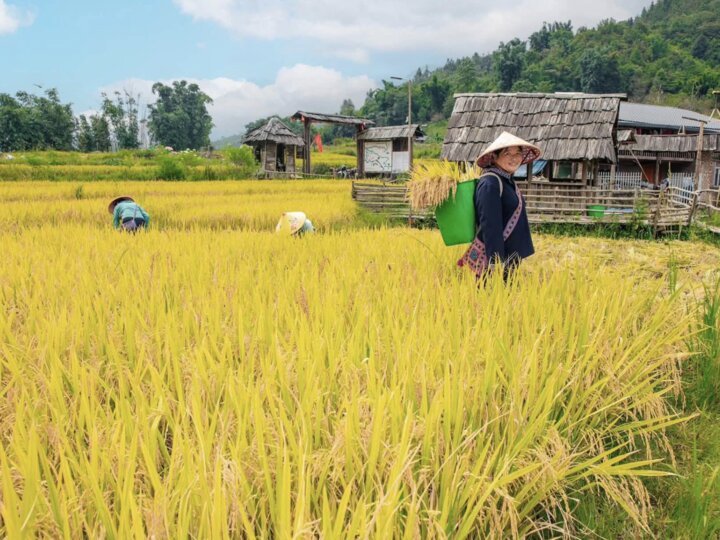
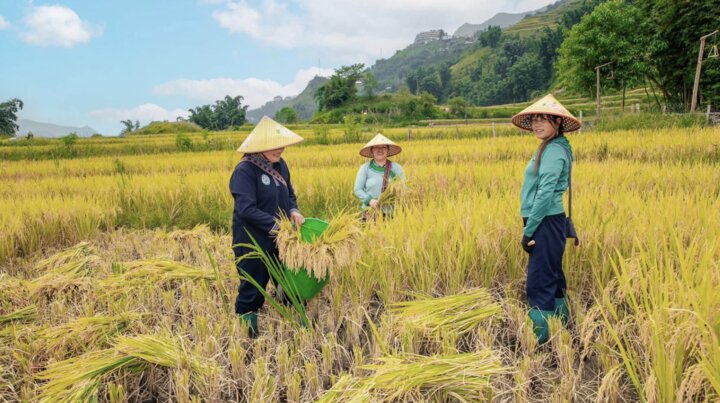
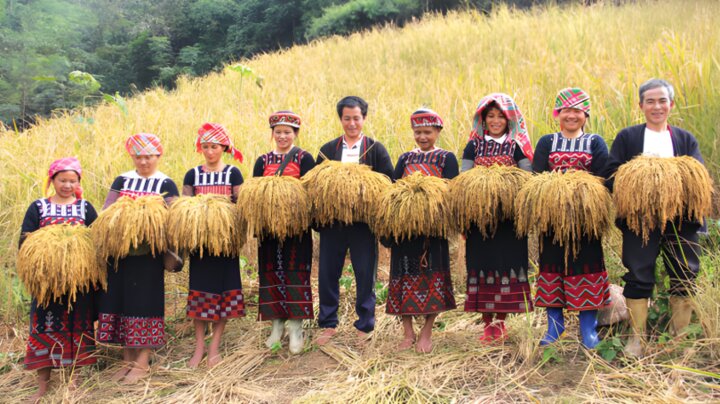
Tet Com Moi Festival is a traditional agricultural ritual associated with the rice cultivation cycle of many ethnic minority communities in the northern mountainous region of Vietnam. The festival is usually held after the rice begins to ripen, before or at the beginning of the harvest season, to celebrate the harvest, offer the new rice, and express gratitude to heaven and earth, deities, and ancestors.
Originating from ancient agricultural beliefs, the Tet Com Moi Festival plays a particularly important role in the spiritual life of many ethnic groups. It is not only an occasion to mark the fruits of labor after a year of cultivation, but also reflects the belief in animism and the veneration of rice – the core livelihood of agricultural communities.
The festival is still preserved and practiced in many localities in the Northwest and Northern Midland mountainous regions, such as Lao Cai, Dien Bien, Phu Tho. Depending on the ethnic group and residential area, the Tet Com Moi ritual may differ in terms of organization time, procedures, and worship rituals, but all aim for the common purpose of giving thanks and praying for a new season with favorable weather, a prosperous life, and peace.
1.2. Spiritual Significance and Role in Community Culture
In spiritual life, the first grains of the new harvest are not just material products but also carry profound spiritual meaning. The Tet Com Moi Festival is an occasion for people to express their sincere respect to ancestors and deities who have protected the crops, while also thanking nature for bestowing a bountiful rice harvest.
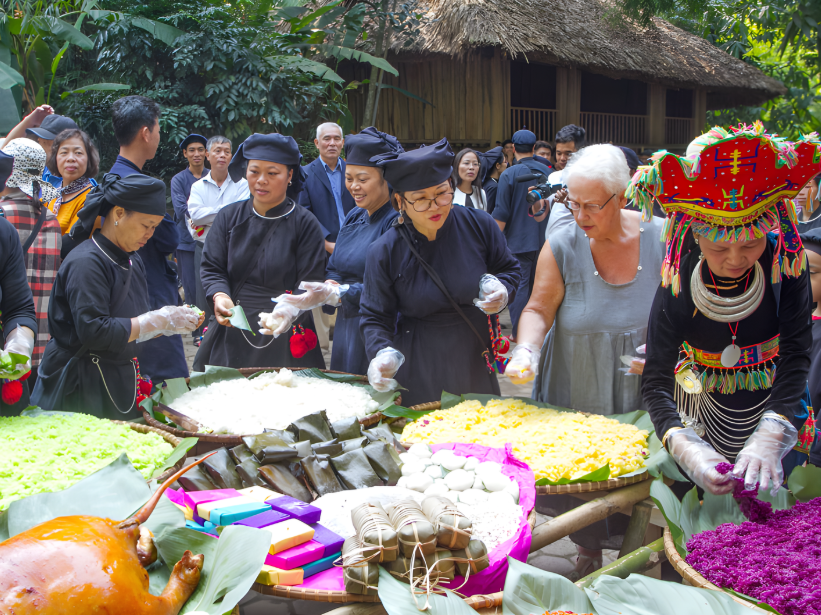
New Rice Festival is an occasion for people to express their reverence to ancestors and deities. (Source: Collected)
Through the rituals of offering new rice, the ceremony of parading the “rice soul”, and accompanying traditional customs, descendants in families and communities are educated about the moral principle of “drinking water, remembering its source”, the awareness of preserving ancestral beliefs, and the appreciation for the achievements of agricultural labor. This is how cultural values are naturally passed down from one generation to another.
Besides its spiritual significance, the New Rice Festival also plays an important role in strengthening community cohesion. The festival is an occasion for families to gather, and villages to jointly organize rituals, play, and share the fruits of their labor after a year of hard work. Activities such as folk games, community gatherings, and ritual teachings contribute to maintaining strong relationships among the members of the village.
1.3. Timing of the New Rice Festival
The timing of the New Rice Festival is closely linked to the growth cycle of rice and the seasonal rhythm of each locality. According to traditional customs, the festival is usually held from the 8th to the 9th lunar month, lasting for about two to three weeks before the official harvest season begins.
Depending on farming conditions and the customs of each ethnic group, the timing of the New Rice Festival has a certain flexibility. The Muong people usually hold the ceremony around the 9th or 10th lunar month, with the specific timing chosen by each family or community based on the progress of the rice harvest. Meanwhile, many Tay, Nung, and Giay communities agree to choose auspicious days at the beginning of the harvest season to perform the rituals.
In highland areas like Sa Pa in Lao Cai, the New Rice Festival usually takes place before the harvest, when the rice has ripened evenly. The choice of this timing reflects the concept of respecting the “rice soul”, offering the most exquisite first grains of the season to ancestors and deities before entering the bustling harvest. Overall, although the timing of the festival may vary among ethnic groups and residential areas, the New Rice Festival is always conducted within a certain agricultural season, ensuring harmony between belief, agricultural production, and community life.
2. Rituals, Offerings, and Organization Process of the New Rice Festival
2.1. Preparation of Offerings and Traditional Dishes for the New Rice Festival
The preparation of offerings for the New Rice Festival usually begins when the rice in the fields has ripened evenly, signaling the end of a crop season. The most important ingredients in the offering tray are new rice and grains, selected from the best early-season rice stalks, representing the essence of the first harvest of the year.
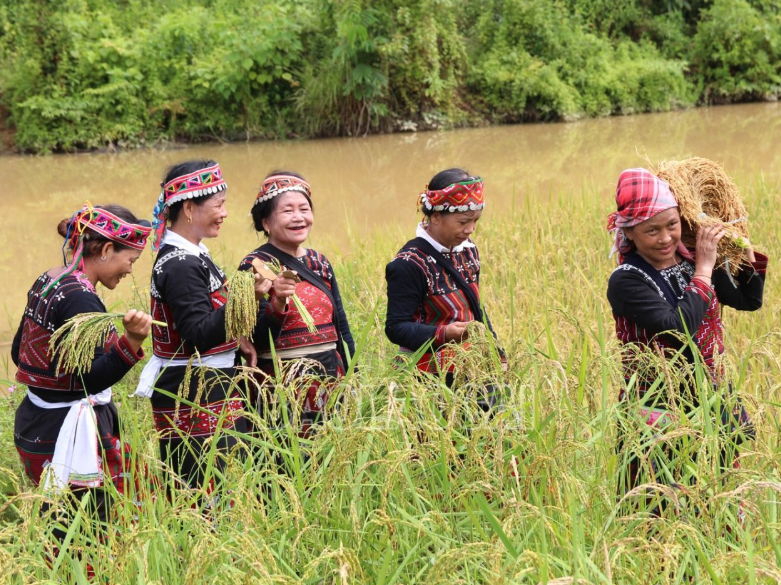
The most important ingredient in the offering tray is new rice and paddy. (Source: Collected)
From the new paddy, families proceed to thresh, pound, or grind it using traditional methods to process it into new rice, sticky rice, green rice flakes, or cakes made from new rice. The offering tray for the new rice festival also includes products raised or grown by the family, such as chicken, pork, fish, along with traditional dishes of each ethnic group.
In some communities, fermented rice wine or homemade distilled spirits are also prepared for offerings and for use during festival activities. Each dish symbolizes reverence, gratitude, and the wish for a peaceful and prosperous new year.
2.2. Process of performing the new rice festival ritual
The new rice festival ritual is usually performed early in the morning, when the space is still quiet, fitting the spiritual beliefs of agricultural residents. First, the family or community chooses an auspicious day at the beginning of the harvest season, then performs rituals related to bringing the new paddy from the fields home.
After the new paddy is processed into cooked rice, sticky rice, or green rice flakes, the offerings are solemnly arranged at the family altar or in the communal living space of the village. The main officiant or the shaman representing the community recites prayers, inviting ancestors, deities, and supernatural forces to witness and partake in the offerings.
An important ritual in the new rice festival of many ethnic groups is the ritual of welcoming or calling the 'rice soul', reflecting the belief in animism and the respect for the rice plant. Bundles of new paddy are often hung near the altar or placed in a prominent position in the house, with the hope that the rice soul will stay, bringing abundance and luck to the family.
After the ceremonies of each household, some places also organize a communal village ceremony, combining community activities, sharing the blessings of the offerings, and wishing each other a new season with favorable weather, good harvests, and healthy descendants.
2.3. The ceremony and the festival - what happens during the new rice festival?
Nowadays, in Ta Van commune, Sa Pa, along with the development of tourism, the new rice festival has been organized on a larger scale and has gradually become a characteristic rice festival of the region. Annually, the festival attracts a large number of tourists and cultural researchers to attend, experience, and learn about the spiritual life and traditional customs of the local community. Therefore, the new rice festival is usually organized with two main parts: the ceremony and the festival.
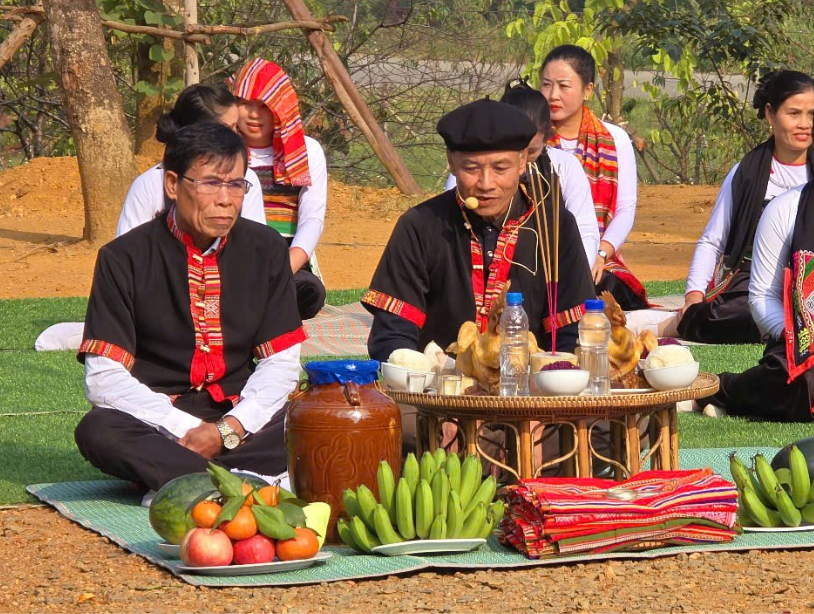
The festival attracts a large number of visitors to attend and experience. (Source: Collected)
The ceremony takes place in a solemn atmosphere at the family altar or the sacred space of the village. Important offerings such as new rice sheaves, new rice, sticky rice, and young rice flakes are offered to ancestors and deities. This part most strongly expresses the spiritual and agricultural beliefs in the new rice festival.
After the ceremony is completed, the village atmosphere becomes lively with the festival part, where everyone participates in community activities together. The sounds of gongs, traditional musical instruments resonate with folk dances, creating a joyful and cohesive atmosphere. Many familiar games such as tug-of-war, pole pushing, and ball tossing are organized, attracting the participation of both adults and children.
3. Unique variations of the new rice festival by region and ethnic group
3.1. Muong, Thai, Xa Pho people - distinctive features in the new rice festival
Each ethnic group practices the new rice festival in their own ways, contributing to the diverse cultural tapestry of mountainous agricultural communities. For the Muong people in the Northern Midlands and Mountains region, the new rice festival is usually held within the family or village. The ritual is presided over by a Mo shaman, with offerings including new rice, sticky rice, and dishes made from local products, expressing gratitude to ancestors and praying for favorable harvests.
For the Thai people in the Northwest region, the new rice festival is associated with rituals to worship the rice deity and community activities. The first bowl of new rice of the season is considered a quintessential offering, presented to ancestors and supernatural forces. After the ceremony, families and villages gather to organize singing, dancing, and folk games, creating a cohesive community space after the harvest season.
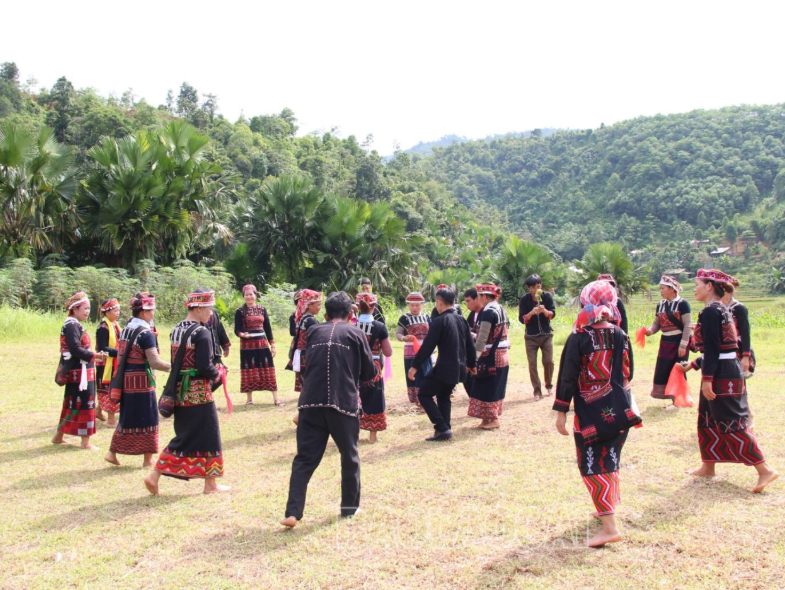
The game part of the new rice celebration festival of the Xa Pho people not only expresses the joy and excitement of the people. (Source: Collected)
Meanwhile, the Xa Pho people in Lao Cai maintain solemn rituals. The head of the household prepares offerings early in the morning, with dishes made from new rice and local products to offer to ancestors. Among them, the offering tray is more distinct and elaborate, including: wildflowers, thorny eggplant clusters, hillside beans,... along with many other offerings. Therefore, the common point in the new rice festival of ethnic groups is the veneration of the new rice grain - a symbol of abundance, connection, and solidarity in community life.
3.2. Tay Nguyen and the new rice offering ceremony – the difference of the great mountain land
Amidst the mountainous and forest space of the Tay Nguyen highlands, the new rice eating ceremony of the Thai people carries its own nuances, reflecting the process of migration, adaptation, and preservation of cultural identity in new lands. In Dak Lak, where many ethnic communities live together, the Thai people still maintain the new rice eating ceremony as one of the most important cultural and spiritual activities of the year.
In Ea Kiet commune, the new rice eating ceremony of the Thai people is usually held around the 9th lunar month, when the rice on the terraced fields and farms has been harvested. In the ceremony, the ritual of offering the new rice is considered the most sacred and solemn. The shaman, representing the community, arranges the offering tray with the quintessence of the harvest, especially a bowl of rice cooked from the new grain, symbolizing the fruits of the early season's labor. The ancient prayers are read in Thai, conveying wishes for favorable rain and wind, prosperous fields, and a prosperous life for the community.
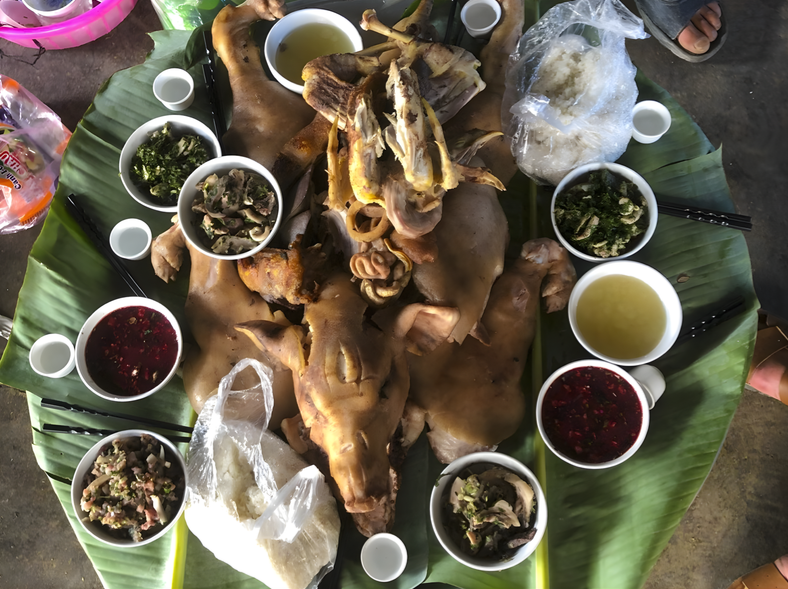
People gather around traditional meal tables, enjoying the fragrant taste of new rice. (Source: Collected)
After the ceremony, the festival space becomes lively with the communal celebration. The sound of rice pounding pestles, Thai gongs and cymbals resonate along with Sạp dances and Xòe dances - symbols of solidarity and connection. Everyone, regardless of age or status, joins hands in the Xòe circle, sharing the joy of a bountiful harvest and community cohesion.
The festival also provides an occasion for traditional folk games such as crossbow shooting, top spinning, and throwing the ball to be recreated, contributing to the preservation of the distinctive cultural values of the Thai people. At the end of the festival, the community gathers around traditional meal tables, enjoying the fragrant taste of new rice - the fruits of a year of hard work.
3.3. New Rice Festival at Dong Cuong Temple, Lao Cai
The New Rice Festival at Dong Cuong Temple is a typical agricultural ritual of the Tay Khao community, held annually according to the traditional calendar. According to custom, on the Mao day of the ninth lunar month, the Tay Khao community in Ben Den village, Dong Cuong solemnly organizes the New Rice offering ceremony to express gratitude to heaven and earth, deities, Saint Mother Thuong Ngan, and ancestors for blessing the crops to be lush and the weather favorable.
The New Rice Festival at Dong Cuong Temple not only signifies the culmination of a year of labor and production but also serves as an important cultural and spiritual space where the community gathers, shares farming experiences, and teaches the younger generation core values such as the principle of 'when drinking water, remember its source', solidarity, and the awareness of preserving the cultural identity of the Tay Khao people.
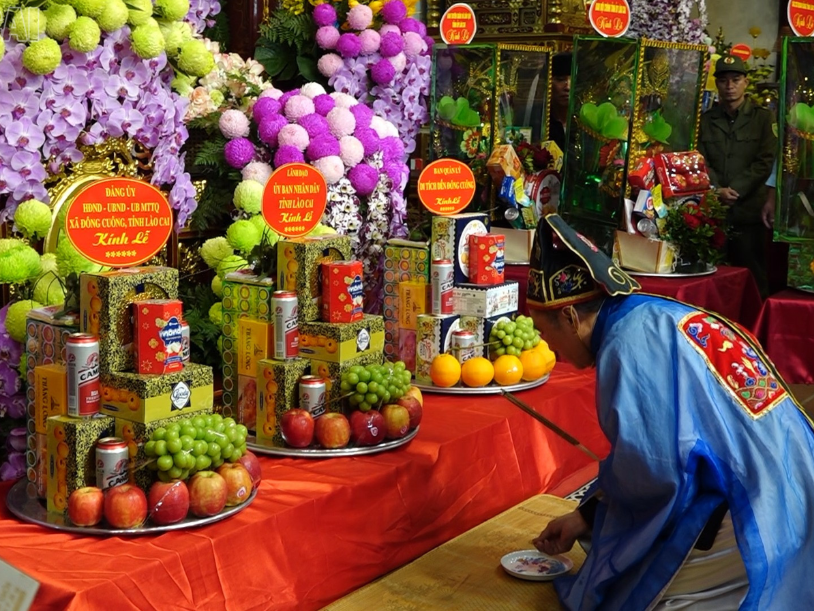
The Tay Khao community solemnly organizes the new rice offering ceremony to express gratitude to heaven and earth. (Source: Collected)
Traditional rituals are performed solemnly, according to custom, including: the ceremony to welcome Mr. Mo to the temple, the incense offering ceremony, the weekly feast offering ceremony, the black buffalo slaughter ritual, and the main feast offering ceremony. In years with unfavorable weather conditions, the festival may only hold the ritual part, not the celebration part, but the core rites are still maintained fully and solemnly. This shows the central role of the spiritual element in the New Rice Ceremony, while affirming the sustainable value of the ritual in community cultural life.
The New Rice Ceremony at Dong Cuong Temple is held annually, contributing to meeting the spiritual and cultural needs of the people, while awakening the awareness of protecting and promoting cultural heritage values associated with the relic, beliefs, and formation history of the Tay Khao community in this area.
4. Tips for Attending the New Rice Festival for Tourists
4.1. Experiencing the Festival Atmosphere and Preserving Cultural Memories
To fully feel the vitality of the New Rice Festival, tourists should spend time immersing themselves in the community atmosphere after the solemn ritual part. Even standing on the sidelines, listening, and clapping to the beat of the gongs is enough to feel the bustling, warm atmosphere of the festival.
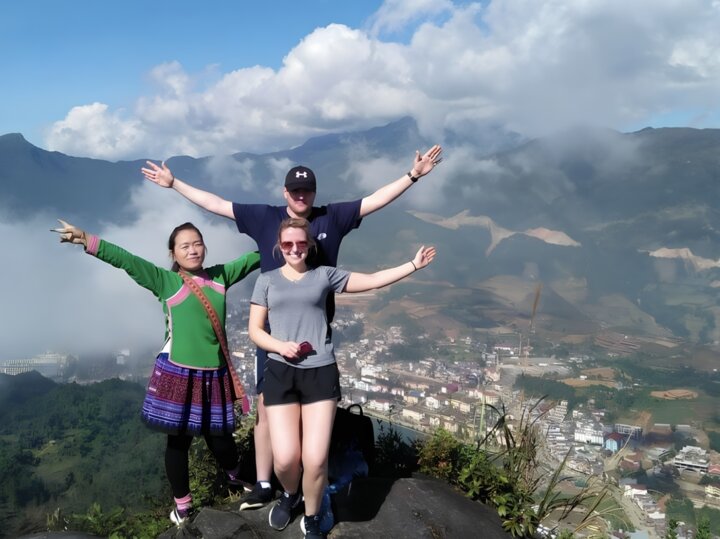
After experiencing moments in the village, the journey to explore highland culture can be explored in a more unique way, through sightseeing and experiencing the landscape and local life. In the Sa Pa area, many tourists choose to combine attending the festival with a journey to explore nature and spiritual culture at Sun World Fansipan Legend, which offers panoramic views of terraced fields, villages, and highland life. This connection makes the trip more complete, when the traditional festival experience is placed in the context of a vast cultural and natural space.
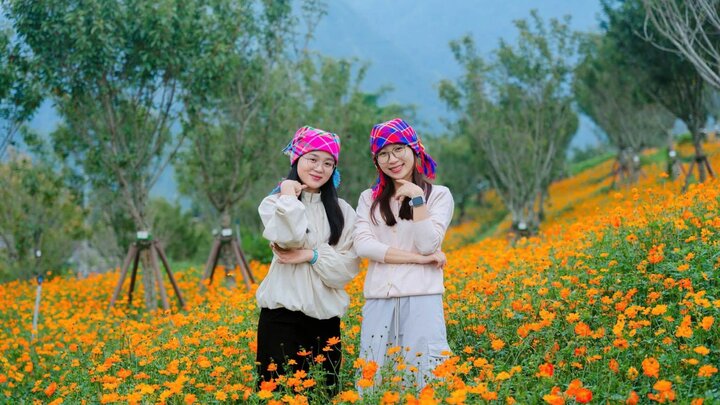
When preserving memorable moments, tourists can prioritize capturing traditional costumes during the ritual, the new sticky rice trays offered, or the scene of the harvest season village viewed from high points. The New Rice Festival is therefore not just a cultural event, but also becomes an emotional imprint in the journey to explore the Northern mountains – where people, beliefs, and nature blend harmoniously.
4.2. Notes on Preserving and Respecting Local Cultural Values
Attending the New Rice Festival is not just an experiential trip, but also requires understanding and respect for the local community's spiritual space. Tourists need to comply with regulations throughout the festival, avoid interfering with the sacred offering rituals, and listen to and follow the guidance of local people. Moderation in behavior, speech, and conduct is the clearest manifestation of responsible tourism culture.
Besides that, participating in activities to learn about and spread positive information about the festival appropriately also contributes to raising awareness about cultural heritage preservation. With a sincere attitude in learning and a spirit of respecting traditional values, each tourist will become a small but meaningful bridge, contributing to preserving and promoting the sustainable beauty of the New Rice Festival in contemporary life.
The New Rice Festival is a ritual of gratitude to ancestors and heaven and earth, a vibrant expression of the wet-rice civilization. In contemporary life, the festival continues to exist as a living heritage, connecting the past with the present, uniting the community and nurturing Vietnamese cultural identity. Learning about, experiencing, and preserving the New Rice Festival is how everyone joins hands to preserve precious traditional values, so that new rice seasons continue to be told through memories, rituals, and a strong community spirit!