















1. Overview of Sa Pa Historical Sites
1.1. Role of Sa Pa Historical Sites
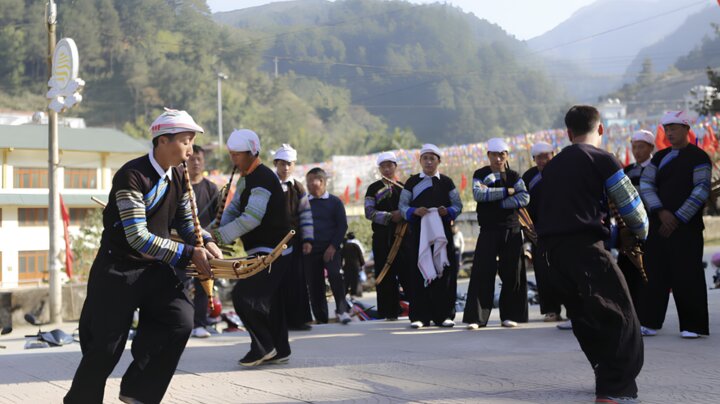
Located in the high mountains of the Northwest, Sa Pa is not only famous for its majestic natural scenery but also a place that preserves many historical sites of Sa Pa with special cultural and historical value. These relics were formed and developed in parallel with the process of pioneering, cultural exchange, and the long-standing lives of many ethnic minorities such as H’Mông, Dao Đỏ, Tày, Giáy…
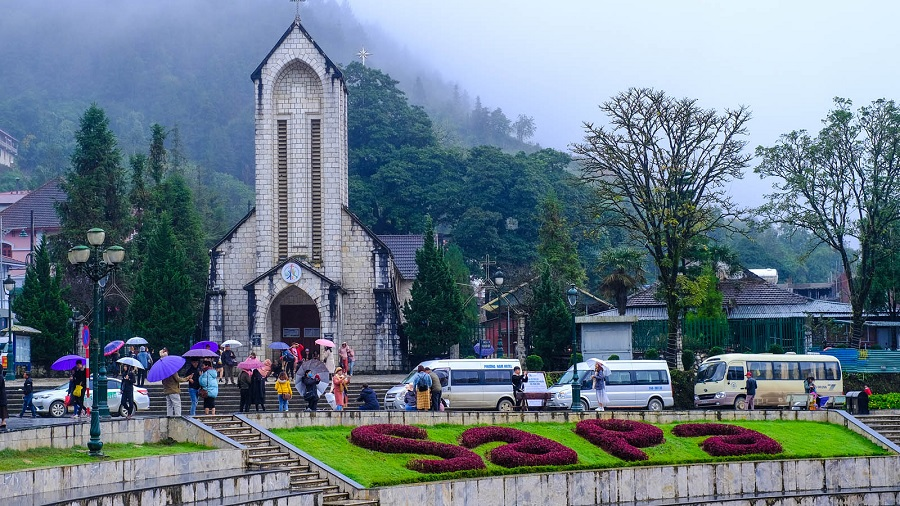
Sa Pa possesses many outstanding historical sites, attracting many visitors (Source: Collected)
Through each historical period, Sa Pa gradually became a point of intersection between local identity and imprints of architecture, beliefs, and community activities, contributing to the cultural depth for the entire Tay Bac region.
1.2. Why explore Sa Pa's historical sites?
Exploring Sa Pa's historical sites is a journey to learn about unique cultural and spiritual values associated with the spiritual life of the mountain residents. Each relic not only reflects the history of the land's formation but also clearly shows the identity, customs, and traditional beliefs of the indigenous ethnic groups.
Besides, visiting these relics also offers a sustainable tourism experience, helping visitors broaden their historical and cultural knowledge, suitable for many audiences from families, students to tourists who love exploration and in-depth discovery of destinations.
2. Top 5 outstanding historical sites in Sa Pa to visit
2.1. Sa Pa Ancient Rock Field
The Sa Pa Ancient Rock Field, stretching across Muong Hoa valley, about 8 km from the town center, is one of Sa Pa's historical sites with exceptionally rare archaeological value in Vietnam. The relic area consists of hundreds of large and small stones, with many mysterious carvings on their surfaces such as terraced fields, humans, strange symbols, and geometric patterns. Many hypotheses suggest that these carvings date back thousands of years, associated with ancient residents who once lived in the Tay Bac region.
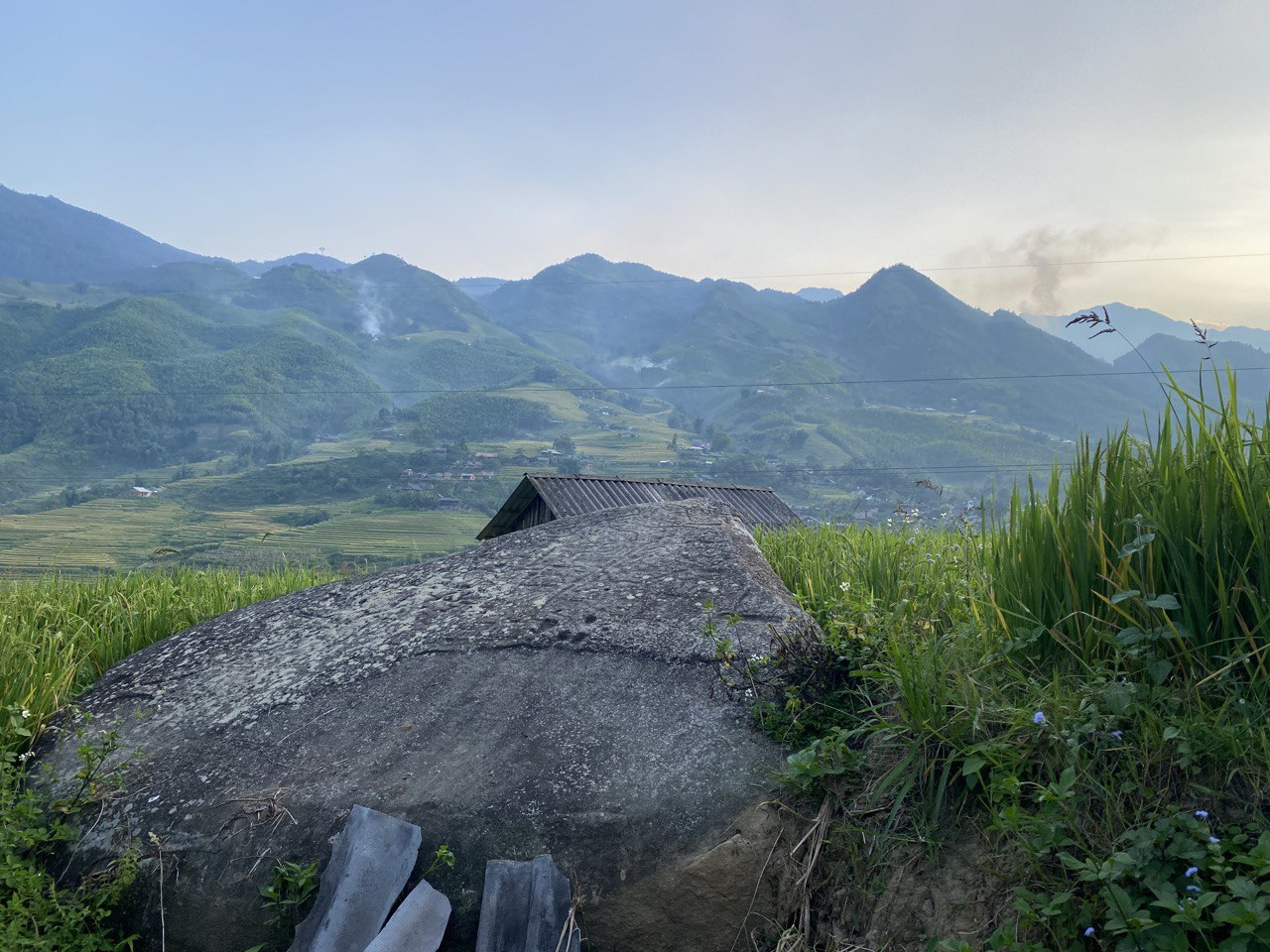
The Ancient Stone Field of Sa Pa is a mysterious relic site attracting many tourists to explore (Source: Collected)
The Ancient Stone Field of Sa Pa is not only a place preserving hundreds of mysterious carved stones but also a living cultural center for the H'Mong and Red Dao ethnic communities around Muong Hoa valley. When visiting the stone field, tourists can combine it with a visit to Ta Van and Lao Chai villages, where families maintain traditional brocade weaving, corn wine making, and ancient terraced rice cultivation methods. Experiences such as learning to weave, trying to roast corn kernels, or walking with locals through the terraced fields help tourists deeply understand the connection between agricultural life and indigenous beliefs. In particular, many community archaeology tours guide tourists on how to read the symbols on the stones, explaining their historical and cultural significance – a fun and educational experience that helps explore the historical relic of Sa Pa in a vivid and meaningful way.
2.2. Sa Pa Stone Church
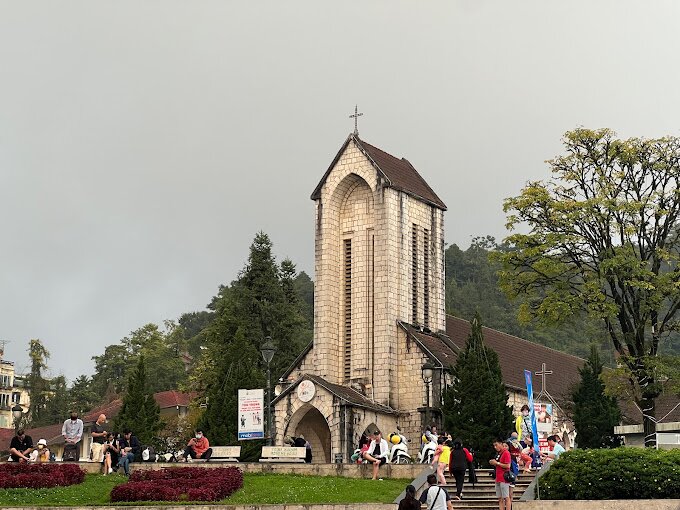
Located right in the center of the town, Sa Pa Stone Church is a typical historical relic of Sa Pa bearing strong Western architectural imprints. The structure was built in the early 20th century by the French, in Romanesque Gothic style with arched roofs, bell towers, and solid stone walls.
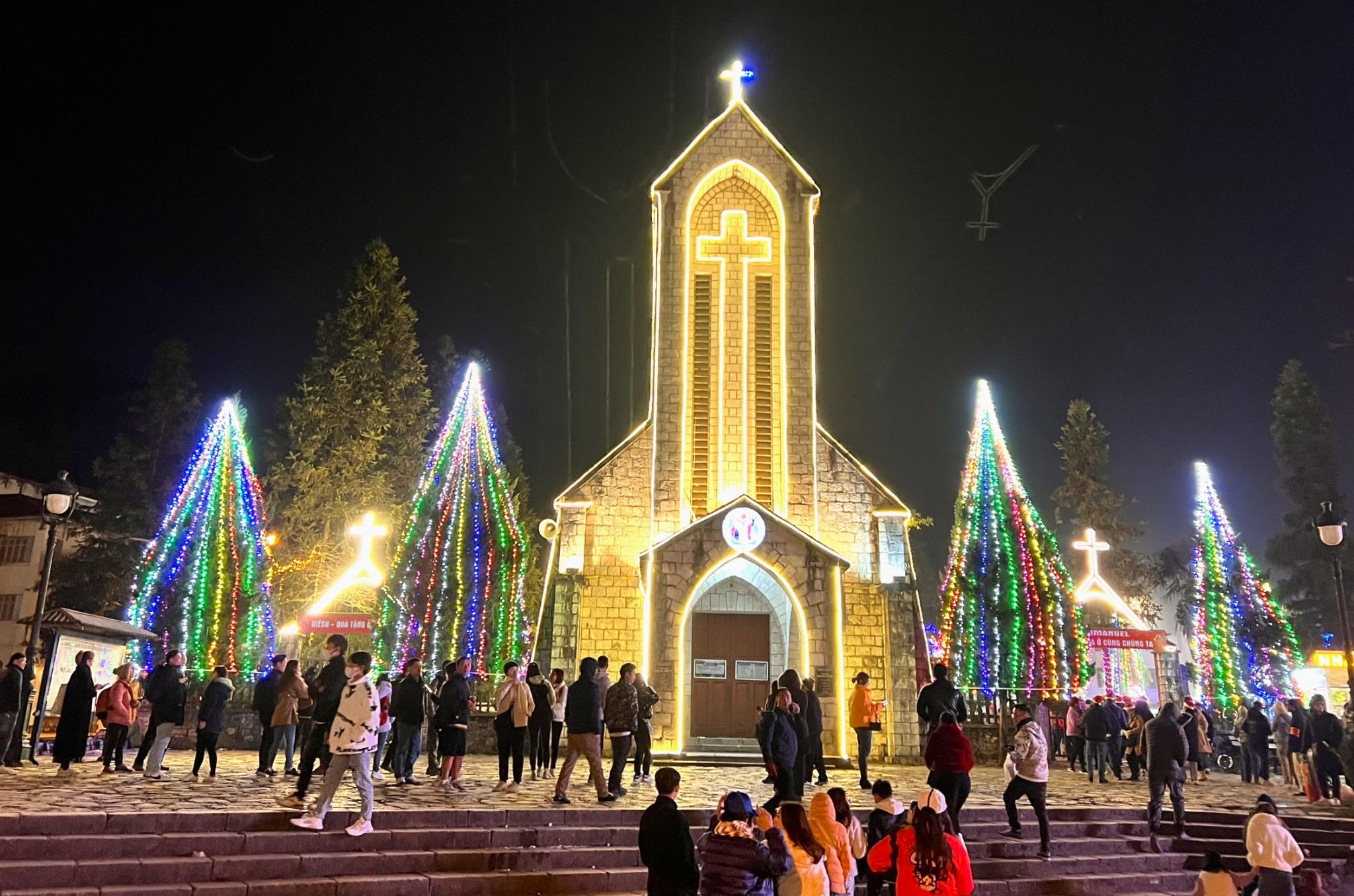
Sa Pa Stone Church is one of the most famous check-in spots in Sa Pa (Source: Collected)
Sa Pa Stone Church, with its hundred-year-old Roman Gothic architecture, is not only a unique architectural work but also a venue for annual cultural and religious activities. During the Christmas or Easter season, visitors can immerse themselves in a solemn yet friendly atmosphere, observe holy mass rituals, and join the community in traditional songs and gestures. Additionally, the church hosts local cultural festivals interspersed with tourism activities such as the “Sa Pa love market” or folk music performances. These experiences allow visitors to enjoy ancient architecture while gaining a deeper understanding of the spiritual life and culture of the community around the historical site of Sa Pa.
2.3. Mau Son Temple
Mau Son Temple, located near the center of Sa Pa, has a history of over 200 years and is a historical site of Sa Pa associated with the local residents' Mother Goddess worship. The temple features traditional architecture, harmonizing with the mountainous landscape, creating a sacred and tranquil ambiance.
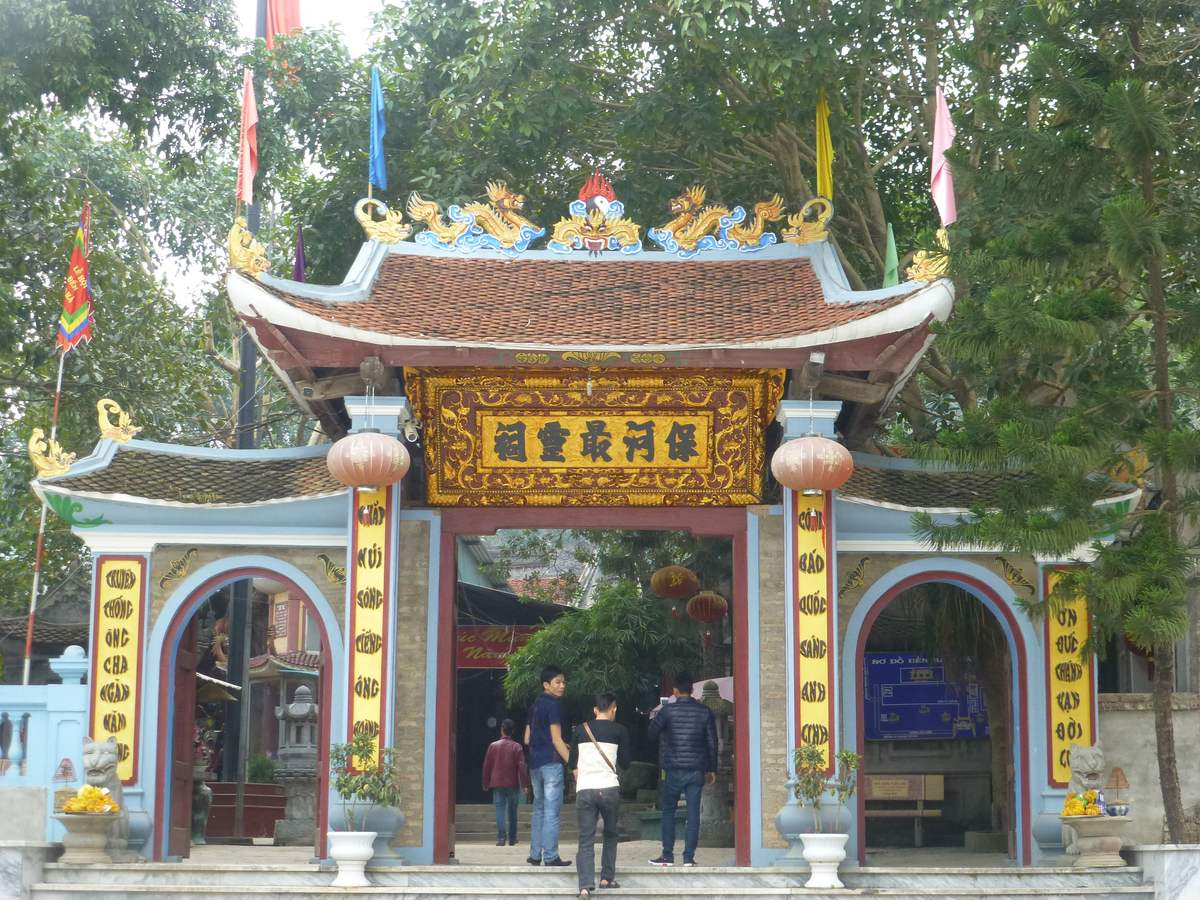
Mau Son Temple in Sa Pa has a history of over 200 years, associated with the Vietnamese Mother Goddess worship beliefs (Source: Collected)
When visiting the temple, visitors are guided on how to offer sacrifices, recite traditional prayers, and understand the meaning of each ritual. The temple's space with its curved tiled roof, intricate carvings, and location near the town center creates a sacred feeling, connecting the mountain and forest nature with the spiritual life of the people. Participating in activities here, visitors not only gain knowledge about the historical relics of Sa Pa, but also directly experience the harmony between people, beliefs, and nature, a unique cultural feature of the Northwest region.
2.4. Hang Pho Temple
Hang Pho Temple is a historical relic of Sa Pa with special significance regarding the tradition of defending the homeland. The relic is located in the town area, built to commemorate the generals and national heroes who contributed to defending the land and villages throughout history.
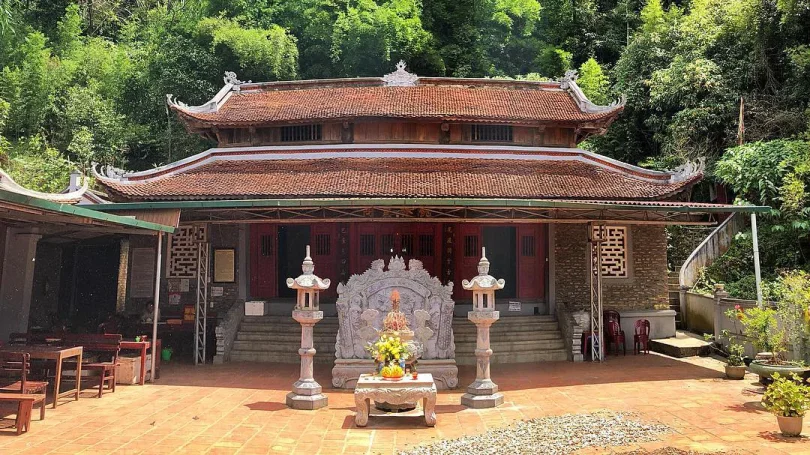
The interior space of Hang Pho Temple in Sa Pa (Source: Collected)
When visiting the temple, tourists will be guided to learn about each artifact, bas-relief, statue, and historical stories related to the struggle against invasion. Many tours combine historical explanations to help tourists visualize the wartime context, the victories, and the resilient spirit of the people of Sa Pa. This is a vivid historical education experience, while also helping each trip to the historical site of Sa Pa become more profound, connecting the past with the present and creating a sense of appreciation for national cultural values.
2.5. Ham Rong Mountain
Ham Rong Mountain is not only a famous scenic spot but is also considered a historical site of Sa Pa associated with natural defense and observation elements from ancient times. With its high terrain and wide visibility, this area once played an important role in controlling and protecting the central region of Sa Pa.
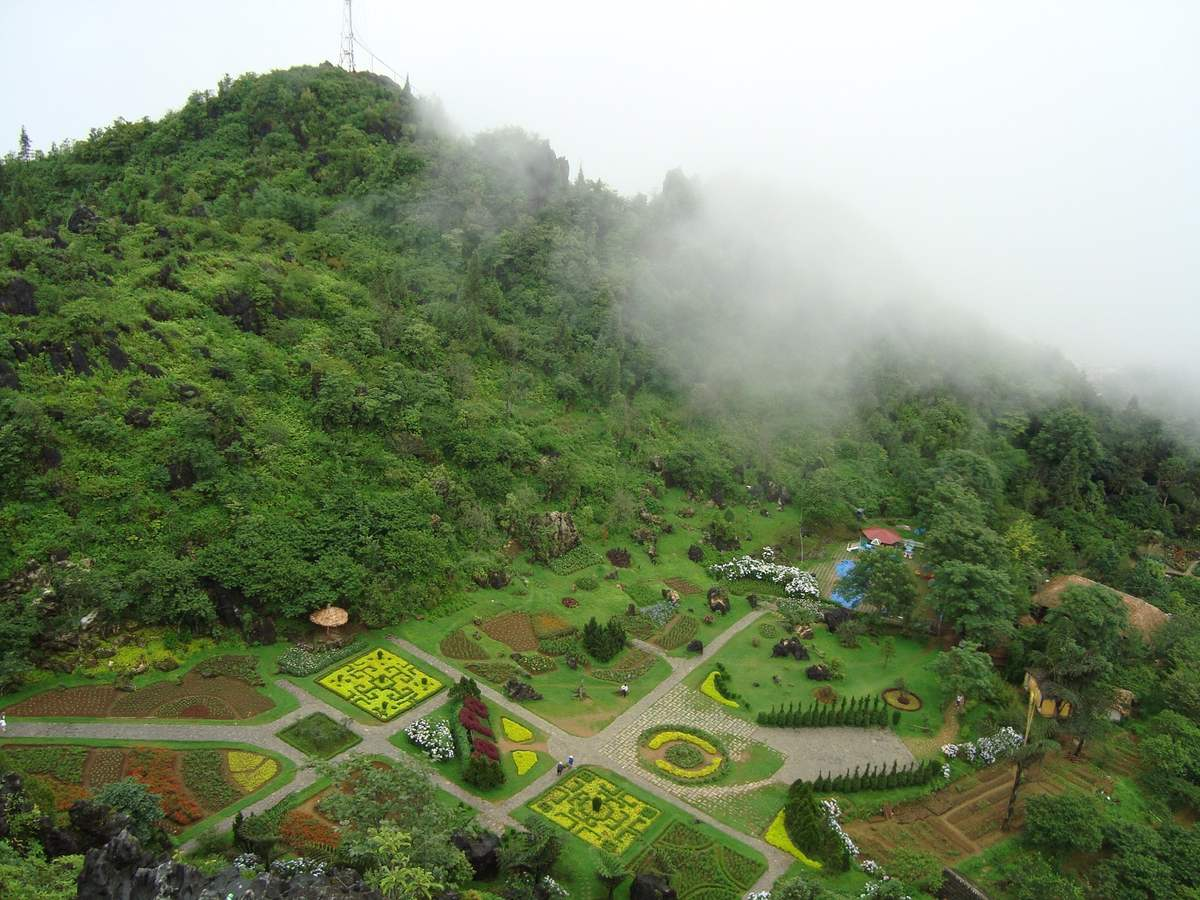
Majestic natural scenery from Ham Rong Mountain (Source: Collected)
When climbing the mountain, visitors can participate in experiential activities such as enjoying herbal tea at nearby homestays, learning historical stories about town defense, or combining cloud hunting and taking photos with ancient rose gardens. Local guides also introduce how to identify historical traces on the mountain, explaining the connection between terrain, defense strategies, and people's lives. This is a multi-layered experience, combining nature, history, and folk culture, making the journey to explore Sa Pa historical sites richer, more vivid, and more meaningful.
3. Experience exploring Sa Pa historical sites fully
3.1. Ideal time to visit Sa Pa historical sites
To fully explore Sa Pa historical sites, visitors should prioritize times with stable weather, favorable for outdoor travel and sightseeing. From March to May is spring – early summer, with cool climate and fresh scenery, suitable for combining site visits and experiencing local culture. From September to November, Sa Pa enters autumn with dry, clear weather, and many traditional festivals of the ethnic minorities take place, offering opportunities to learn more deeply about the historical and spiritual values associated with each site.
3.2. Convenient travel to each historical site
Traveling between Sa Pa historical sites is currently quite convenient thanks to the improving tourism infrastructure. For sites located within the town center such as the Stone Church, Mau Son Temple, or Hang Pho Temple, visitors can easily walk, rent motorbikes, or take taxis. Sites located further away, like the Sa Pa Ancient Stone Field in Muong Hoa valley, are suitable for motorbikes, private cars, or group tours. Currently, the internal and inter-commune road networks have been improved, making connections between attractions faster and safer, even for first-time visitors to Sa Pa.
3.3. Notes when visiting historical and local cultural sites
When visiting Sa Pa historical sites, visitors should pay attention to preserving the landscape and respecting heritage values. Do not touch, carve, or stand on ancient structures, especially in archaeological areas like the ancient stone field. When checking in or taking photos, comply with posted signs, avoiding disturbance to the common space or the daily lives of local people. For spiritual sites like temples and pagodas, visitors should dress modestly, maintain a solemn attitude, and inquire about regulations before participating in rituals. Civilized behavior not only contributes to the preservation of historical sites but also makes the journey of exploring Sa Pa's culture and history more meaningful and complete.

Tourists should combine visiting famous attractions with historical sites to make the Sa Pa exploration journey more complete (Source: Collection)
Besides visiting Sa Pa historical sites, tourists can also explore many other famous attractions such as Muong Hoa Valley with its beautiful terraced fields, Heaven's Gate – a place to admire the panoramic view of the Hoang Lien Son mountain range, Fansipan – the "Roof of Indochina" with its modern cable car system, or the vibrant Sa Pa night market, where you can enjoy local specialties and shop for local handicrafts. These destinations help make the trip richer, combining history, culture, and the unique nature of the Northwest region.
Exploring Sa Pa historical sites offers tourists a journey to learn about history and experience the diverse culture of the Northwest region. From Sa Pa Ancient Stone Field, Stone Church, Mau Son Temple, Hang Pho Temple to Ham Rong Mountain, each destination preserves its own values in architecture, beliefs, and community life of ethnic groups. By combining sightseeing of historical sites with experiences of festivals, cuisine, handicrafts, and nature, tourists not only broaden their knowledge but also contribute to the preservation and promotion of local heritage. The journey to explore Sa Pa thus becomes complete, emotionally rich, and sustainably meaningful, suitable for all those who love cultural and historical tourism.