















1. Introduction to Sapa's 'cap nach' pig meat
1.1. Origin and unique characteristics of Sapa's 'cap nach' pig meat
Sapa's 'cap nach' pig meat originates from a native breed that has been raised by the Mong, Dao, and many other ethnic groups in the Northwest highlands for a long time. Unlike industrial farming models, 'cap nach' pigs are raised free-range, living mainly on hillsides and terraced fields, foraging on leaves, wild roots, corn, and cassava. Thanks to their close-to-nature living conditions, this pig breed has good resistance and superior meat quality.
Sa Pa's armpit-carried pork is a specialty dish loved by many tourists (Source: Collected)
The name "cap nach" (armpit-carried) originates from the pig's compact size, weighing only about 10–20kg when fully grown. Locals could easily carry the pig under their arm to the market to sell, creating a rustic yet impressive name. Over time, Sa Pa's armpit-carried pork has become not only a familiar food for locals but also an attractive specialty for tourists.
1.2. Nutritional Value and Distinct Flavor
The highlight of Sa Pa's armpit-carried pork lies in its firm texture, small muscle fibers, and natural bright pink color. Because the pigs are active and eat clean food, the meat has low fat content, is lean but not dry, with a thin skin that becomes delightfully crispy when cooked.
In terms of flavor, Sa Pa's armpit-carried pork has a naturally rich sweet taste and a distinct meaty aroma, unlike the fishy or mushy texture of some industrially farmed meats. This is also why this type of meat is increasingly popular in the healthy eating trend that emphasizes clean food and natural origins.
1.3. How is Sa Pa's armpit-carried pork different from regular pork?
Compared to industrially farmed pigs, Sa Pa's armpit-carried pork shows clear differences in both appearance and quality. Armpit-carried pigs have small bodies, short legs, black or dark brown fur, and a thin, evenly distributed layer of fat, unlike the thick, concentrated fat of super-lean pigs. When cut, the meat is firm, elastic, and does not release much water.
Furthermore, Sa Pa's armpit-carried pork is highly regarded for its safety, as it hardly uses any growth promoters or stimulants. These differences make this highland specialty meat difficult to confuse with regular pork, while also creating its unique value in Sa Pa's cuisine.
2. Delicious Dishes Made from Sa Pa's Armpit-Carried Pork
2.1. Steamed Sa Pa Armpit-Carried Pork with Ginger and Lemongrass
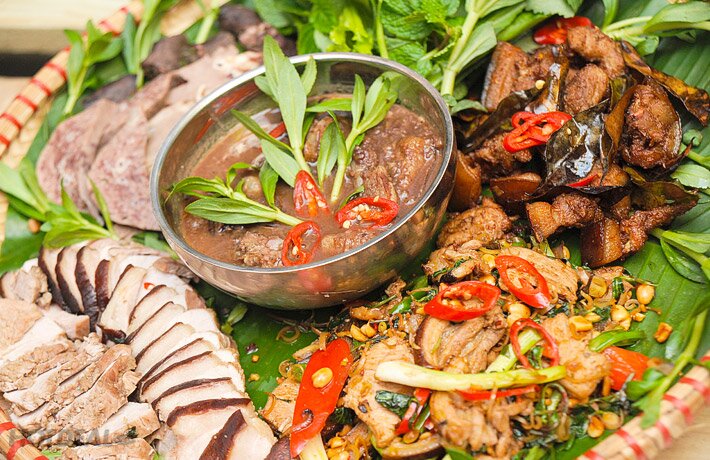
Steaming is a cooking method that helps Sa Pa's armpit-carried pork retain its natural sweetness and nutritional value. The meat is cut into bite-sized pieces and steamed with ginger and lemongrass to remove any odor and enhance its aroma. When cooked, the meat has a light pink color, is tender, yet retains its characteristic natural chewiness.
A tray of "cap nach" pork steamed with lemongrass is a dish chosen by many diners when visiting Sa Pa (Source: Collected)
This steamed dish is especially suitable for diners who love healthy cuisine. Sa Pa "cap nach" pork steamed with ginger and lemongrass, served with wild vegetables and a lightly spicy dipping sauce, will bring a feeling of lightness but still be very attractive.
2.2. Sa Pa "cap nach" pork stir-fried "xao lan" style
S a Pa "cap nach" pork stir-fried "xao lan" style is a familiar dish in the local people's meals. The meat is quickly stir-fried with lemongrass, onions, chili, and mountain spices, creating a rich, slightly spicy flavor that is very appetizing.
Thanks to its firm texture, Sa Pa "cap nach" pork does not release much water when stir-fried, maintaining a moderate tenderness and natural sweetness. This dish is usually served hot, especially delicious when enjoyed in the cool weather of Sa Pa.
2.3. Sa Pa "cap nach" pork grilled over charcoal
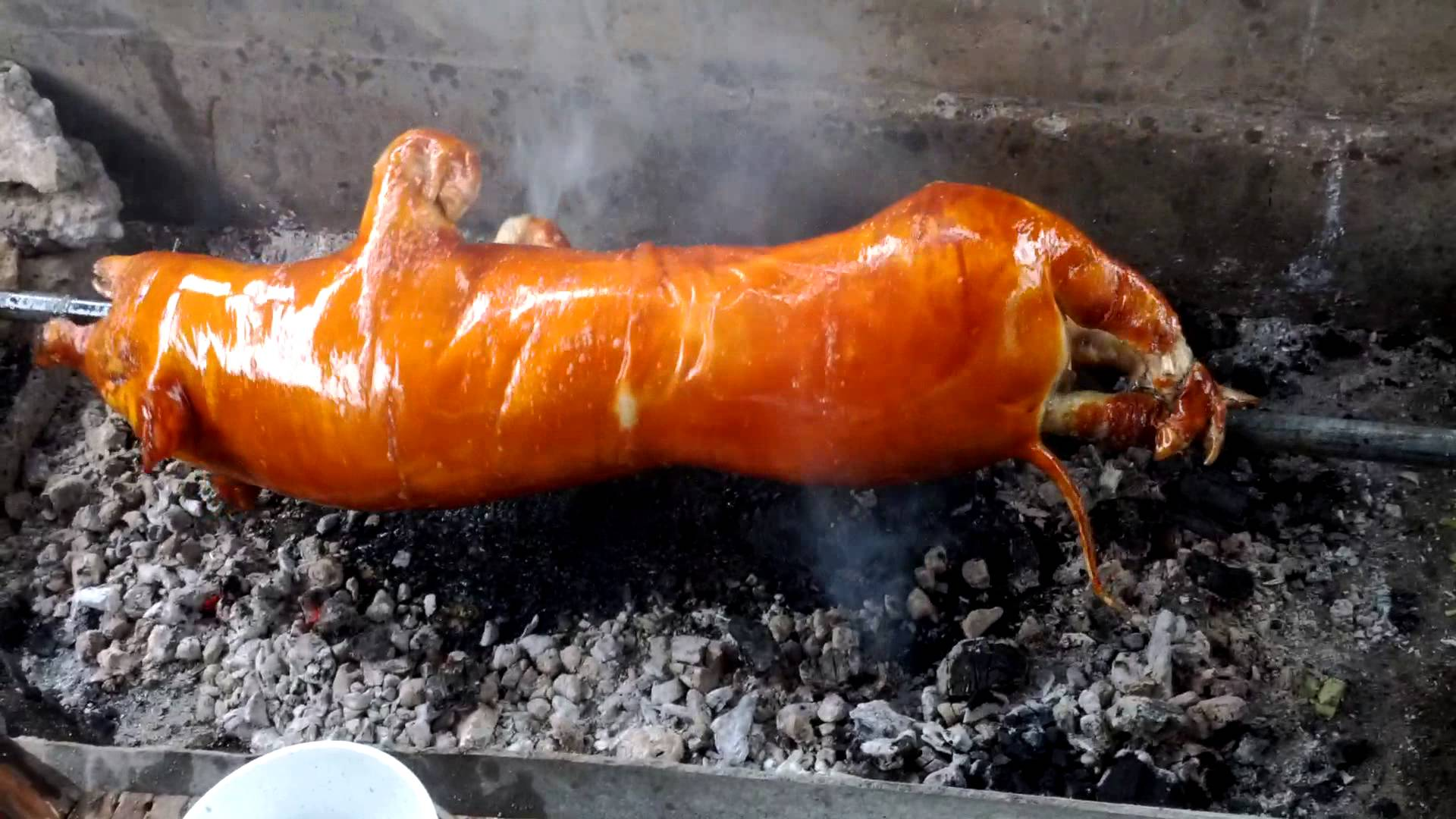
S a Pa "cap nach" pork grilled over charcoal is considered the "soul" of highland cuisine. After being simply marinated with salt, mac khen, and doi seeds, the meat is grilled directly over hot charcoal. When cooked, the skin is golden and crispy, the meat inside is tender but not mushy, and it emits a very distinctive aroma.
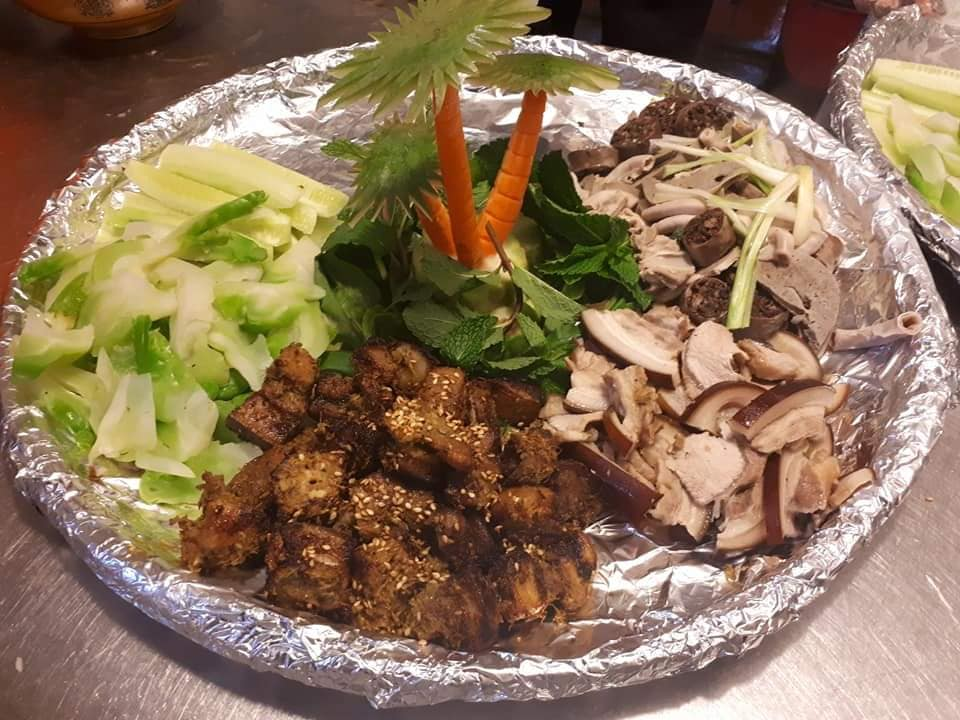
The aroma of charcoal-grilled 'thit lon cap nach' attracts many diners (Source: Collection)
The appeal of this grilled dish lies in the natural sweetness of Sa Pa 'thit lon cap nach', not overpowered by seasoning. When eaten, the meat is usually dipped with 'cham cheo' or wild chili salt, further highlighting the rich, rustic flavor of the Northwest mountains.
2.4. Sa Pa 'thit lon cap nach' pan-fried until crispy
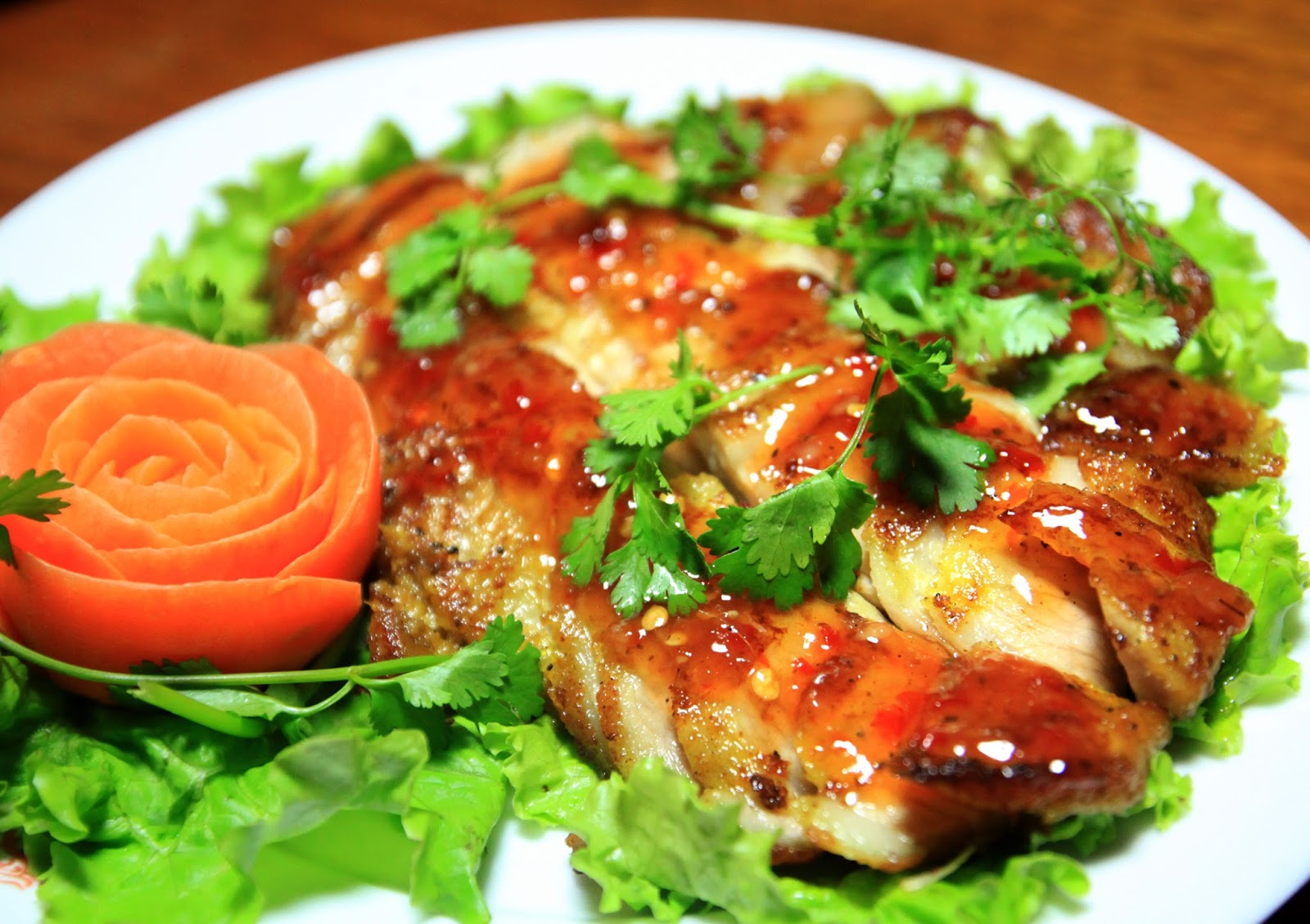
Pan-frying until crispy is a simple preparation method that best highlights the original flavor of Sa Pa 'thit lon cap nach'. The meat is fried over medium heat until the edges are golden brown, and just enough fat is rendered to create an attractive sheen without being greasy.
When enjoyed, Sa Pa 'thit lon cap nach' pan-fried until crispy has a crispy exterior and a tender, sweet interior, pairing perfectly with white rice or boiled vegetables. This is a rustic dish that many tourists remember long after leaving Sa Pa.
3. Top Restaurants to Enjoy Fresh and Delicious Sa Pa 'Thit Lon Cap Nach'
3.1. Anh Dung 'Thit Lon Cap Nach' Restaurant
Sa Pa 'thit lon cap nach' at Anh Dung 'Thit Lon Cap Nach' Restaurant is always highly praised for its rich flavor and traditional preparation methods. The pork here can be grilled, smoked, cooked in a 'gia cay' style, or simply boiled, yet it retains its characteristic natural sweetness. The dipping sauce at the restaurant is also praised by many diners as "divine," adding to the richness of the dish.
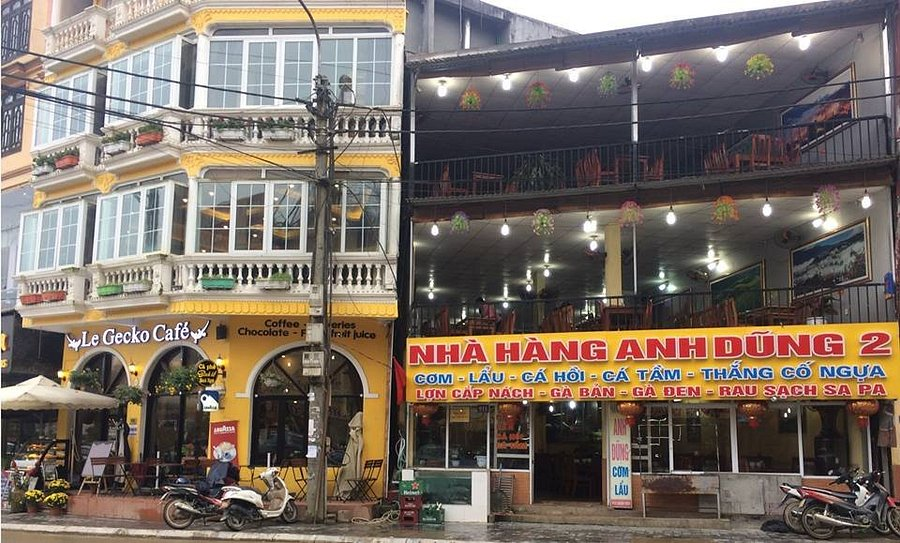
Anh Dung Restaurant is the place to buy "pork carried under the arm" right in the center of Sa Pa (Source: Collected)
Located at 12 Xuan Vien, right in the center of Sa Pa, it is very convenient for tourists to enjoy after strolling around town. The spacious atmosphere, fast service, and reasonable prices ranging from about 50,000 – 200,000 VND/person make it a familiar stop for both domestic and international guests.
3.2. Hoa Dong Tien Sa Pa "Pork Carried Under the Arm" Restaurant
Located at 29 Cau May, the "pork carried under the arm" in Sa Pa at Hoa Dong Tien Sa Pa is prepared from small local pigs (about 8–10kg), with only 2–3 pigs used daily to ensure freshness and deliciousness. The restaurant stands out not only for its main dish but also for its design style that is deeply rooted in the Northwest mountains.
Here, the pork is processed into many different delicious dishes, from grilled, roasted, to steamed, allowing diners to experience diverse flavors. The average price is about 100,000 – 275,000 VND/person, suitable for groups of friends, families, or those who want to try many interesting "Sapa pork carried under the arm" dishes.
3.3. Do Quyen "Pork Carried Under the Arm" Restaurant
The "Sapa pork carried under the arm" at Do Quyen Restaurant is rated as fragrant and delicious, with richer variations such as roasted pork, whole roasted pig, steamed, or served with a rich bone marrow sauce. The restaurant is located on Thach Son street, with a spacious and cozy atmosphere, suitable for a delicious meal with family.
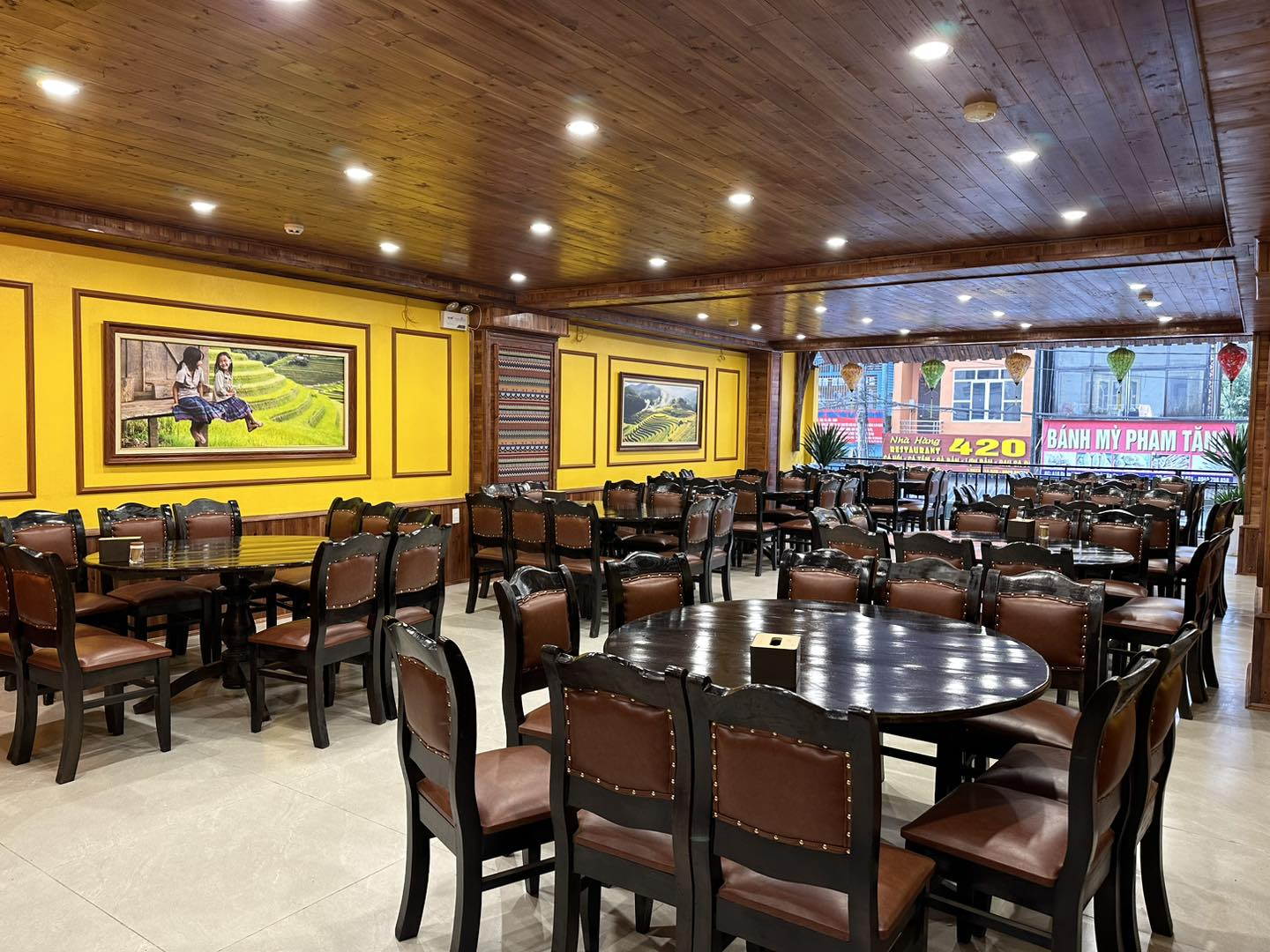
Spacious area at Do Quyen restaurant suitable for large tourist groups (Source: Collection)
The interesting point when dining at Do Quyen is the combination of mountain cuisine with pig blood pudding and local wild vegetables – familiar dishes but always attractive to tourists. The average price is quite reasonable (50,000 – 200,000 VND/person), suitable for even first-time visitors to Sa Pa.
3.4. A Phu Sa Pa Restaurant
A Phu Sa Pa is one of the famous restaurants in the town center, not only for its Sa Pa piglet meat but also for many other Northwestern dishes. The pork here is prepared in many ways – from grilling, stir-frying to steaming – but still retains the chewy, delicious taste and natural sweetness of local meat.
The restaurant space is cozy and spacious with decoration style deeply imbued with H'Mong ethnic culture, very suitable for dinner with friends or family after a long day exploring Sa Pa. Prices here are usually a bit higher than at casual eateries (about 150,000 – 300,000 VND/person) but in return, there is good service and diverse delicious dishes.
3.5. Lon Met Dung Long Restaurant
As the name suggests, Lon Met Dung Long specializes in serving dishes made from Sa Pa piglet meat in the traditional Northwestern 'met' style. The pork is roasted whole until the skin is crispy, golden brown, with just the right amount of fat to create a moderately delicious and fatty taste, retaining the characteristic of local pork.
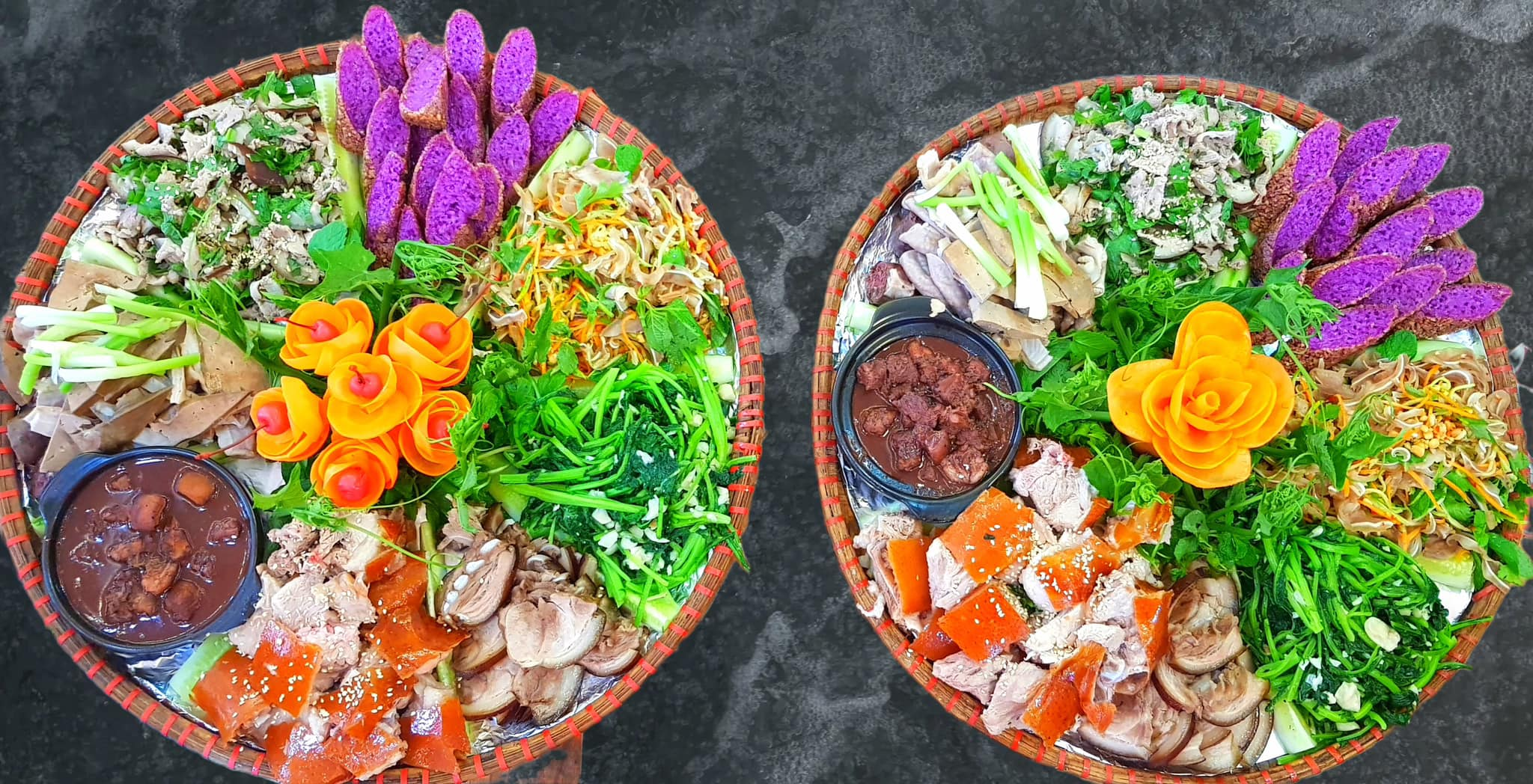
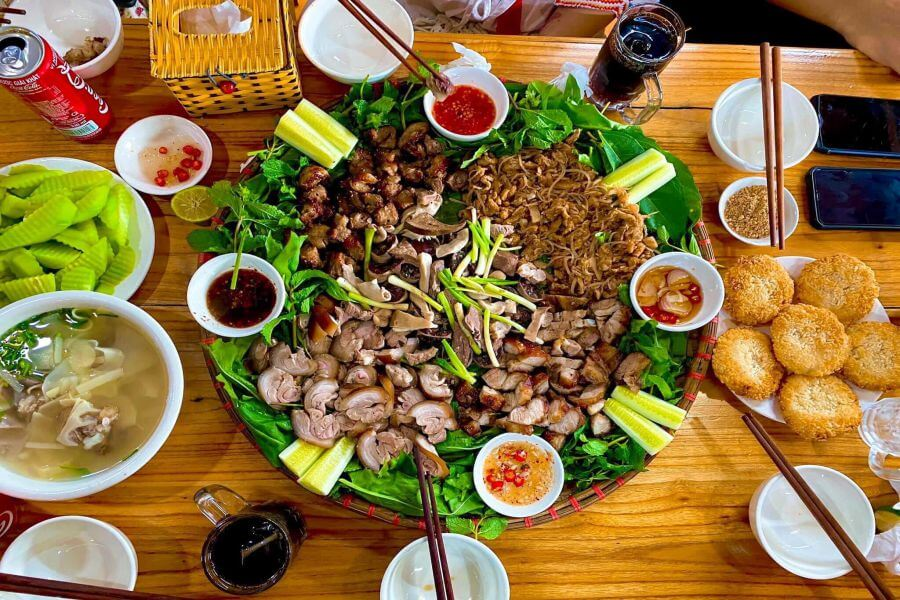
Generous platter of 'thit lon cap nach' (piglet carried under the arm) at Dung Long restaurant (Source: Collected)
The restaurant also offers many other attractive dishes such as sweet and sour pig ear salad, grilled intestines and sausages... and is often chosen by tourists as a dinner spot and for gatherings with friends. The price is around 50,000 – 200,000 VND/person, which is very suitable if you want to experience many delicious dishes of Sapa 'thit lon cap nach' without spending too much.
4. Tips for choosing authentic Sapa 'thit lon cap nach'
4.1. Identifying Sapa 'thit lon cap nach' by shape and size
One of the simplest ways to identify authentic Sapa 'thit lon cap nach' is to observe the pig's size. 'Thit lon cap nach' pigs are usually small, weighing only about 10–20kg, with a compact body, small legs, a long snout, and a quick, agile gait – completely different from industrially farmed pigs.
When butchered and sold, a piece of 'thit lon cap nach' has firm, naturally dark pink meat fibers, a thin layer of fat, and thick skin, not mushy. If the meat piece is too large, fatty, and has thin skin, it is likely not local 'thit lon cap nach'.
4.2. Observing the color, smell, and elasticity of the meat
Delicious Sapa 'thit lon cap nach' usually has a light, characteristic aroma of clean meat, without any foul or strange fishy smell. When you press your finger into the meat, the surface is elastic and quickly returns to its original state, leaving no indentation.
Tourists should consult local people carefully when buying "cap nach" pork (Source: Collected)
Meat color is a very important factor: the meat should have a natural pinkish-red color, not pale or too dark. The fat layer should be off-white, not dark yellow or watery – signs that the meat is fresh and was free-range.
4.3. Prioritize buying at local markets or from local people
To buy authentic Sa Pa "cap nach" pork, you should prioritize traditional markets like Sa Pa market, highland weekend markets, or buy directly from local people. These are places that sell free-range pigs, in limited quantities but with guaranteed quality.
If buying at restaurants or eateries, you should ask clearly about the origin of the pig, its weight, and how it was raised. Reputable establishments are usually willing to share information and even let customers see the pig before it is prepared.
4.4. Be cautious of pork "disguised" as "cap nach" pork
Currently, due to the popularity of Sa Pa "cap nach" pork, some places use crossbred pigs or small industrial-farmed pigs to "label" them as "cap nach" pork. This type of meat is usually cheaper, fattier, quickly becomes unappetizing, and lacks the natural sweet flavor.
Therefore, you should not be tempted by unusually low prices. The price of authentic "cap nach" pork is usually higher than regular pork due to the longer raising period and limited quantity. Choosing the right reputable seller will help you have a complete and worthwhile culinary experience.
5. Suggested 1-day itinerary to explore Sa Pa and enjoy "cap nach" pork
5.1. Morning: Stroll around Sa Pa center, visit the stone church
Start your day in the center of Sa Pa town with its characteristic cool air. You can walk around the square, visit the Sa Pa stone church – an ancient architectural symbol with a strong European imprint amidst the Northwest mountains. The morning is the ideal time to feel the slow, peaceful rhythm of Sa Pa life.
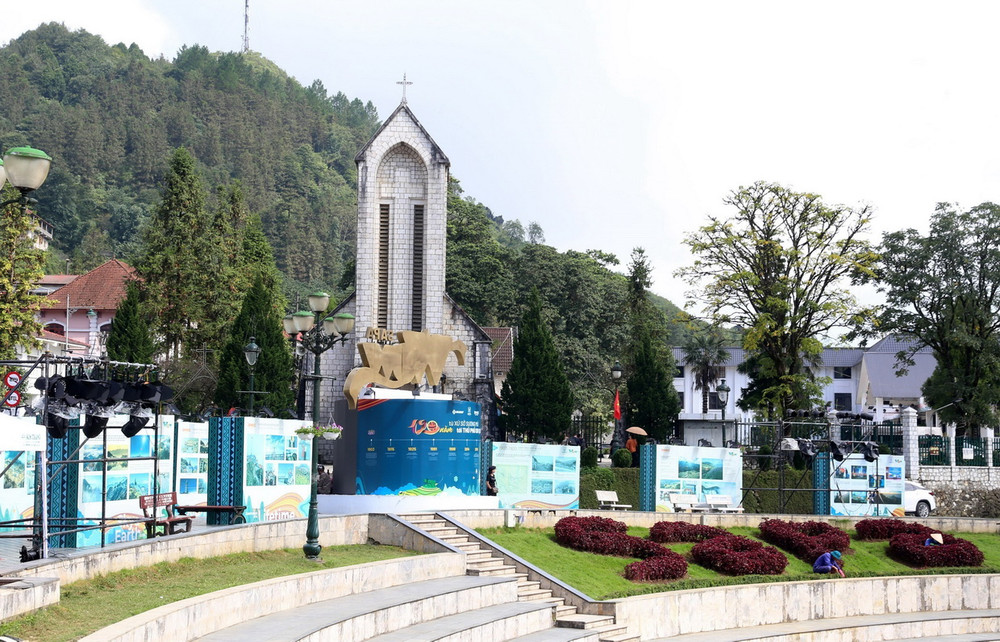
Morning is the ideal time to explore the central square (Source: Collected)
After sightseeing, you should enjoy a light breakfast with local dishes such as pho, bun, or xoi to recharge. Eating just enough helps your body prepare for the day's exploration and leaves room for delicious specialties in the afternoon and evening.
5.2. Noon: Enjoy "pork carried on the arm" at a local restaurant
Noon is the appropriate time to enjoy Sa Pa "pork carried on the arm" when the body has expended a lot of energy. You can choose specialty restaurants in the town center to enjoy grilled, steamed, or stir-fried "pork carried on the arm" with wild vegetables.
The pork is cooked just right, retaining its sweetness and firmness, served with chẩm chéo or mountain pepper salt to further highlight its distinctive flavor. A cozy lunch with "pork carried on the arm" is not only delicious but also helps you clearly feel the highland culinary culture.
5.3. Afternoon: Visit Fansipan – the roof of Indochina
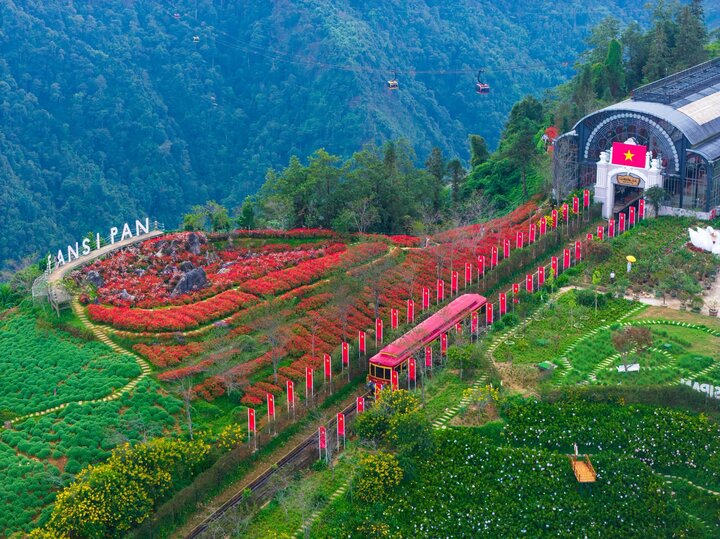
After lunch, you can move to the Fansipan tourist area to continue your journey. Taking the cable car to Fansipan not only saves energy but also offers the opportunity to admire the panoramic view of Muong Hoa valley, rolling mountains, and floating clouds.

Magnificent spiritual structures at Sun World Fansipan Legend (Source: Collected)
The afternoon is quite suitable for visiting the spiritual complex, taking photos, and enjoying the fresh air at an altitude of over 3,000m. This experience will make your Sapa trip more complete before concluding with a memorable culinary evening.
5.4. Evening: Dinner and exploring Sapa at night
Returning to the town center in the evening, you can continue to enjoy Sapa's "thit lon cap nach" (piglet carried on the shoulder) prepared in a different way for a change of taste, such as "thit lon cap nach" stir-fried until slightly burnt or charcoal-grilled.
After dinner, take time to stroll around Sapa night market, enjoy the chilly air, and admire the stalls selling brocade and street food. A day exploring Sapa concludes gently, offering enough experiences of nature, culture, and the unique cuisine of the Northwest highlands.
Sapa's "thit lon cap nach" is not just a delicious dish but also the "breath" of the mountains, symbolizing the simple lifestyle and connection to nature of the highland people. Don't miss this experience if you truly want to savor the full taste of Sapa on your trip. Save the list above and share your actual experiences to motivate the travel community to explore the colorful Sapa!