
















1. Overview: Does Sapa have an airport in 2026?
1.1. Does Sapa have an airport?
Sapa - one of the famous tourist destinations not only of Lao Cai province but also of the Northwest region, attracting millions of visitors each year thanks to its wonderful natural beauty and fresh air of the high mountain region. However, by 2026, Sapa will still not have any commercial airports in operation.
1.2. Reasons why Sapa does not have an airport yet
Sapa's terrain is mainly high mountains and steep slopes, and it is located far from major city centers, making the construction and operation of an airport a major challenge. In addition, the airport project here also requires a very large investment capital and complex construction techniques. Therefore, the main means of transportation from Hanoi to Sapa are currently road and rail transport.

Although there is no airport yet, Sapa remains a favorite destination for many domestic and international tourists. (Source: Collected)
2. Sapa Airport Project: Latest Update 1/2026
Although Sapa does not yet have an operational airport, a project for an airport in this area has been planned and is under construction. Here are the details about the progress of the Sapa airport project:
2.1. Location and Scale of the Sapa Airport Project
The Sapa airport project is named Sapa Airport, built in Cam Con commune, Bao Yen district, Lao Cai province, about 60-80 km from Sapa center. This airport will have a scale to serve from 1.5 million to 3 million passengers per year and is expected to operate medium-haul aircraft such as A320 and A321.
With the goal of becoming the largest international airport in the Northwest region, Sapa airport will not only serve tourism needs but also contribute to promoting socio-economic development for this mountainous area.
2.2. Sapa Airport Construction Progress in 2026
The Sapa airport project officially broke ground in March 2022. However, according to the plan, the airport will not be operational until the end of 2026. Construction progress has been accelerated in Q4/2026, and the project will be completed and operational before 2030.
Upon completion, Sapa airport will be a strategic project, playing an important role in connecting Lao Cai and the Northwestern provinces with other regions domestically and internationally. This will be part of the comprehensive development goal for the region's tourism and transportation infrastructure.
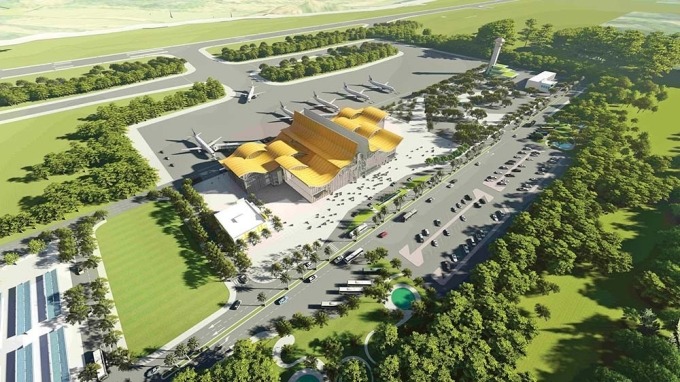
Perspective of Sapa Airport. (Source: Compilation)
2.3. Sapa Airport Access Road – Transportation Links
Sapa Airport is being built close to the Noi Bai – Lao Cai expressway, the arterial route connecting the capital Hanoi and Lao Cai. This will make traveling from Hanoi to Sapa more convenient and faster. Once the airport is completed, travel time from Hanoi to Sapa can be significantly reduced, to only about 3-4 hours instead of the current 5.5–6.5 hours.
3. How to Travel to Sapa Before the Airport is Operational
3.1. Popular Means of Transport to Sapa
From 2026, when Sapa Airport is not yet operational, tourists can choose other means of transport to get to Sapa. One of the most popular options is to use a limousine bus or a sleeper bus, with a travel time of about 5.5 to 6.5 hours from Hanoi to Sapa. Ticket prices range from 250,000 to 450,000 VND per trip, depending on the type of bus and carrier. In addition, trains are also a mode of transport chosen by many tourists. The train runs from Hanoi to Lao Cai station, taking about 7-8 hours. From Lao Cai station, tourists will continue their journey by car to Sapa, which is about 38-60 km away. Train ticket prices range from 250,000 to 1,800,000 VND/person, depending on the train class. Another option is to travel by private car via the Noi Bai – Lao Cai expressway, with a distance of about 320 km and a travel time of 5.5 to 6 hours.
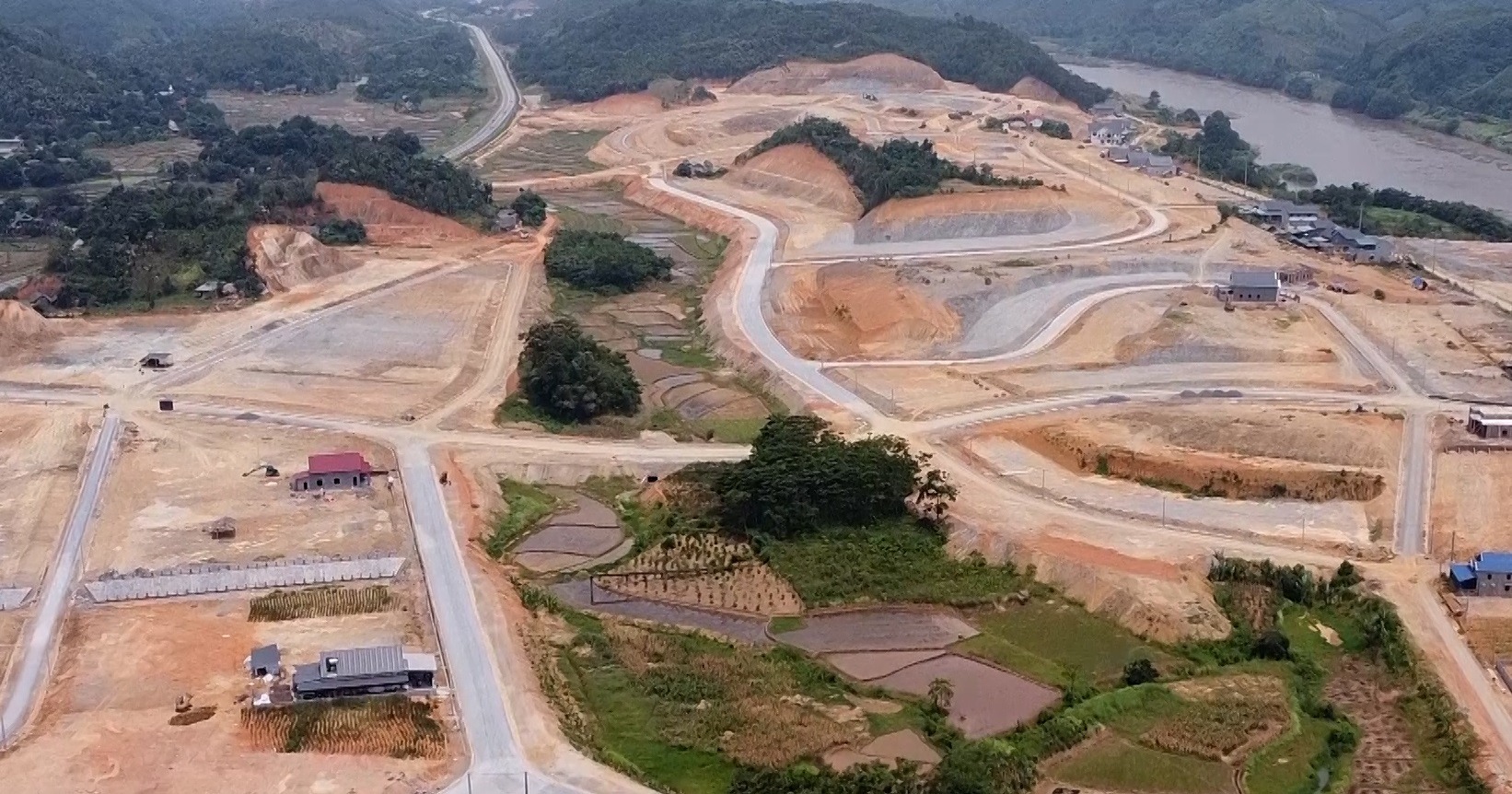
Sapa Airport is expected to be operational before 2030 (Source: Collected)
3.2. Most economical and convenient travel experience
For a smooth and economical trip, visitors should book bus or train tickets in advance, especially during peak seasons like October-November (rice harvest season) or February (peach and plum blossom season), when the number of visitors to Sapa is high. If you are far from Hanoi, you can look for cheap flight tickets from domestic airlines, then combine travel by limousine bus from Noi Bai Airport to reach Sapa. Additionally, to save costs and have a local cultural experience, visitors can choose to stay in homestays. However, it should be noted that Sapa's weather changes rapidly, especially in winter, so visitors need to prepare warm clothing.
4. Nearest airports to Sapa currently
4.1. Noi Bai Airport – Hanoi (closest to Sapa)
Although Sapa does not have an official airport yet, there are still several airports near the area that visitors can use to start their exploration journey. Noi Bai Airport in Hanoi is the closest airport to Sapa, about 320 km away, with a travel time from Hanoi to Sapa of about 5.5–6.5 hours via the Noi Bai – Lao Cai expressway. Most visitors from other provinces and cities will fly to Noi Bai Airport, then continue their journey to Sapa by bus, limousine, or train.
4.2. Other options: Van Don, Dien Bien airports
Besides Noi Bai Airport, visitors can also choose other airports such as Van Don Airport in Quang Ninh and Dien Bien Airport. However, the distance from these airports to Sapa is much farther, specifically 450 km from Van Don to Sapa, and about 420 km from Dien Bien to Sapa. Therefore, these airports are not as convenient as Noi Bai Airport for visitors wishing to go to Sapa.

Sapa currently does not have an operational airport, therefore, the main means of transport are trains and sleeper buses. (Source: Collected)
5. Sapa Travel Experience: Things to know when there is no airport
5.1. Must-visit spots in Sapa
Although Sapa does not have an airport yet, this area remains an attractive destination for tourists who love exploring the natural beauty and unique culture of ethnic minorities. Visitors can participate in many activities such as exploring Sun World Fansipan Legend, experiencing the cable car to the Fansipan peak, known as the "Roof of Indochina", or visiting Cat Cat village, a H'mong village with characteristic houses and beautiful scenery. Sapa is also famous for its Sapa night market, where visitors can enjoy specialty dishes like salmon hot pot, thang co, and shop for handicrafts made by ethnic people.
5.2. Suggested itinerary for a 3-day, 2-night Sapa exploration
With 3 days and 2 nights, visitors can fully enjoy the beauty of Sapa with exciting activities. The suggested itinerary includes visiting prominent attractions such as Ham Rong mountain for cloud hunting, exploring ethnic minority villages, and enjoying the unique highland cuisine. For a complete trip, visitors should choose to stay in homestays or central hotels for convenient travel, while also immersing themselves in the peaceful atmosphere of Sapa.
Day 1: Hanoi – Sapa – exploring the misty town
In the morning, visitors depart from Hanoi to Sapa by limousine bus or train combined with a car, with a travel time of about 5.5 to 7 hours. Arriving in the early afternoon, you check into your hotel or homestay, rest, and get acquainted with the cool air characteristic of the highlands.
The afternoon is the ideal time to wander around the center of Sapa town, visit the ancient Stone Church – a familiar symbol of Sapa, then stroll around Sapa Lake and the small streets with a distinct European charm. In the evening, visitors can visit Sapa night market to enjoy highland specialties such as grilled dishes, salmon hot pot, sturgeon hot pot, and shop for brocade products.
Day 2: Conquer Fansipan – Cat Cat village
The second day begins with a journey to explore Sun World Fansipan Legend. From the center of Sapa, visitors travel to the cable car station and experience the modern cable car system to conquer Fansipan peak – the "Roof of Indochina". At the summit, you will admire the majestic mountain scenery, the floating sea of clouds, and the magnificent spiritual complex. In the afternoon, visitors return to the town center for lunch and rest.
In the afternoon, the journey continues with a visit to Cat Cat village – an ancient H'mong village located near the center of Sapa. Here, you can learn about the daily life of the local people, visit waterfalls, windmills, and take beautiful photos amidst the poetic natural scenery. The evening is free time to relax, enjoy coffee in the cool weather, or experience the medicinal bath service of the Red Dao people.
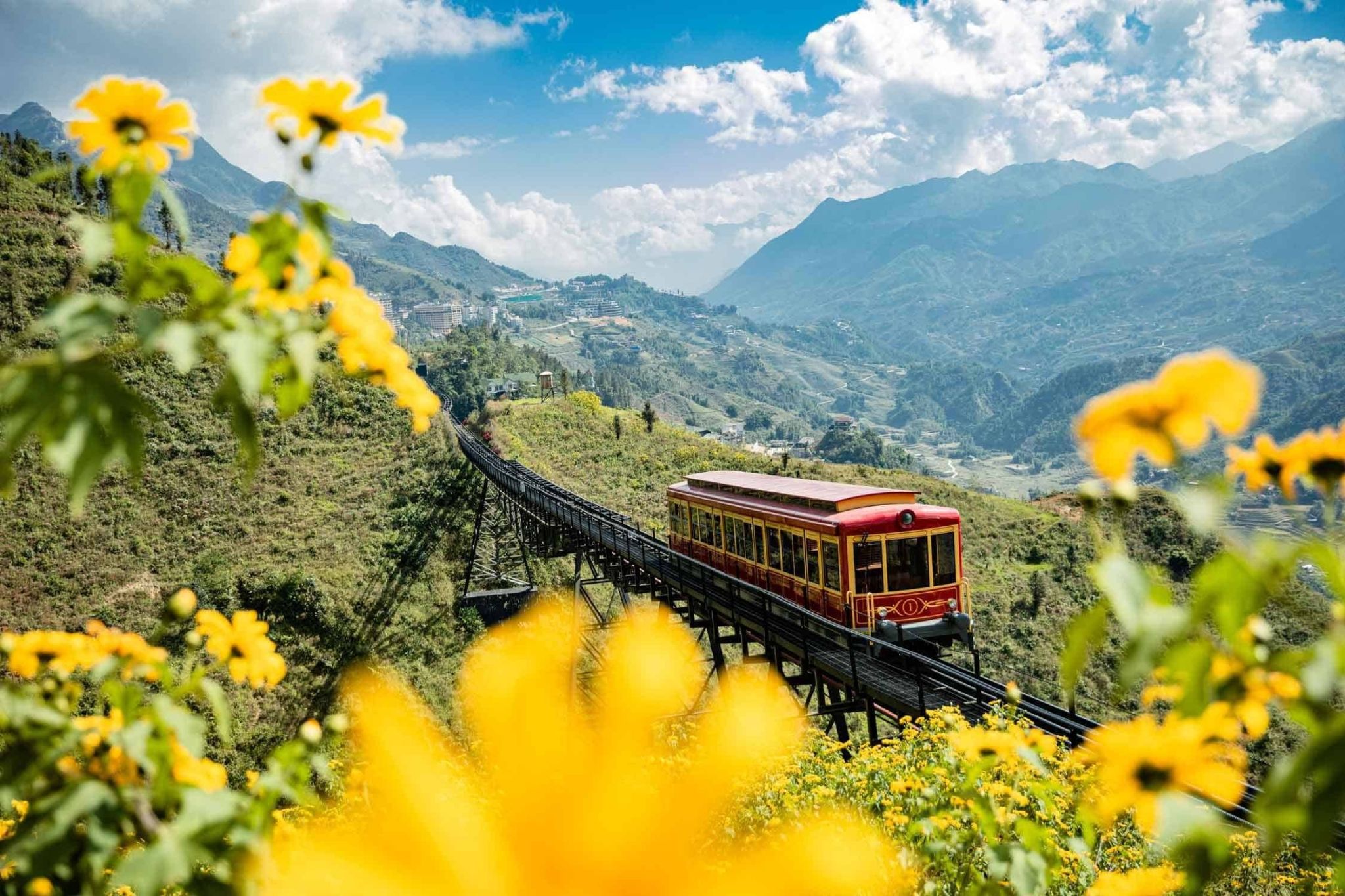
The Muong Hoa train in Sapa offers a unique, smooth, and romantic travel experience, taking visitors through the beautiful Muong Hoa valley, where majestic mountains and terraced fields unfold like a vibrant Tay Bac (Northwest Vietnam) painting. (Source: Collected)
Day 3: Cloud hunting – shopping – return to Hanoi
Early on the third day is the ideal time for cloud hunting at Ham Rong mountain or at cafes with high views overlooking the Muong Hoa valley. The moment Sapa emerges from the early mist brings a sense of peace and is very memorable. After breakfast, visitors can take the opportunity to shop for local specialties such as apple wine, corn wine, or brocade, or visit Sapa market to feel the highland life.
By noon or early afternoon, you check out and board the bus to return to Hanoi, concluding the 3-day, 2-night journey of exploring Sapa filled with experiences and emotions.
5.3. Ideal time to explore Sapa
Sapa is a destination whose beauty changes with each season of the year, each time offering a special and attractive scenery. Every season has its own unique charms, but there are times when Sapa's beauty becomes more captivating and prominent. The rice harvest season, from September to November, is a wonderful time to visit Sapa. The golden terraced fields, stretching across the hillsides, create a mystical and beautiful landscape that cannot be found anywhere else. This is when the rice fields change color, attracting tourists to admire and take photos. Sapa's cool and pleasant autumn weather is also an ideal factor for the trip.
Additionally, during the peach and plum blossom season from March to April, Sapa is adorned with a dreamy beauty with vibrant pink peach blossoms and pure white plum blossoms blooming throughout the villages. This is the ideal time for nature lovers who want to enjoy the fresh air of the highlands to visit Sapa. In March and April, visitors will have the opportunity to immerse themselves in the fresh, vibrant natural scenery of this land.
Winter in Sapa, from December to February, although cold, offers a wonderful experience for those who want to enjoy the characteristic cold weather of the Northwest mountains. Winter is also a great time to experience cloud hunting, especially on Fansipan peak, where visitors can admire the white sea of clouds covering the entire land.
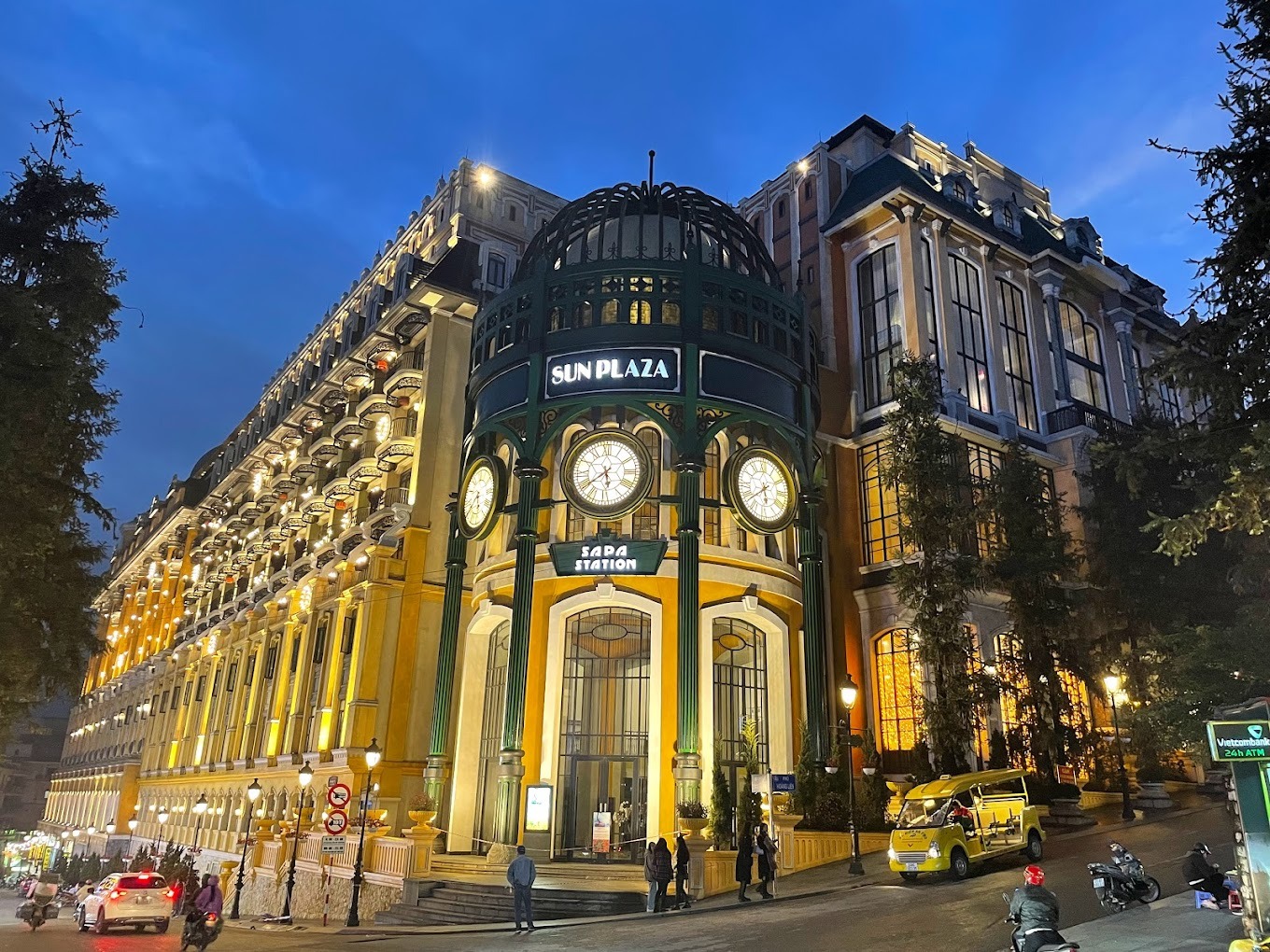
Sun Plaza in Sapa impresses with its luxurious classic European architecture, standing out in the town center as an iconic landmark, serving as both a gateway to Fansipan and an unmissable check-in background for tourists. (Source: Collected).
6. Future Forecast: When will Sapa have an airport?
6.1. When will Sapa have an airport
Although the Sapa airport project commenced in 2022, according to the latest information, this airport will not be operational until 2026. According to the plan, the construction is expected to be put into operation before 2030. This means that for about 4 more years, tourists will still have to use road or rail transport to travel from Hanoi to Sapa.
Once the Sapa airport is operational, traveling to this area will become much faster and more convenient. Travel time from Hanoi to Sapa will be shortened, helping tourists save time and costs. Direct flights from major cities like Hanoi, Da Nang, or Ho Chi Minh City will open up opportunities for tourists to easily access Sapa without spending a lot of time traveling by car or train. This will also contribute to stronger connectivity of the Northwest region with international countries and regions.

Although Sapa does not yet have an airport, travel remains very convenient thanks to the modern highway system, limousine buses, and trains, making Sapa tourism always attractive, accessible, and captivating for visitors with its majestic mountain scenery and unique year-round experiences. (Source: Collected).
As of January 2026, Sapa still has no operational airport, and tourists must choose transportation methods such as passenger buses, limousine buses, or trains to reach this beautiful land. However, with the Sapa airport project being implemented and expected to be completed before 2030, Sapa's future will see significant changes.
When the Sapa airport becomes operational, traveling to Sapa will be faster and more convenient, not only shortening travel time but also opening up international connectivity opportunities for the Northwest region. With strong strides in infrastructure development, Sapa promises to become a more attractive and accessible international tourist destination than ever before. Although there is no airport yet, Sapa remains one of the top tourist destinations in Vietnam, attracting millions of visitors each year thanks to its majestic natural beauty and distinctive culture.