















1. The beauty of one of the Northwest tourism icons
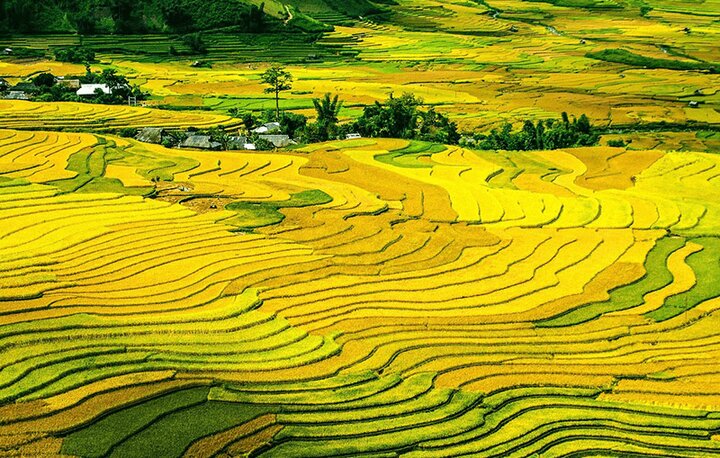
Sa Pa terraced fields were created from the long-standing cultivation process of the Mong, Dao, and Giay ethnic groups on the high mountain slopes. From the characteristic steep terrain of the Northwest region, people have skillfully created successive layers of fields, both serving agricultural production and contributing to the formation of one of Vietnam's most famous landscapes. Through many generations, these fields have become an icon associated with the image of Sa Pa in the eyes of tourists.
Not only do the terraced fields hold value in terms of production, but they also reflect human adaptation to the harsh natural conditions of the high mountains. At each time of the year, the color of the fields changes with the seasons, creating vivid natural paintings. It is this continuous transformation that has led many people to choose to return to Sa Pa multiple times to experience the different beauties of this land.
The winding terraced fields create a unique beauty for Sa Pa's nature. (Source: Collected)
2. The best time to experience Sa Pa's terraced fields
2.1. Ripe rice season September – October
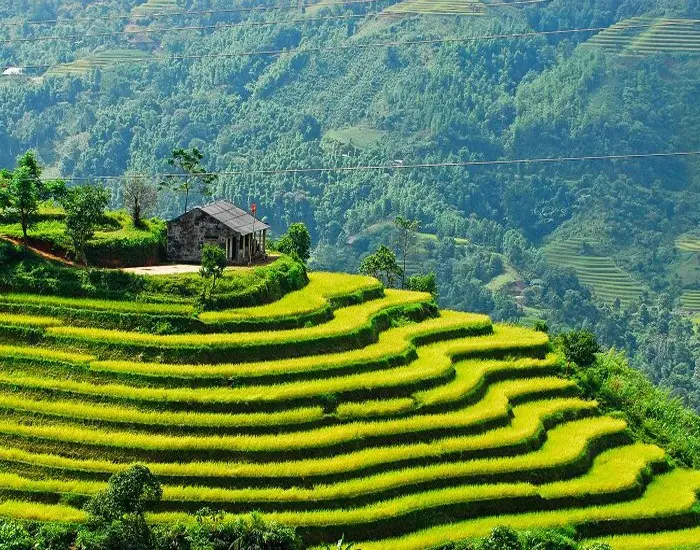
If tourists want to learn about and experience admiring Sa Pa's terraced fields, the period from September to early October is the most favored choice by many visitors. This is when the rice enters the ripe stage, dyeing the mountainsides and valleys yellow. Under the gentle autumn sunlight, the tiered fields appear brilliantly, creating the characteristic landscape that has made Sa Pa tourism attractive for many years.
Besides the impressive scenery, the ripe rice season also offers favorable weather conditions for sightseeing activities. With less rain, pleasant temperatures, and fresh air, tourists can comfortably trek through villages or hunt for photos of the golden season. This is also the time when many photographers choose to capture the most beautiful moments of the terraced fields in the Northwest region.
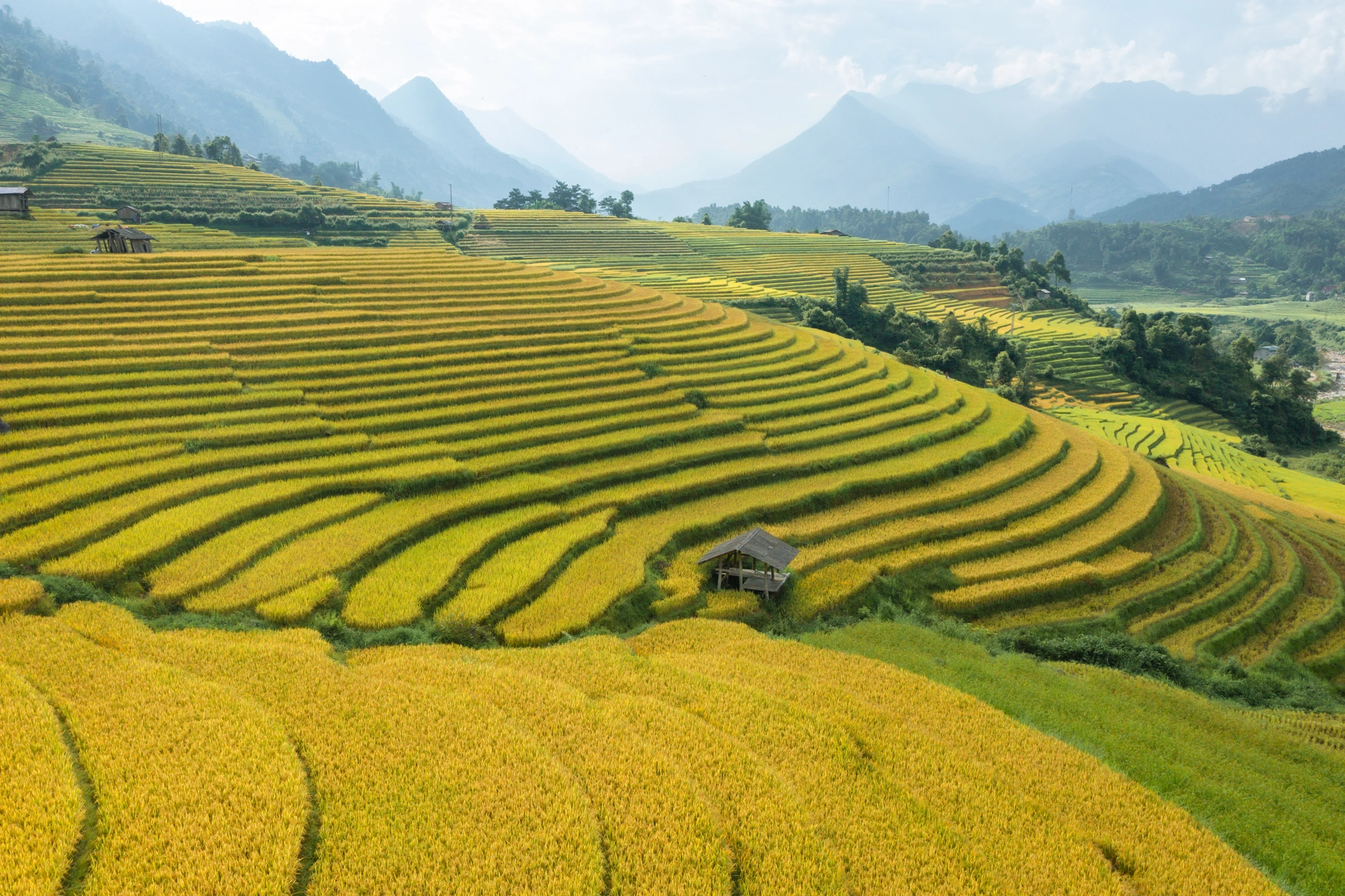
Terraced rice fields of Sa Pa are adorned with brilliant yellow as they enter the ripe rice season (Source: Collected)
2.2. Water Pouring Season May – June
Besides the ripe rice season, the water pouring season from May to June is also a time loved by many tourists when exploring the terraced rice fields of Sa Pa. Before entering the new planting season, people lead water from streams to the fields, creating giant mirror surfaces reflecting the sky, white clouds, and rolling mountains. Under the early summer sun, each shimmering field looks like it's covered in a layer of silver, creating a scene that is both poetic and vibrant. The changing light effects throughout the day make the scenery here particularly captivating for nature lovers.
Unlike the brilliant splendor of the golden season, the water pouring season offers a gentler, more peaceful, and pristine feeling. This is an ideal time for photography enthusiasts or those seeking a new perspective on Sa Pa before the harvest season begins. The shimmering fields under the sunlight combined with the green of the mountains create a harmonious and vibrant natural picture. Not as crowded as the ripe rice season, the water pouring season also allows tourists to better feel the working rhythm of the highland people and the simple beauty of the Northwestern mountainous region.
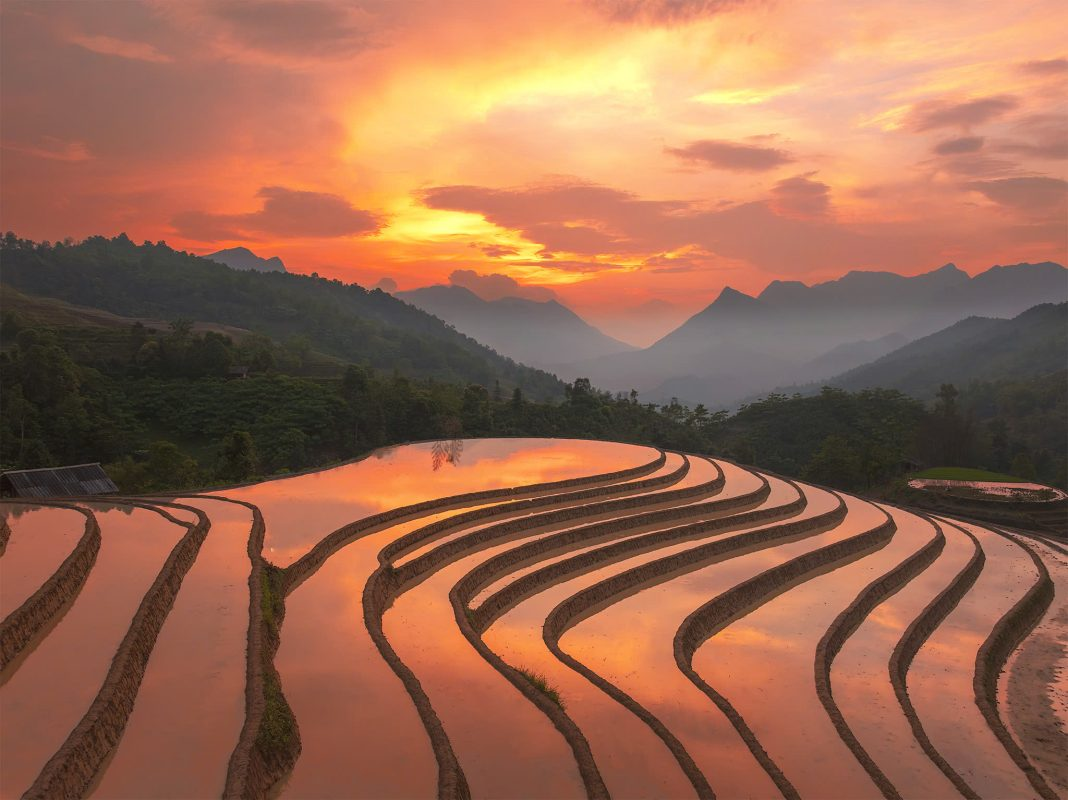
Terraced fields in Sapa during the water-pouring season appear like giant mirrors amidst the mountains and forests of the Northwest. (Source: Collected)
2.3. The beauty of terraced fields through each season of the year
Besides the two most prominent times, the water-pouring season and the ripe rice season, Sapa terraced fields still possess their own charm throughout the four seasons of the year. Spring, from about February to April, is when plants bud and sprout after the cold winter days. The fields begin to be covered with the young green color of new rice, mixed with the pink of peach blossoms, the white of plum blossoms, and the characteristic fresh air of the highlands. The fresh natural scenery and pleasant weather make Sapa an ideal destination for those who love gentle and peaceful beauty.
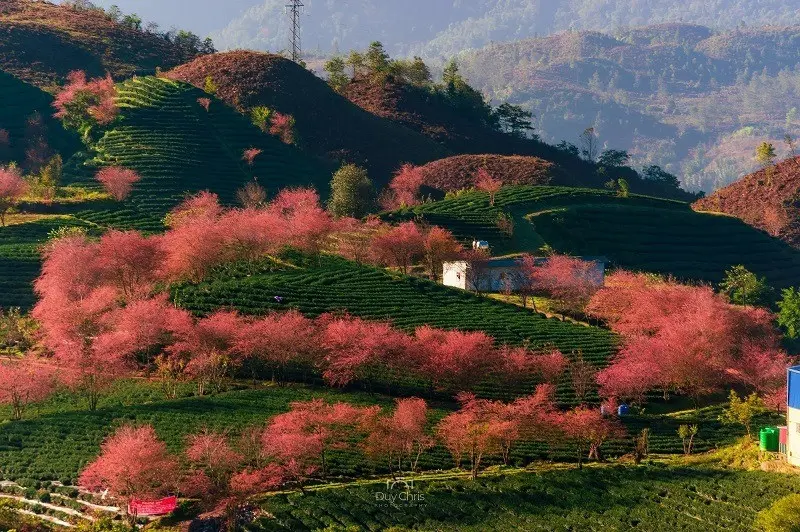
The fresh beauty of Sa Pa's terraced fields in spring attracts many tourists to explore (Source: Collection)
When winter arrives, Sa Pa takes on a completely different appearance with misty veils covering mountains and valleys. Although the vibrant golden color of the ripe rice season is gone, Sa Pa's terraced fields still create a unique charm thanks to their mystical beauty amidst a sea of floating clouds and the characteristic chilly air. On days with favorable weather, visitors have the opportunity to go cloud hunting, watch frost, or admire the mountain scenery appearing and disappearing in the early mist. The constant seasonal changes ensure that Sa Pa always offers new experiences, attracting tourists to return and explore many times.
3. Outstanding Experiences During Sa Pa's Ripe Rice Season
3.1. Golden Season Scenery in Muong Hoa Valley
Muong Hoa is considered the place that best showcases the beauty of the ripe rice season in Sa Pa. As the harvest season begins, the entire valley is covered in a golden hue stretching from the foot of the mountains to distant villages. The tiered fields nối tiếp nhau create soft curves, offering a spectacular scene that every tourist wants to capture in photos.
Not only is it outstanding in landscape, but Muong Hoa is also a place that preserves many cultural values of the local ethnic communities. During the harvest season, tourists can see people harvesting rice on the mountainsides, creating emotionally rich everyday moments. This is also one of the experiences that makes a trip to Sa Pa more authentic and memorable.
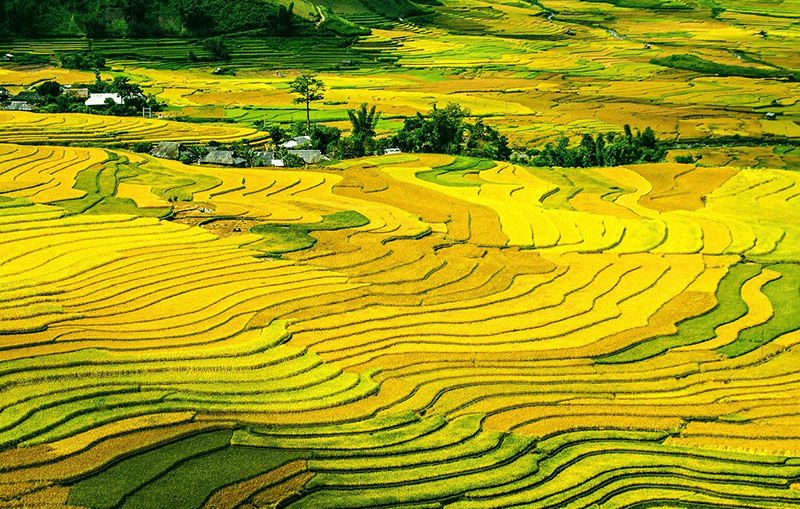
Muong Hoa Valley enters the transitional season as the terraced fields gradually turn from lush green to golden yellow (Source: Collected)
3.2. Journey to explore highland villages
The ripe rice season is a suitable time to join trekking routes through Lao Chai, Ta Van, or villages along the Muong Hoa Valley. The small paths winding through the terraced fields allow tourists to get closer to nature and appreciate the beauty of the golden season from various perspectives. This is also an activity favored by many international tourists visiting Sa Pa.
Besides sightseeing, the journey to explore villages also opens opportunities to learn about the culture and life of ethnic minorities in the highlands. Tourists can visit traditional houses, enjoy local specialties, or chat with local people. These simple experiences contribute to the unique charm of Sa Pa tourism.
4. Itinerary combining exploration of Sun World Fansipan Legend
4.1. Panoramic view from the Fansipan cable car
After exploring the villages and terraced fields at the foot of the mountain, many tourists choose to continue their journey at Sun World Fansipan Legend. From the cable car cabin, the entire Muong Hoa Valley with its terraced fields unfolds expansively amidst the mountains and forests of the Northwest. This is one of the ideal observation points to clearly feel the scale and beauty of Sa Pa's terraced field system.
When the ripe rice season arrives, the golden patches stretching across the foothills create a particularly impressive scene when viewed from above. The combination of the harvest's golden color and the green of the mountains and forests creates a vibrant natural picture. This is also the time when many tourists choose to capture unique panoramic photos of Sa Pa.
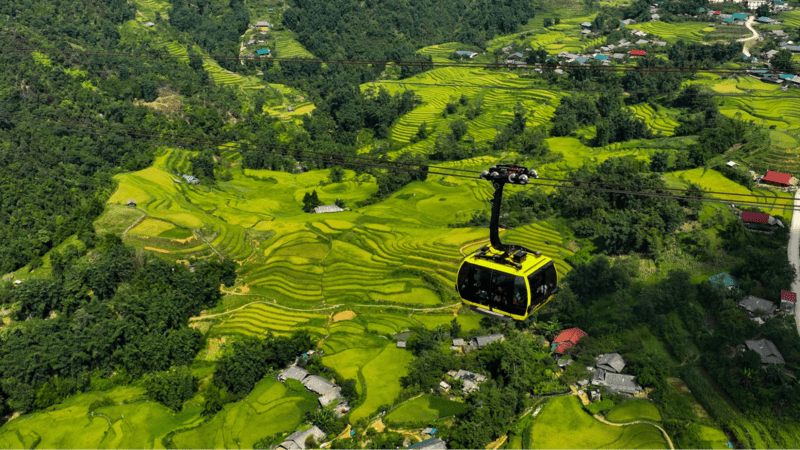
Muong Hoa Valley appears majestic when viewed from the Sun World Fansipan Legend cable car (Source: Collected)
👉 BOOK FANSIPAN CABLE CAR TICKETS NOW!
4.2. Experience cloud hunting on Fansipan peak
Autumn is not only a beautiful time to admire terraced fields but also an ideal season for cloud hunting at Fansipan. From an altitude of over 3,000m, visitors can admire floating seas of clouds covering the mountain peak, creating a scene that is both majestic and poetic. This is an experience chosen by many when combining exploration of Sa Pa during the ripe rice season.
Besides the natural landscape, the Fansipan peak area also boasts a complex of prominent spiritual cultural works amidst the Northwest mountains. The serene space along with the wide-open view makes the journey to conquer the 'Roof of Indochina' more memorable. Combining the admiration of terraced fields and exploring Fansipan also makes the trip more diverse and complete.
Regarding the question of what month to experience Sa Pa's terraced fields, the period from September to early October is highly rated by many tourists and photographers. This is the most beautiful ripe rice season of the year, when the rice fields don a brilliant yellow color stretching across the mountainsides and valleys. Favorable weather conditions also make it easy for tourists to visit, take photos, and explore the highland villages.
If you love pristine beauty and want to admire the fields reflecting like a sky mirror, the water-flooding season from May to June is also a worthwhile option. Regardless of when you visit, Sa Pa's terraced fields still offer unforgettable experiences, contributing to the special charm of the famous misty land of the Northwest.